. 2014 Jul 3:4:5562.
doi: 10.1038/srep05562.

Horizontal gene transfer of a bacterial insect toxin gene into the Epichloë fungal symbionts of grasses

Affiliations

Horizontal gene transfer of a bacterial insect toxin gene into the Epichloë fungal symbionts of grasses

Karen V Ambrose et al. Sci Rep. .

Abstract

Horizontal gene transfer is recognized as an important factor in genome evolution, particularly when the newly acquired gene confers a new capability to the recipient species. We identified a gene similar to the makes caterpillars floppy (mcf1 and mcf2) insect toxin genes in Photorhabdus, bacterial symbionts of nematodes, in the genomes of the Epichloë fungi, which are intercellular symbionts of grasses. Infection by Epichloë spp. often confers insect resistance to the grass hosts, largely due to the production of fungal alkaloids. A mcf-like gene is present in all of the Epichloë genome sequences currently available but in no other fungal genomes. This suggests the Epichloë genes were derived from a single lineage-specific HGT event. Molecular dating was used to estimate the time of the HGT event at between 7.2 and 58.8 million years ago. The mcf-like coding sequence from Epichloë typhina subsp. poae was cloned and expressed in Escherichia coli. E. coli cells expressing the Mcf protein were toxic to black cutworms (Agrotis ipsilon), whereas E. coli cells containing the vector only were non-toxic. These results suggest that the Epichloë mcf-like genes may be a component, in addition to the fungal alkaloids, of the insect resistance observed in Epichloë-infected grasses.


Figures
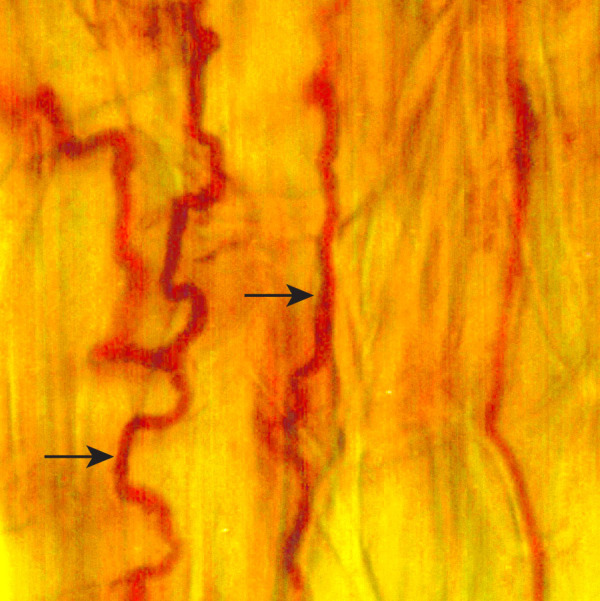
Figure 1
Figure 1. Leaf sheath epidermal peel of Poa secunda subsp. juncifolia infected with Epichloë typhina subsp. poae Ps1 stained with Rose Bengal.
Fungal hyphae growing in between the plant cells are indicated by arrows.
Figure 2
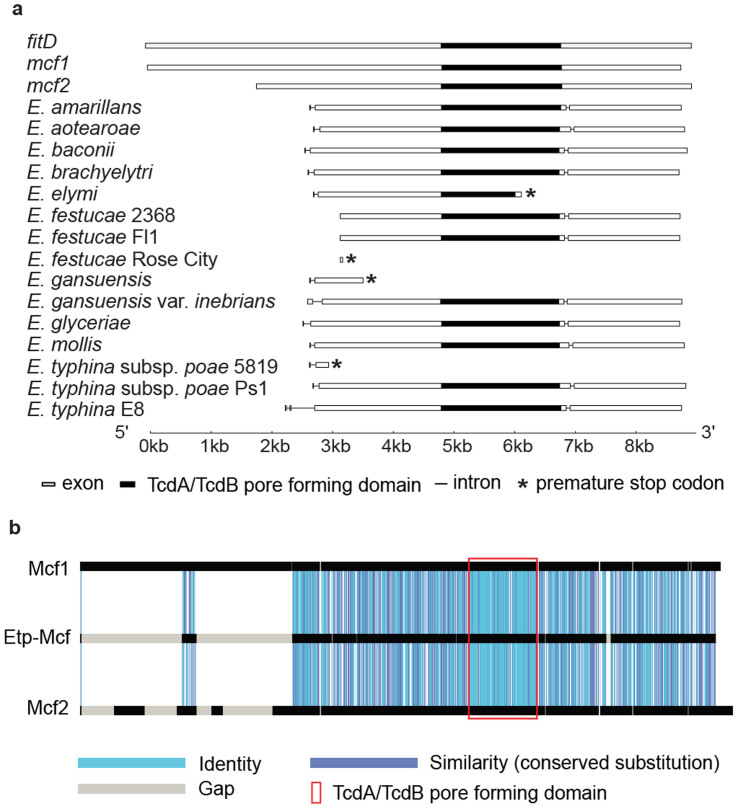
Figure 2. Gene structure of the Epichloë mcf-like genes and amino acid similarity of E. typhina subsp. poae Ps1-Mcf protein with the bacterial Mcf proteins.
(a) Diagrams of gene structure of the bacterial mcf1, mcf2, fitD, and Epichloë mcf-like genes. The exons are indicated by boxes and the introns by lines. The conserved TcdA/TcdB pore-forming region is indicated by filled in boxes. The positions of the premature stop codons in some of the Epichloë genes are indicated by *. The end of intron 1 of the E. typhina subsp. poae 5819 sequence was modified from the annotated version to that of the experimentally determined position in E. typhina subsp. poae Ps1. (b) GECA analysis illustrating the amino acid sequence similarity of the E. typhina subsp. poae Ps1-Mcf protein (1,997 amino acids; accession KJ502561) to Mcf1 (2,929 amino acids; accession AF503504.2) and Mcf2 (2,388 amino acids; accession AY445665) proteins from Ph. luminescens.
Figure 3
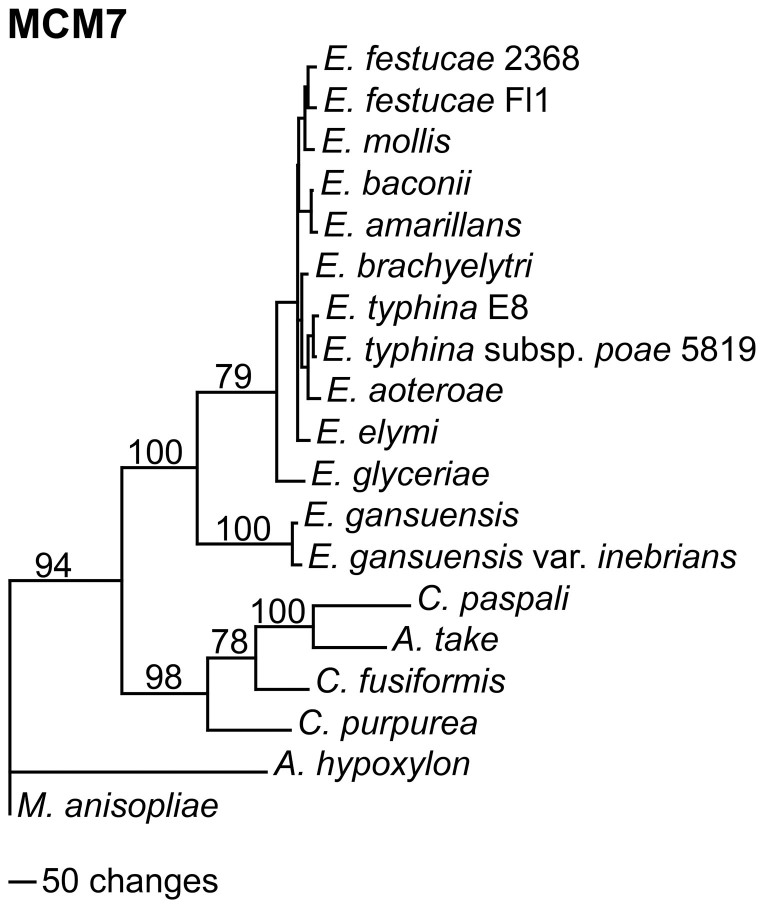
Figure 3. Rooted 50% majority rule maximum parsimony phylogenetic tree of the MCM7 DNA coding sequences.
The Metarhizium anisopliae sequences were designated as the outgroup for rooting the tree. The numbers at the nodes are the bootstrap percentages based on 1,000 replications. The tree was based upon 2,472 total characters, of which 1,549 were constant, 343 variable characters were parsimony uninformative, and 580 variable characters were parsimony informative. The unmarked nodes all had bootstrap support of 69 or higher.
Figure 4
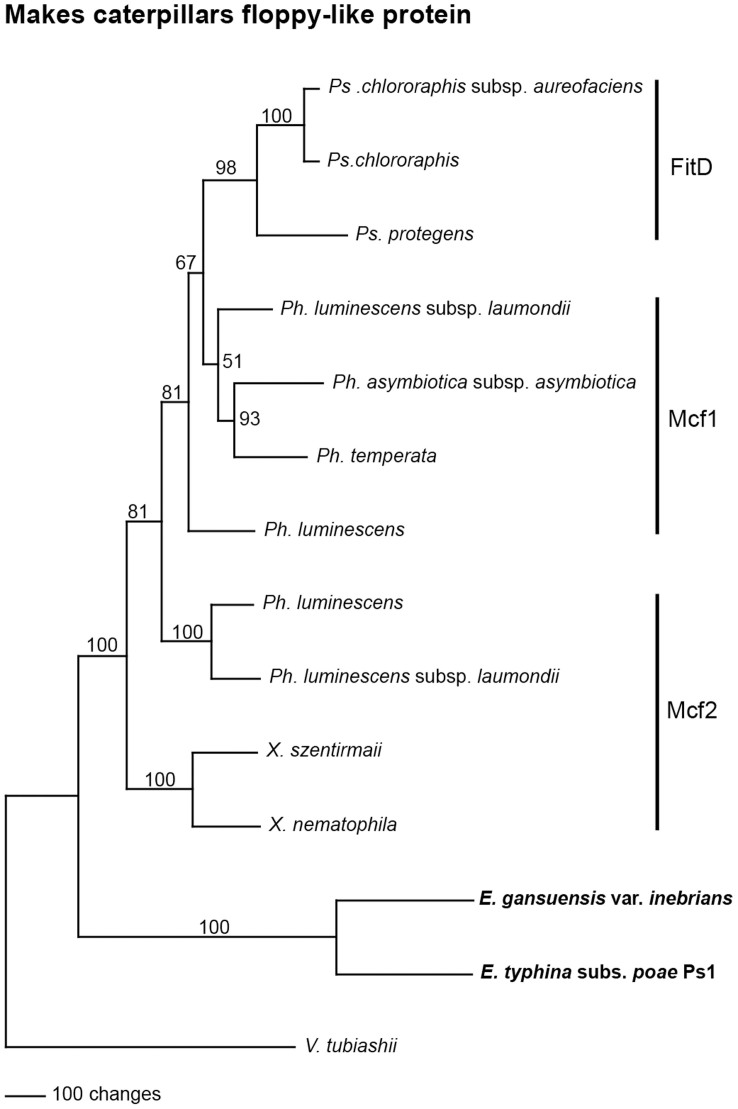
Figure 4. Rooted 50% majority rule maximum parsimony phylogenetic tree of bacterial Mcf proteins and the Mcf-like protein sequences from E. gansuensis var. inebrians and E. typhina subsp. poae.
The Vibrio tubiashii sequence was designated as the outgroup for rooting the tree. The numbers at the nodes are the bootstrap percentages based on 1,000 replications. The tree was based upon 1,983 total characters, of which 391 were constant, 404 variable characters were parsimony uninformative, and 1,188 variable characters were parsimony informative.
Figure 5
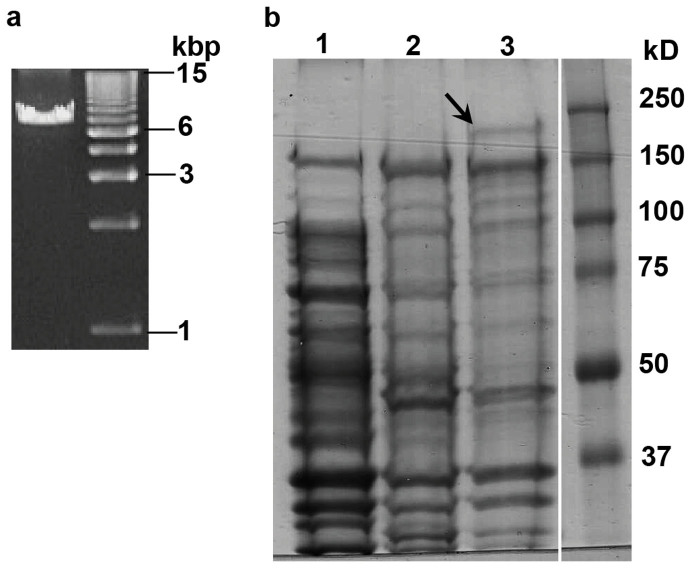
Figure 5. Expression of E. typhina subsp. poae Ps1-mcf in vivo and in E. coli.
(a) PCR product of the E. typhina subsp. poae Ps1-mcf transcript using infected Poa secunda subsp. juncifolia plant cDNA generated from oligo(dT) as template. (b) SDS-PAGE analysis of insoluble E. coli proteins. Lane 1: E. coli containing the pCold II vector only subjected to induction conditions. Lane 2: E. coli containing the pCold II::E. typhina subsp. poae Ps1-Mcf with no induction of protein expression. Lane 3: E. coli containing the pCold II::E. typhina subsp. poae Ps1-Mcf subjected to induction conditions. Arrow indicates presence of the induced protein at the expected size of 223 kD.
Figure 6
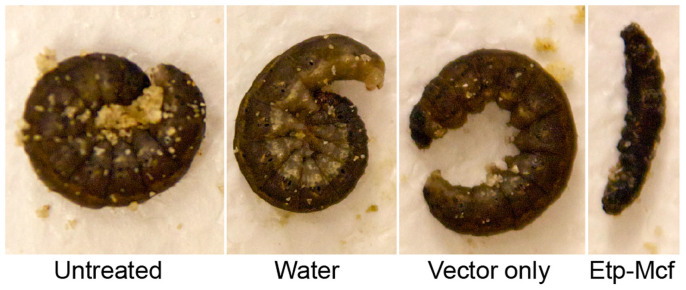
Figure 6. Toxicity of the E. typhina subsp. poae Ps1-Mcf protein to black cutworms.
Fourth instar cutworm larvae were injected with water, 50 million E. coli cells containing the pCold II vector only, or 50 million E. coli cells expressing the E. typhina subsp. poae Ps1-Mcf protein. The live cutworms curl in response to prodding.

References

    1. Keeling P. J. & Palmer J. D. Horizontal gene transfer in eukaryotic evolution. Nature Rev. Genetics 9, 605–618 (2008). - PubMed
    1. Syvanen M. Evolutionary implications of horizontal gene transfer. Annu. Rev. Genet. 46, 341–358 (2012). - PubMed
    1. Richards T. A., Leonard G., Soanes M. & Talbot N. J. Gene transfer into the fungi. Fungal Biol. Rev. 25, 98–110 (2011).
    1. Marcet-Houben M. & Gabaldon T. Acquisition of prokaryotic genes by fungal genomes. Trends Genet. 26, 5–8 (2010). - PubMed
    1. Fitzpatrick D. A. Horizontal gene transfer in fungi. FEMS Microbiol. Lett. 329, 1–8 (2012). - PubMed

Publication types

Substances

Associated data

LinkOut - more resources