. 2014:2014:834815.
doi: 10.1155/2014/834815. Epub 2014 Jun 1.

Aqueous Extract of Phyllanthus niruri Leaves Displays In Vitro Antioxidant Activity and Prevents the Elevation of Oxidative Stress in the Kidney of Streptozotocin-Induced Diabetic Male Rats

Affiliations

Aqueous Extract of Phyllanthus niruri Leaves Displays In Vitro Antioxidant Activity and Prevents the Elevation of Oxidative Stress in the Kidney of Streptozotocin-Induced Diabetic Male Rats

Nelli Giribabu et al. Evid Based Complement Alternat Med. 2014.

Abstract

P. niruri has been reported to possess antidiabetic and kidney protective effects. In the present study, the phytochemical constituents and in vitro antioxidant activity of P. niruri leaf aqueous extract were investigated together with its effect on oxidative stress and antioxidant enzymes levels in diabetic rat kidney. Results. Treatment of diabetic male rats with P. niruri leaf aqueous extract (200 and 400 mg/kg) for 28 consecutive days prevents the increase in the amount of lipid peroxidation (LPO) product, malondialdehyde (MDA), and the diminution of superoxide dismutase (SOD), catalase (CAT), and glutathione peroxidase (GPx) activity levels in the kidney of diabetic rats. The amount of LPO showed strong negative correlation with SOD, CAT, and GPx activity levels. P. niruri leaf aqueous extract exhibits in vitro antioxidant activity with IC50 slightly lower than ascorbic acid. Phytochemical screening of plant extract indicates the presence of polyphenols. Conclusion. P. niruri leaf extract protects the kidney from oxidative stress induced by diabetes.


Figures
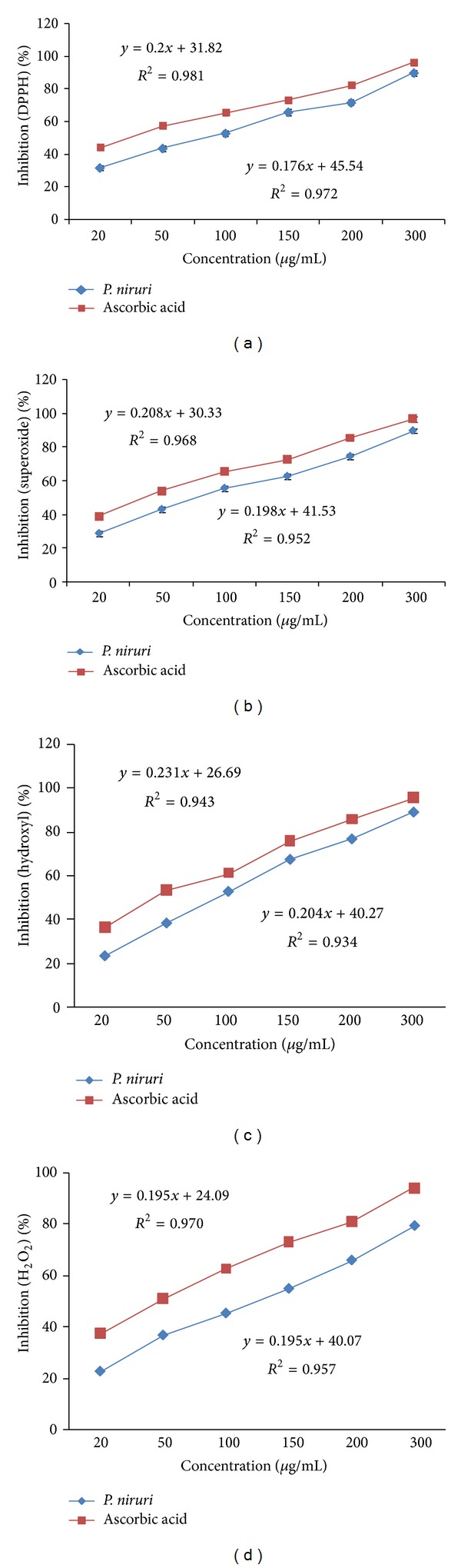
Figure 1
Figure 1
In vitro antioxidant assay of P. niruri leaf aqueous extract. The graphs show (a) DPPH radical, (b) superoxide radical, (c) hydroxyl radical, and (d) hydrogen peroxide scavenging activities of P. niruri leaf extract and ascorbic acid. Results represent means of triplicates of each concentration. For each assay, the IC50 for P. niruri leaf extract was slightly less than ascorbic acid.
Figure 2
Figure 2
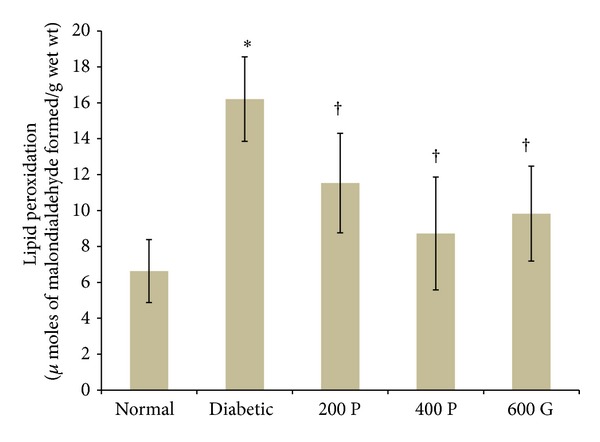
Estimation of LPO product, MDA, in the kidney in different experimental groups. Higher MDA levels were noted in diabetic rats as compared to normal, nondiabetic control rats. Administration of P. niruri leaf extract resulted in decreased MDA levels in the kidney in diabetes. 200P: 200 mg/kg/day P. niruri leaf extract; 400P: 400 mg/kg/day P. niruri leaf extract; 600G: 600 μg/kg/day glibenclamide. n = 6 per treatment group, *P < 0.05 as compared to normal, nondiabetic control rats, and P < 0.05 as compared to nontreated diabetic rats.
Figure 3
Figure 3
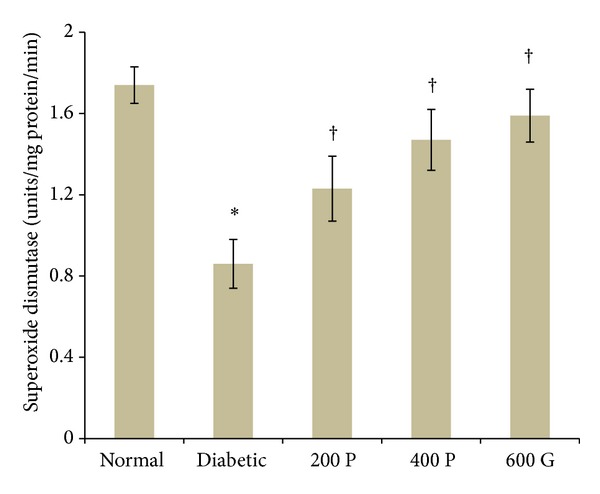
SOD activity levels in the kidney in different experimental groups. SOD activity levels were reduced in diabetic rats as compared to normal, nondiabetic rats. Administration of P. niruri leaf extract at 200 or 400 mg/kg/day and glibenclamide resulted in higher SOD activity in the kidney as compared to nontreated diabetic rats. 200P: 200 mg/kg/day P. niruri leaf extract; 400P: 400 mg/kg/day P. niruri leaf extract; 600G: 600 μg/kg/day glibenclamide. n = 6 per treatment group, *P < 0.05 as compared to normal, nondiabetic control rats, and P < 0.05 as compared to nontreated diabetic rats.
Figure 4
Figure 4
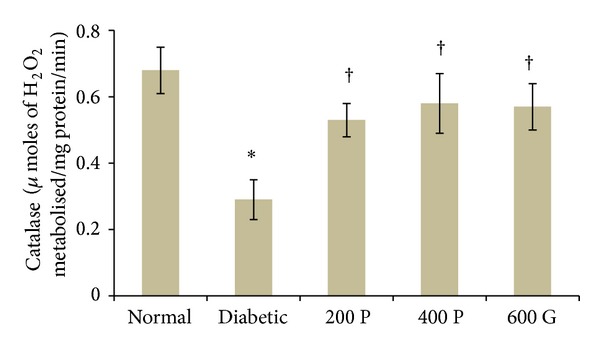
CAT activity levels in the kidney in different experimental groups. Administration of P. niruri leaf extract at 200 and 400 mg/kg/day or glibenclamide to diabetic rats prevented decrease in CAT activity in the kidney in diabetes. 200P: 200 mg/kg/day P. niruri leaf extract; 400P: 400 mg/kg/day P. niruri leaf extract; 600G: 600 μg/kg/day glibenclamide. n = 6 per treatment group, *P < 0.05 as compared to normal, nondiabetic control rats, and P < 0.05 as compared to nontreated diabetic rats.
Figure 5
Figure 5
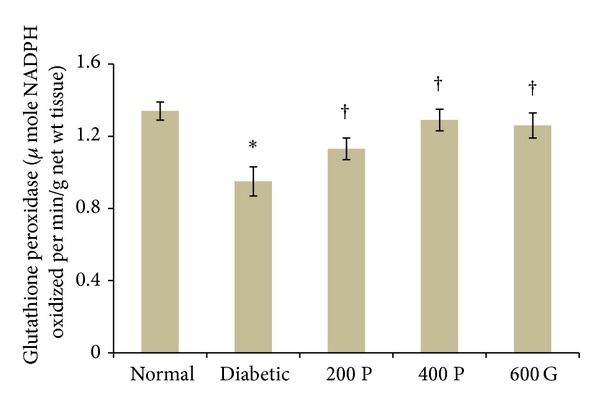
GPx activity levels in the kidney in different experimental groups. Administration of P. niruri leaf extract at 200 and 400 mg/kg/day or glibenclamide prevented deterioration of GPx activity levels in the kidney in diabetes. 200P: 200 mg/kg/day P. niruri leaf extract; 400P: 400 mg/kg/day P. niruri leaf extract; 600G: 600 μg/kg/day glibenclamide. n = 6 per treatment group, *P < 0.05 as compared to normal, nondiabetic control rats, and P < 0.05 as compared to nontreated diabetic rats.
Figure 6
Figure 6
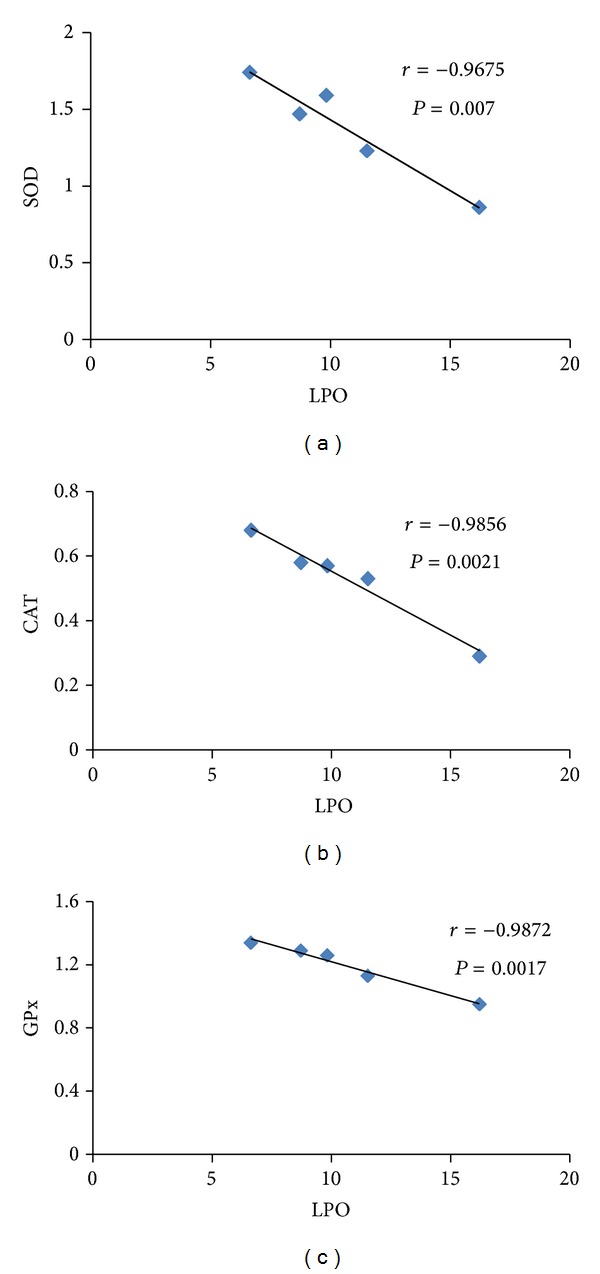
(a–c) Correlation between MDA and activity levels of SOD, CAT, and GPx in the kidney. Strong negative correlations were noted between the levels of MDA and activity of antioxidant enzymes indicating that the extent of tissue damage due to oxidative stress was directly related to the levels of endogenous antioxidant enzymes.

References

    1. Maritim AC, Sanders RA, Watkins JB., III Diabetes, oxidative stress, and antioxidants: a review. Journal of Biochemical and Molecular Toxicology. 2003;17(1):24–38. - PubMed
    1. Forbes JM, Coughlan MT, Cooper ME. Oxidative stress as a major culprit in kidney disease in diabetes. Diabetes. 2008;57(6):1446–1454. - PubMed
    1. Jack M, Wright D. Role of advanced glycation endproducts and glyoxalase i in diabetic peripheral sensory neuropathy. Translational Research. 2012;159(5):355–365. - PMC - PubMed
    1. Kashihara N, Haruna Y, Kondeti VK, Kanwar YS. Oxidative stress in diabetic nephropathy. Current Medicinal Chemistry. 2010;17(34):4256–4269. - PMC - PubMed
    1. Vadivelan R, Haruna Y, Kondeti VK, Kanwar YS. Oxidative stress induced diabetic nephropathy. Research Journal of Pharmacology and Pharmacodynamics. 2010;2(5):321–323.

LinkOut - more resources