


Implementation of a safer conception service for HIV-affected couples in South Africa
- PMID: 24991901
- PMCID: PMC4882476
- DOI: 10.1097/QAD.0000000000000330
Implementation of a safer conception service for HIV-affected couples in South Africa
Abstract
Objective: To describe the development and implementation of a safer conception service in a resource-limited setting.
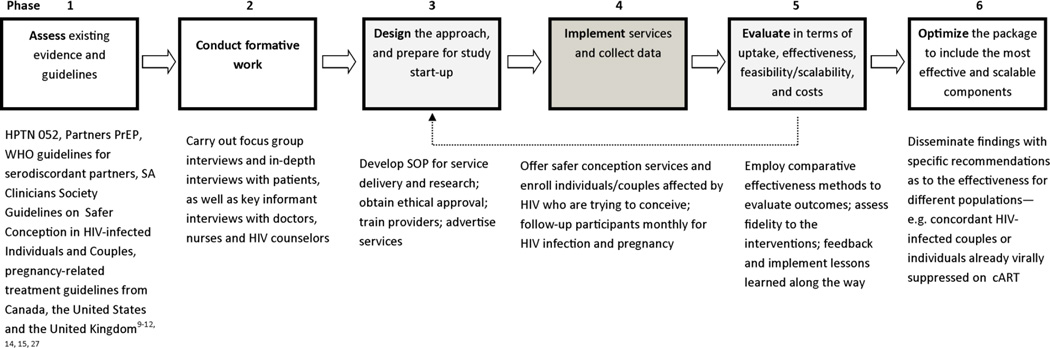
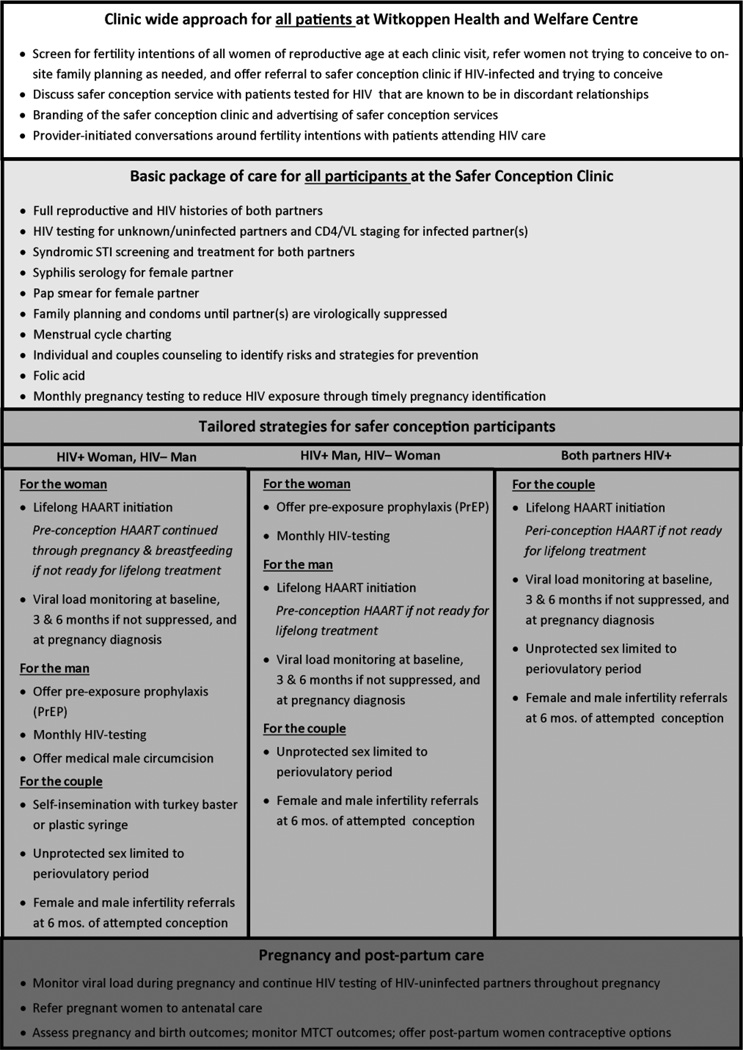
Methods: Qualitative work to inform the design of a safer conception service was conducted with clients and providers at Witkoppen Health and Welfare Centre, a primary health center in Johannesburg, South Africa. Services began in July 2013 for HIV-affected participants planning conception within 6 months and included counseling about timed unprotected intercourse and home-based self-insemination, early initiation of combined antiretroviral therapy (cART) for HIV-infected individuals, pre-exposure prophylaxis for HIV-uninfected partners and circumcision for men. Participants were enrolled into an implementation science study evaluating method uptake, acceptability, and pregnancy and HIV transmission outcomes.
Results: Findings to-date from 51 qualitative participants and 128 clinical cohort participants (82 women and 46 men, representing 82 partnerships) are presented. All men were accompanied by female partners, whereas 56% of women attended with their male partner. Fifteen of the 46 couples (33%) were in confirmed serodiscordant relationships; however, of the 36 additional women attending alone, 56% were unaware of their partners' HIV status or believed them to be HIV-uninfected. The majority of the HIV-infected women (86%) and men (71%) were on cART at enrollment; however, only 47% on cART were virally suppressed. Timed unprotected intercourse, self-insemination and cART were common choices for participants; few elected pre-exposure prophylaxis.
Conclusions: Lessons learned from early implementation demonstrate feasibility of safer conception services; however, reaching discordant couples, cART-naïve infected partners, and men remain challenges. Creating demand for safer conception services among those at highest risk for HIV transmission is necessary.
Figures
References
-
- Nattabi B, Li J, Thompson SC, Orach CG, Earnest J. A systematic review of factors influencing fertility desires and intentions among people living with HIV/AIDS: implications for policy and service delivery. AIDS Behav. 2009;13:949–968. - PubMed
-
- Cooper D, Moodley J, Zweigenthal V, Bekker LG, Shah I, Myer L. Fertility intentions and reproductive health care needs of people living with HIV in Cape Town, South Africa: implications for integrating reproductive health and HIV care services. AIDS Behav. 2009;(13 Suppl 1):38–46. - PubMed
-
- Schwartz SR, Mehta SH, Taha TE, Rees HV, Venter F, Black V. High pregnancy intentions and missed opportunities for patient-provider communication about fertility in a South African cohort of HIV-positive women on antiretroviral therapy. AIDS Behav. 2012;16:69–78. - PubMed
-
- Iliyasu Z, Abubakar IS, Kabir M, Babashani M, Shuaib F, Aliyu MH. Correlates of fertility intentions among HIV/AIDS patients in northern Nigeria. Afr J Reprod Health. 2009;13:71–83. - PubMed
Publication types
MeSH terms
Grants and funding
LinkOut - more resources
Full Text Sources
Other Literature Sources
Medical
