


Epidemiology and outcomes of invasive candidiasis due to non-albicans species of Candida in 2,496 patients: data from the Prospective Antifungal Therapy (PATH) registry 2004-2008
- PMID: 24991967
- PMCID: PMC4081561
- DOI: 10.1371/journal.pone.0101510
Epidemiology and outcomes of invasive candidiasis due to non-albicans species of Candida in 2,496 patients: data from the Prospective Antifungal Therapy (PATH) registry 2004-2008
Abstract
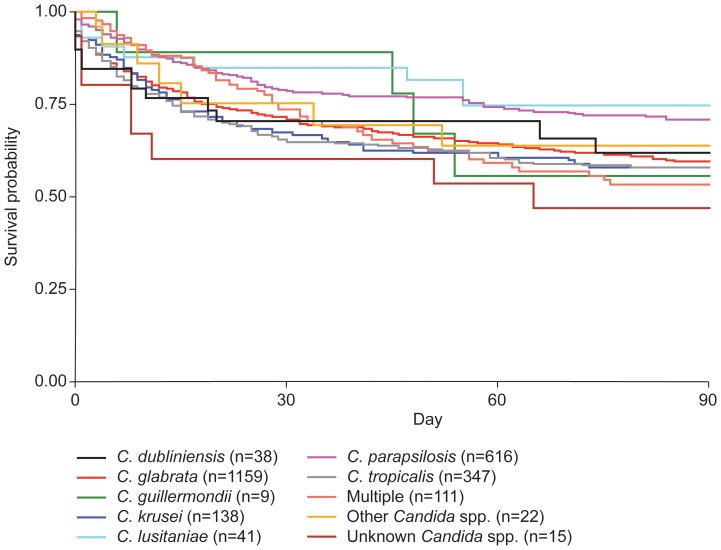
This analysis describes the epidemiology and outcomes of invasive candidiasis caused by non-albicans species of Candida in patients enrolled in the Prospective Antifungal Therapy Alliance (PATH Alliance) registry from 2004 to 2008. A total of 2,496 patients with non-albicans species of Candida isolates were identified. The identified species were C. glabrata (46.4%), C. parapsilosis (24.7%), C. tropicalis (13.9%), C. krusei (5.5%), C. lusitaniae (1.6%), C. dubliniensis (1.5%) and C. guilliermondii (0.4%); 111 infections involved two or more species of Candida (4.4%). Non-albicans species accounted for more than 50% of all cases of invasive candidiasis in 15 of the 24 sites (62.5%) that contributed more than one case to the survey. Among solid organ transplant recipients, patients with non-transplant surgery, and patients with solid tumors, the most prevalent non-albicans species was C. glabrata at 63.7%, 48.0%, and 53.8%, respectively. In 1,883 patients receiving antifungal therapy on day 3, fluconazole (30.5%) and echinocandins (47.5%) were the most frequently administered monotherapies. Among the 15 reported species, 90-day survival was highest for patients infected with either C. parapsilosis (70.7%) or C. lusitaniae (74.5%) and lowest for patients infected with an unknown species (46.7%) or two or more species (53.2%). In conclusion, this study expands the current knowledge of the epidemiology and outcomes of invasive candidiasis caused by non-albicans species of Candida in North America. The variability in species distribution in these centers underscores the importance of local epidemiology in guiding the selection of antifungal therapy.
Conflict of interest statement
Figures
References
-
- Pfaller MA, Diekema DJ (2010) Epidemiology of invasive mycoses in North America. Crit Rev Microbiol 36: 1–53. - PubMed
-
- Pfaller MA, Diekema D (2012) The epidemiology of invasive candidiasis. In: Calderone RA, editor. Candida and candidiasis. 2 ed. Washington DC: ASM Press. 449–480.
Publication types
MeSH terms
Substances
LinkOut - more resources
Full Text Sources
Other Literature Sources
