


Tranilast increases vasodilator response to acetylcholine in rat mesenteric resistance arteries through increased EDHF participation
- PMID: 24992476
- PMCID: PMC4081117
- DOI: 10.1371/journal.pone.0100356
Tranilast increases vasodilator response to acetylcholine in rat mesenteric resistance arteries through increased EDHF participation
Abstract
Background and purpose: Tranilast, in addition to its capacity to inhibit mast cell degranulation, has other biological effects, including inhibition of reactive oxygen species, cytokines, leukotrienes and prostaglandin release. In the current study, we analyzed whether tranilast could alter endothelial function in rat mesenteric resistance arteries (MRA).
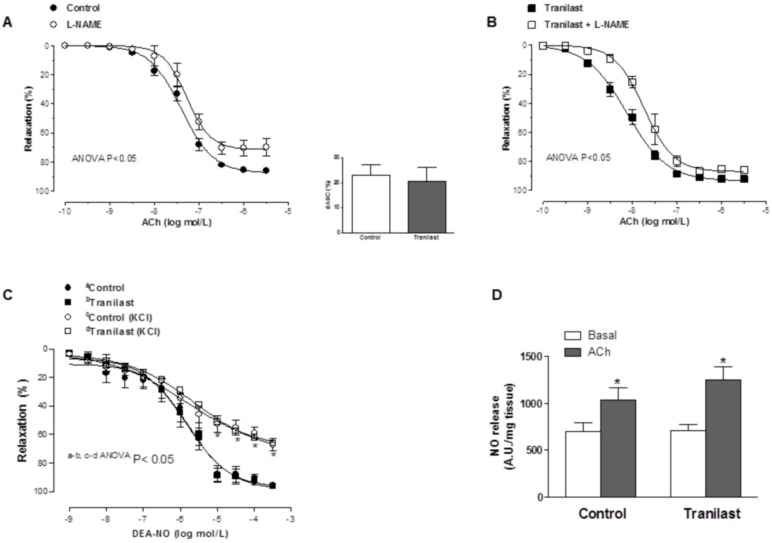
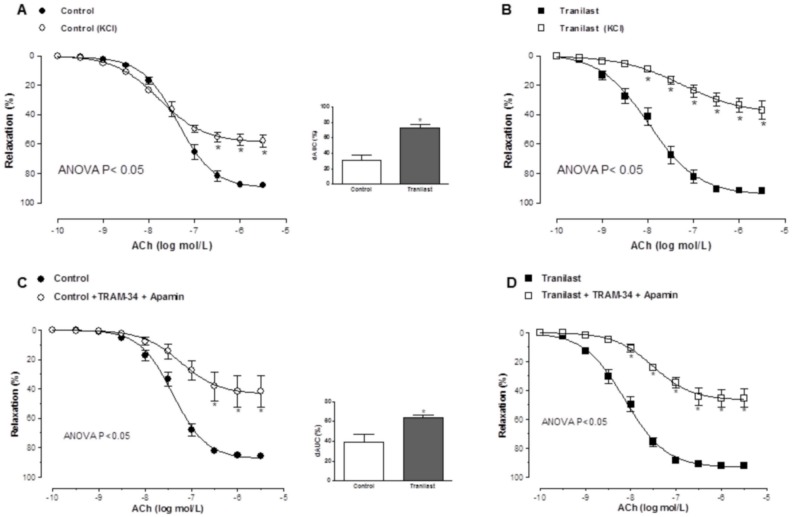
Experimental approach: Acetylcholine-induced relaxation was analyzed in MRA (untreated and 1-hour tranilast treatment) from 6 month-old Wistar rats. To assess the possible participation of endothelial nitric oxide or prostanoids, acetylcholine-induced relaxation was analyzed in the presence of L-NAME or indomethacin. The participation of endothelium-derived hyperpolarizing factor (EDHF) in acetylcholine-induced response was analyzed by preincubation with TRAM-34 plus apamin or by precontraction with a high K+ solution. Nitric oxide (NO) and superoxide anion levels were measured, as well as vasomotor responses to NO donor DEA-NO and to large conductance calcium-activated potassium channel opener NS1619.
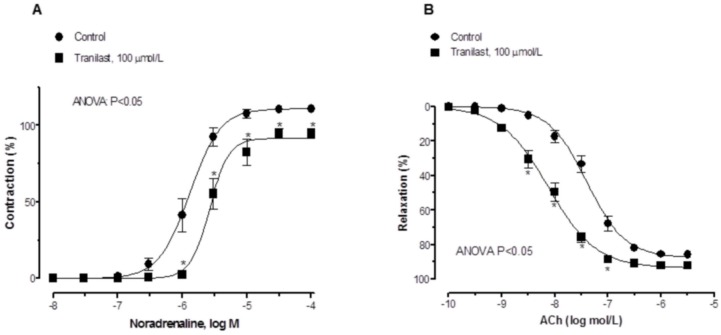
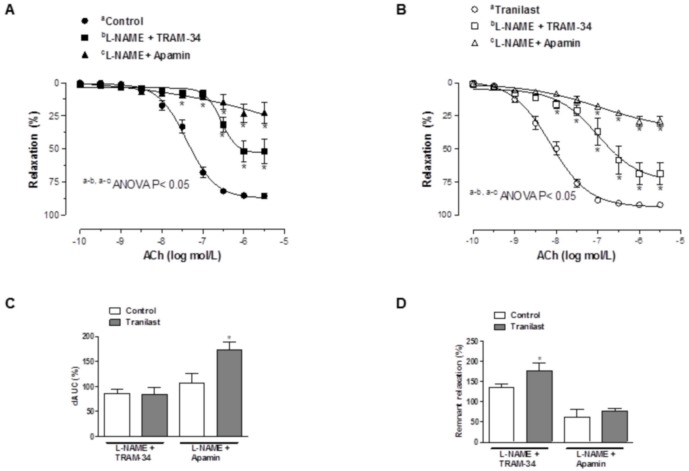
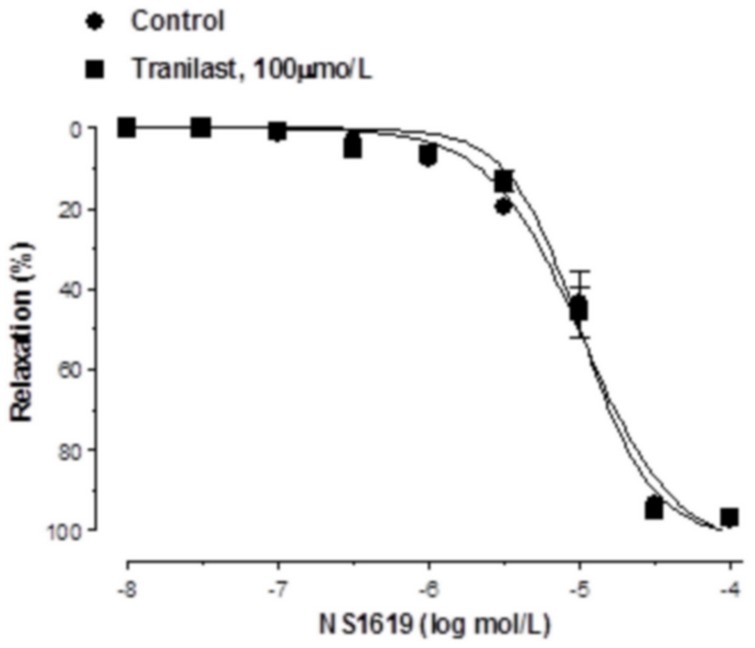
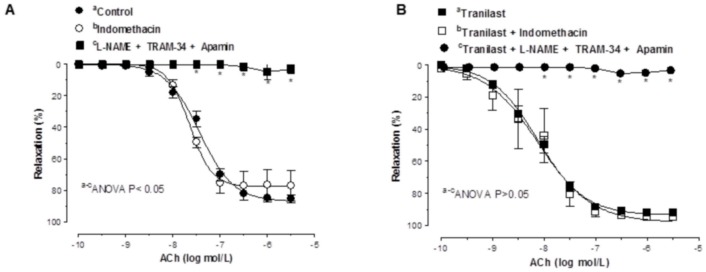
Key results: Acetylcholine-induced relaxation was greater in tranilast-incubated MRA. Acetylcholine-induced vasodilation was decreased by L-NAME in a similar manner in both experimental groups. Indomethacin did not modify vasodilation. Preincubation with a high K+ solution or TRAM-34 plus apamin reduced the vasodilation to ACh more markedly in tranilast-incubated segments. NO and superoxide anion production, and vasodilator responses to DEA-NO or NS1619 remained unmodified in the presence of tranilast.
Conclusions and implications: Tranilast increased the endothelium-dependent relaxation to acetylcholine in rat MRA. This effect is independent of the nitric oxide and cyclooxygenase pathways but involves EDHF, and is mediated by an increased role of small conductance calcium-activated K+ channels.
Conflict of interest statement
Figures
References
-
- Takala J (1996) Determinants of splanchnic blood flow. Br J Anaesth 77: 50–58. - PubMed
-
- Ribatti D, Crivellato E, Vacca A (2012) Inflammation and antiangiogenesis in cancer. Curr Med Chem 19: 955–960. - PubMed
-
- Bot I, Biessen EA (2011) Mast cells in atherosclerosis. Thromb Haemost 106: 820–826. - PubMed
Publication types
MeSH terms
Substances
LinkOut - more resources
Full Text Sources
Other Literature Sources
