


Evaluation of ethanol vortex ELISA for detection of bovine tuberculosis in cattle and deer
- PMID: 24992970
- PMCID: PMC4096425
- DOI: 10.1186/1746-6148-10-147
Evaluation of ethanol vortex ELISA for detection of bovine tuberculosis in cattle and deer
Abstract
Background: The use of serological assays for diagnosis of bovine tuberculosis (TB) has been intensively studied and use of specific antigens have aided in improving the diagnostic accuracy of the assays. In the present study, we report an in-house enzyme linked immunosorbent assay (ELISA), developed by using ethanol extract of Mycobacterium bovis (M. bovis). The assay, named (ethanol vortex ELISA [EVELISA]), was evaluated for detection of anti- M. bovis antibodies in the sera of cattle and white-tailed deer.
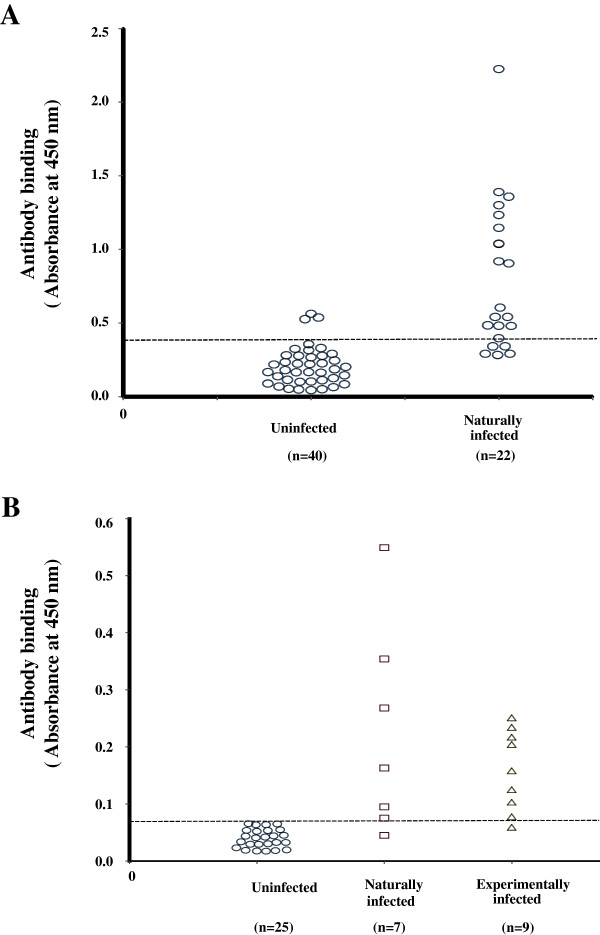
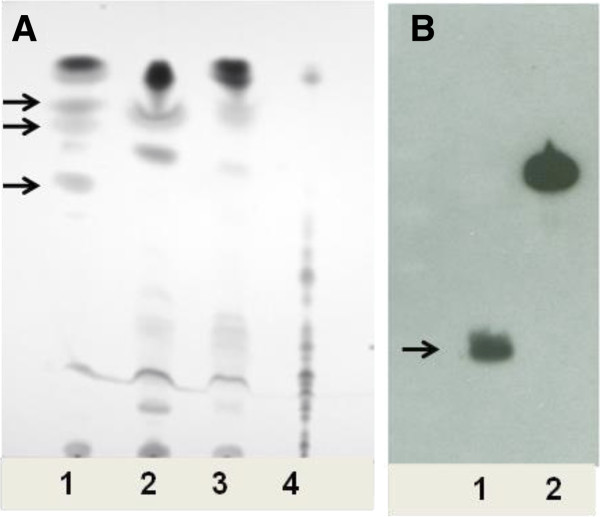
Methods: By using the EVELISA, we tested sera obtained from two species of animals; cattle (n = 62 [uninfected, n = 40; naturally infected, n = 22]) and white-tailed deer (n = 41 [uninfected, n = 25; naturally infected, n = 7; experimentally infected, n = 9]). To detect species specific molecules, components in the ethanol extract were analyzed by thin layer chromatography and western blotting.
Results: Among the tested animals, 77.2% of infected cattle and 87.5% of infected deer tested positive for anti- M. bovis antibody. There were only minor false positive reactions (7.5% in cattle and 0% in deer) in uninfected animals. M. bovis -specific lipids and protein (MPB83) in the ethanol extract were detected by thin layer chromatography and western blotting, respectively.
Conclusion: The results warrant further evaluation and validation of EVELISA for bovine TB diagnosis of traditional and alternative livestock as well as for free-ranging animal species.
Figures
References
-
- Michel AL, Muller B, van Helden PD. Mycobacterium bovis at the animal-human interface: a problem, or not? Vet Microbiol. 2010;140(3–4):371–381. - PubMed
-
- Smith NH, Gordon SV, de la Rua-Domenech R, Clifton-Hadley RS, Hewinson RG. Bottlenecks and broomsticks: the molecular evolution of Mycobacterium bovis. Nat Rev Microbiol. 2006;4(9):670–681. - PubMed
-
- United States Animal Health Association. The Future of the National Tuberculosis Program Report. Denver, Colorado: Unites States Animal Health Association; 2009.
Publication types
MeSH terms
Substances
LinkOut - more resources
Full Text Sources
Other Literature Sources
Medical
