


A nomogram to predict loco-regional control after re-irradiation for head and neck cancer
- PMID: 24993329
- PMCID: PMC5125394
- DOI: 10.1016/j.radonc.2014.06.003
A nomogram to predict loco-regional control after re-irradiation for head and neck cancer
Abstract
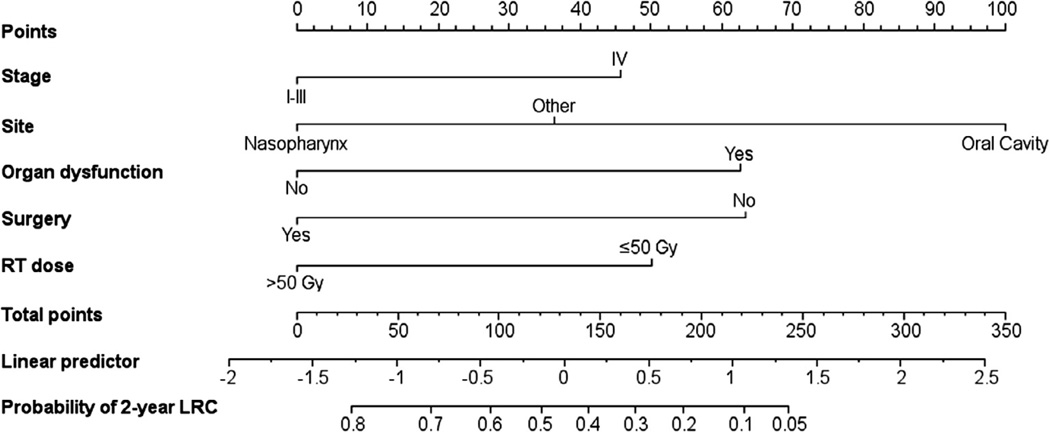
Background and purpose: Loco-regionally recurrent head and neck cancer (HNC) in the setting of prior radiotherapy carries significant morbidity and mortality. The role of re-irradiation (re-RT) remains unclear due to toxicity. We determined prognostic factors for loco-regional control (LRC) and formulated a nomogram to help clinicians select re-RT candidates.
Material and methods: From July 1996 to April 2011, 257 patients with recurrent HNC underwent fractionated re-RT. Median prior dose was 65 Gy and median time between RT was 32.4 months. One hundred fifteen patients (44%) had salvage surgery and 172 (67%) received concurrent chemotherapy. Median re-RT dose was 59.4 Gy and 201 (78%) patients received IMRT. Multivariate Cox proportional hazards were used to identify independent predictors of LRC and a nomogram for 2-year LRC was constructed.
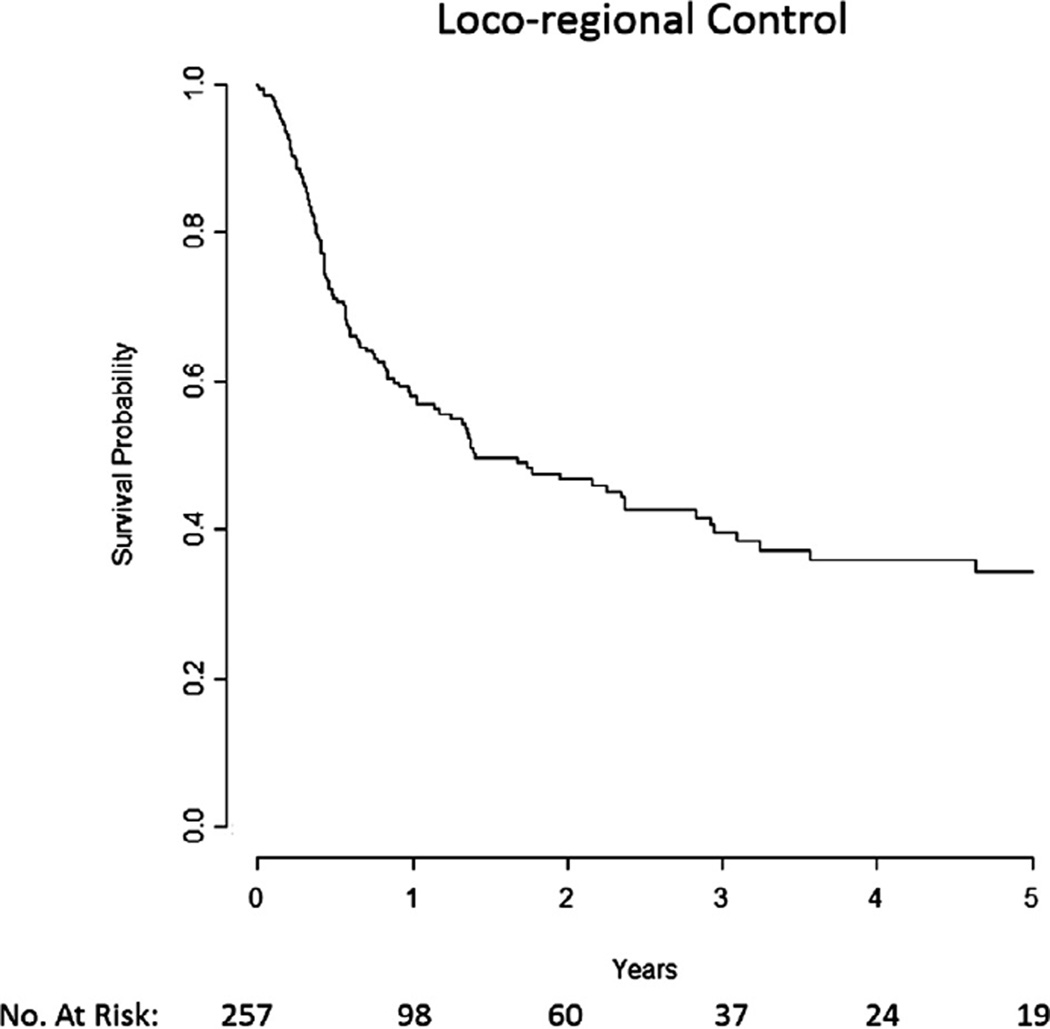
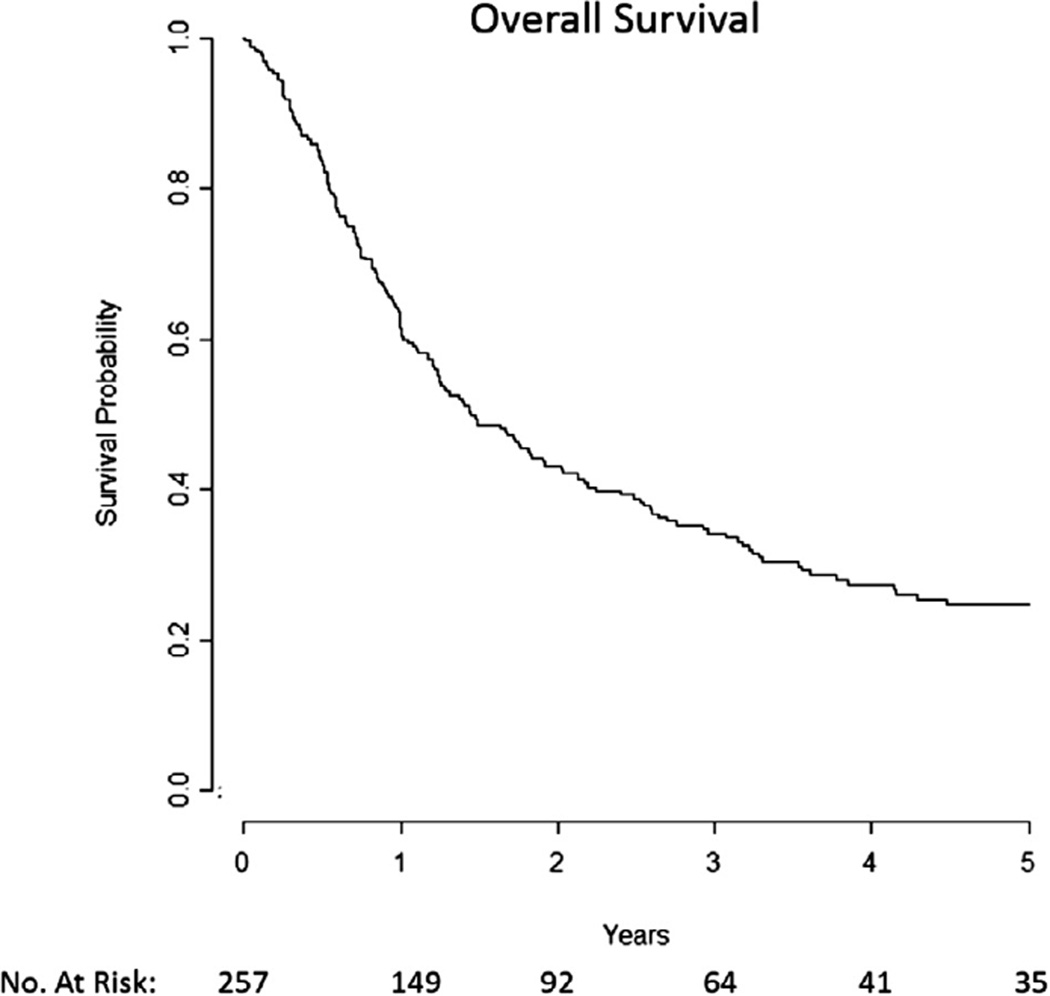
Results: Median follow-up was 32.6 months. Two-year LRC and overall survival (OS) were 47% and 43%, respectively. Recurrent stage (P=0.005), non-oral cavity subsite (P<0.001), absent organ dysfunction (P<0.001), salvage surgery (P<0.001), and dose >50 Gy (P=0.006) were independently associated with improved LRC. We generated a nomogram with concordance index of 0.68.
Conclusion: Re-RT can be curative, and our nomogram can help determine a priori which patients may benefit.
Keywords: Head and neck cancer; Intensity modulated radiation therapy; Re-irradiation; Recurrent head and neck cancer.
Copyright © 2014 Elsevier Ireland Ltd. All rights reserved.
Conflict of interest statement
There are no financial disclosures from any authors.
Figures
References
-
- Weber RS, Berkey BA, Forastiere A, et al. Outcome of salvage total laryngectomy following organ preservation therapy: the Radiation Therapy Oncology Group trial 91–11. Arch Otolaryngol Head Neck Surg. 2003;129:44–49. - PubMed
-
- Cooper JS, Pajak TF, Forastiere AA, et al. Postoperative concurrent radiotherapy and chemotherapy for high-risk squamous-cell carcinoma of the head and neck. N Engl J Med. 2004;350:1937–1944. - PubMed
-
- Setton J, Caria N, Romanyshyn J, et al. Intensity-modulated radiotherapy in the treatment of oropharyngeal cancer: an update of the Memorial Sloan-Kettering Cancer Center experience. Int J Radiat Oncol Biol Phys. 2012;82:291–298. - PubMed
MeSH terms
Grants and funding
LinkOut - more resources
Full Text Sources
Other Literature Sources
Medical
Miscellaneous
