


CD19 as a molecular target in CNS autoimmunity
- PMID: 24993505
- PMCID: PMC4296724
- DOI: 10.1007/s00401-014-1313-z
CD19 as a molecular target in CNS autoimmunity
Abstract
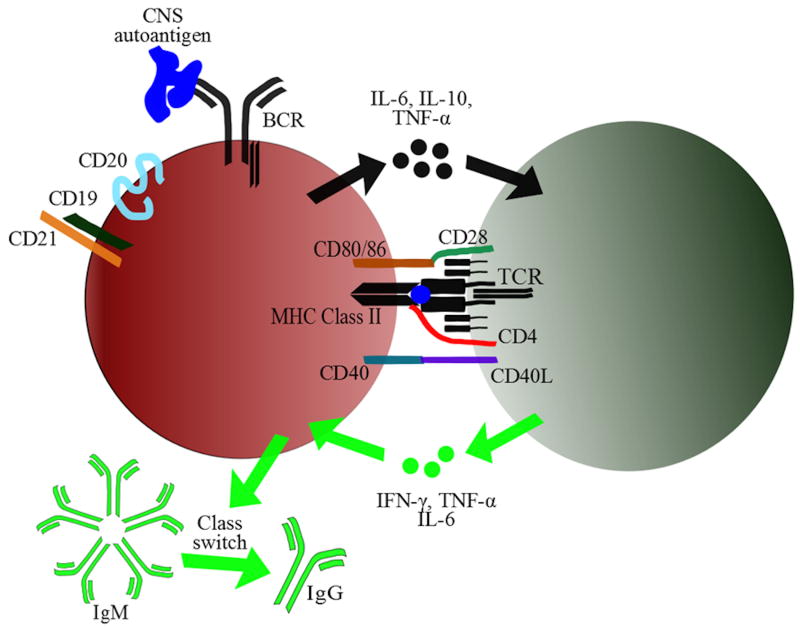
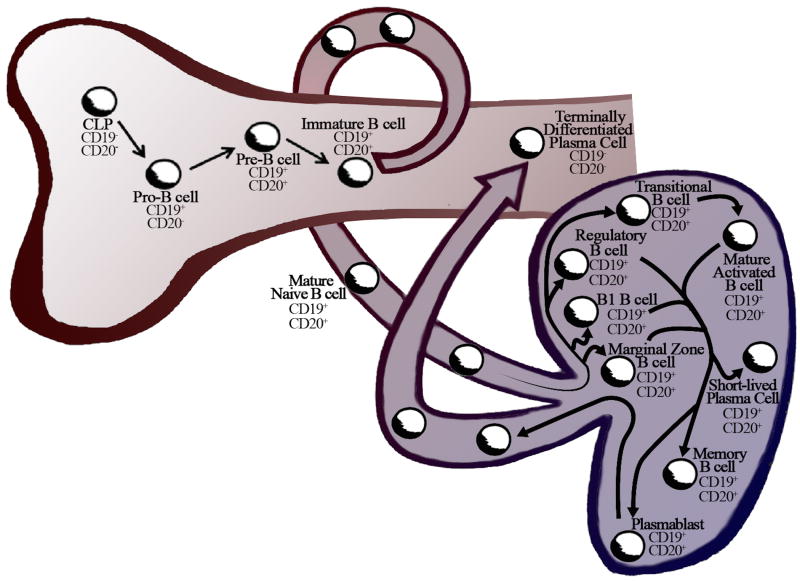
Multiple sclerosis (MS) and neuromyelitis optica (NMO) are the most prevalent neuroinflammatory diseases of the central nervous system (CNS). The immunological cascade of these disorders is complex, and the exact spatial and temporal role of different immune cells is not fully understood. Although MS has been considered for many years to be primarily T cell driven, it is well established that B cells and the humoral immune response play an important role in its pathogenesis. This has long been evident from laboratory findings that include the presence of oligoclonal bands in the CSF. In NMO, the importance of the humoral immune system appears even more obvious as evidenced by pathogenic antibodies against aquaporin 4 (AQP4). Besides their capacity to mature into antibody-producing plasma cells, B cells are potent antigen-presenting cells to T lymphocytes and they can provide soluble factors for cell activation and differentiation to other immune-competent cells. In MS and NMO, there are substantial data from clinical trials that B cell depletion with CD20-directed agents is effective and relatively safe. Plasma cells, which produce antibodies against molecular targets expressed by the host, but which also provide humoral immune responses against pathogens, are not targeted by anti-CD20 therapies. Therefore, the depletion of CD19-expressing cells would offer potential advantages with regard to efficacy, but potentially higher risks with regard to infectious complications. This review will outline the rationale for CD19 as a molecular target in CNS autoimmunity. The current stage of drug development is illustrated. Potential safety concerns will be discussed.
Figures
References
-
- Shen P, Roch T, Lampropoulou V, O'Connor RA, Stervbo U, Hilgenberg E, Ries S, Dang VD, Jaimes Y, Daridon C, Li R, Jouneau L, Boudinot P, Wilantri S, Sakwa I, Miyazaki Y, Leech MD, McPherson RC, Wirtz S, Neurath M, Hoehlig K, Meinl E, Grutzkau A, Grun JR, Horn K, Kuhl AA, Dorner T, Bar-Or A, Kaufmann SH, Anderton SM, Fillatreau S. IL-35-producing B cells are critical regulators of immunity during autoimmune and infectious diseases. Nature. 2014;507(7492):366–370. doi: 10.1038/nature12979. - DOI - PMC - PubMed
-
- Pistoia V. Production of cytokines by human B cells in health and disease. Immunol Today. 1997;18(7):343–350. - PubMed
-
- Harris DP, Goodrich S, Gerth AJ, Peng SL, Lund FE. Regulation of IFN-gamma production by B effector 1 cells: essential roles for T-bet and the IFN-gamma receptor. J Immunol. 2005;174(11):6781–6790. - PubMed
-
- Harris DP, Goodrich S, Mohrs K, Mohrs M, Lund FE. Cutting edge: the development of IL-4-producing B cells (B effector 2 cells) is controlled by IL-4, IL-4 receptor alpha, and Th2 cells. Journal of immunology. 2005;175(11):7103–7107. - PubMed
Publication types
MeSH terms
Substances
Grants and funding
LinkOut - more resources
Full Text Sources
Other Literature Sources
Medical
Molecular Biology Databases
