Review
. 2014:125:113-31.
doi: 10.1016/B978-0-12-397898-1.00005-0.

Telomeres in molecular epidemiology studies

Affiliations
Review

Telomeres in molecular epidemiology studies

Clara Bodelon et al. Prog Mol Biol Transl Sci. 2014.

Abstract

Telomeres are long nucleotide repeats and protein complexes at the ends of chromosomes that are essential for maintaining chromosomal stability. They shorten with each cell division, and therefore, telomere length is a marker for cellular aging and senescence. Epidemiological research of telomeres investigates the role that these genetic structures have in disease risk and mortality in human populations. This chapter provides an overview of the current telomere epidemiology research and discusses approaches taken in these investigations. We also highlight important methodological considerations that may affect data interpretation.

Keywords: Association studies; Epidemiology; Telomere; Telomere length.


Figures

Figure 1:
Figure 1:
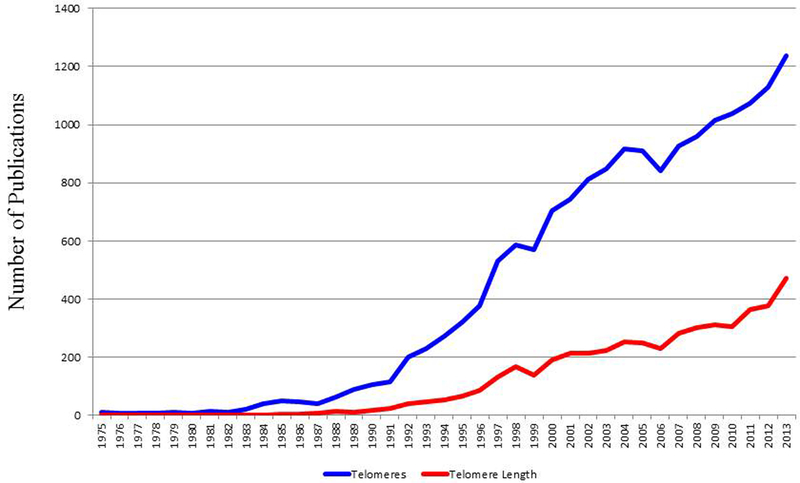
Number of telomere-related PubMed indexed publications and the observed rising trend overtime
Figure 2:
Figure 2:
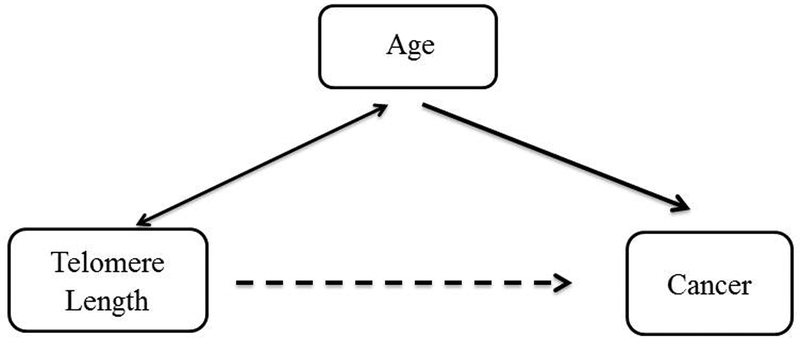
A schematic diagram describing confounding. The bidirectional arrow represents a non-causal association, the unidirectional arrow represents a causal association, and the dashed line represents the observed association
Figure 3:
Figure 3:
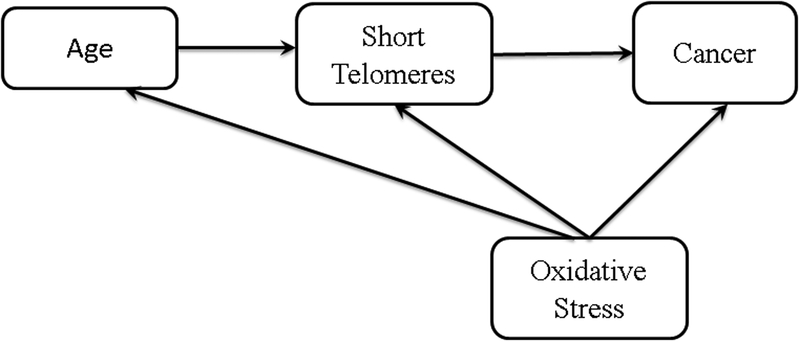
A schematic diagram describing mediation where short telomeres are in the causal pathway of age and cancer

References

    1. Harley CB, Futcher AB, Greider CW. Telomeres shorten during ageing of human fibroblasts. Nature. 1990; 345:458–60. - PubMed
    1. Warters M, Griffen AB. The telomeres of Drosophila. J Hered. 1950; 41:182–90. - PubMed
    1. Frenck RW Jr., Blackburn EH, Shannon KM. The rate of telomere sequence loss in human leukocytes varies with age. ProcNatlAcadSciUSA. 1998; 95:5607–10. - PMC - PubMed
    1. Hunt SC, Chen W, Gardner JP, Kimura M, Srinivasan SR, Eckfeldt JH, et al. Leukocyte telomeres are longer in African Americans than in whites: the National Heart, Lung, and Blood Institute Family Heart Study and the Bogalusa Heart Study. Aging Cell. 2008; 7:451–8. - PMC - PubMed
    1. Alter BP, Baerlocher GM, Savage SA, Chanock SJ, Weksler BB, Willner JP, et al. Very short telomere length by flow fluorescence in situ hybridization identifies patients with dyskeratosis congenita. Blood. 2007; 110:1439–47. - PMC - PubMed

Publication types