


Assessing neurocognitive function in psychiatric disorders: a roadmap for enhancing consensus
- PMID: 24994503
- PMCID: PMC4250359
- DOI: 10.1016/j.nlm.2014.06.011
Assessing neurocognitive function in psychiatric disorders: a roadmap for enhancing consensus
Abstract
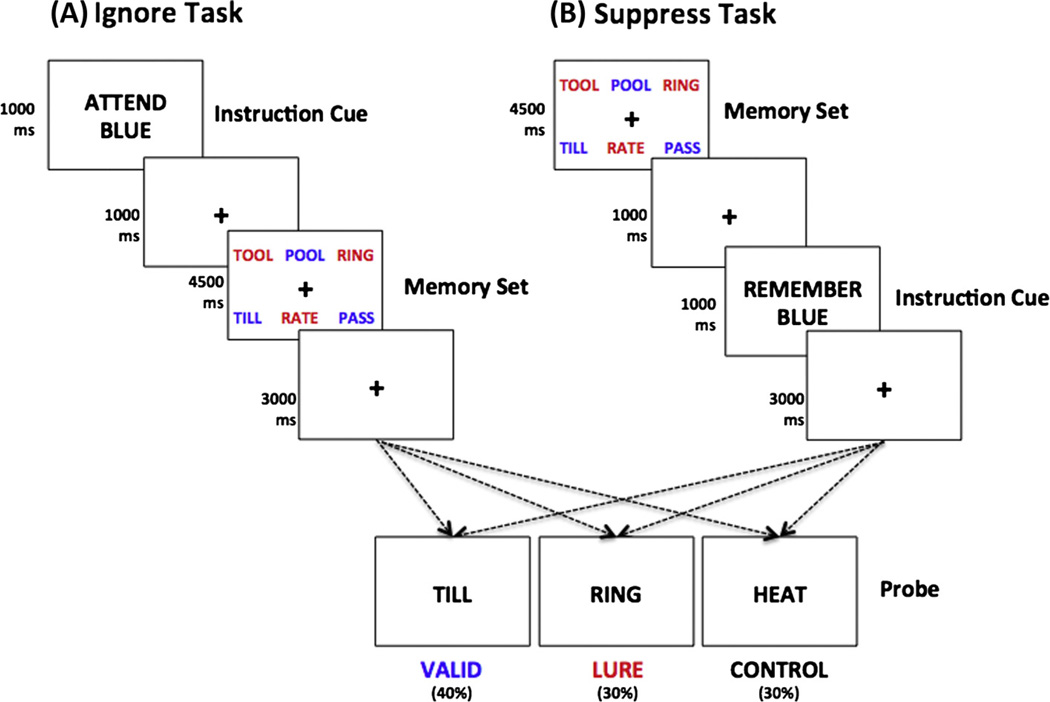
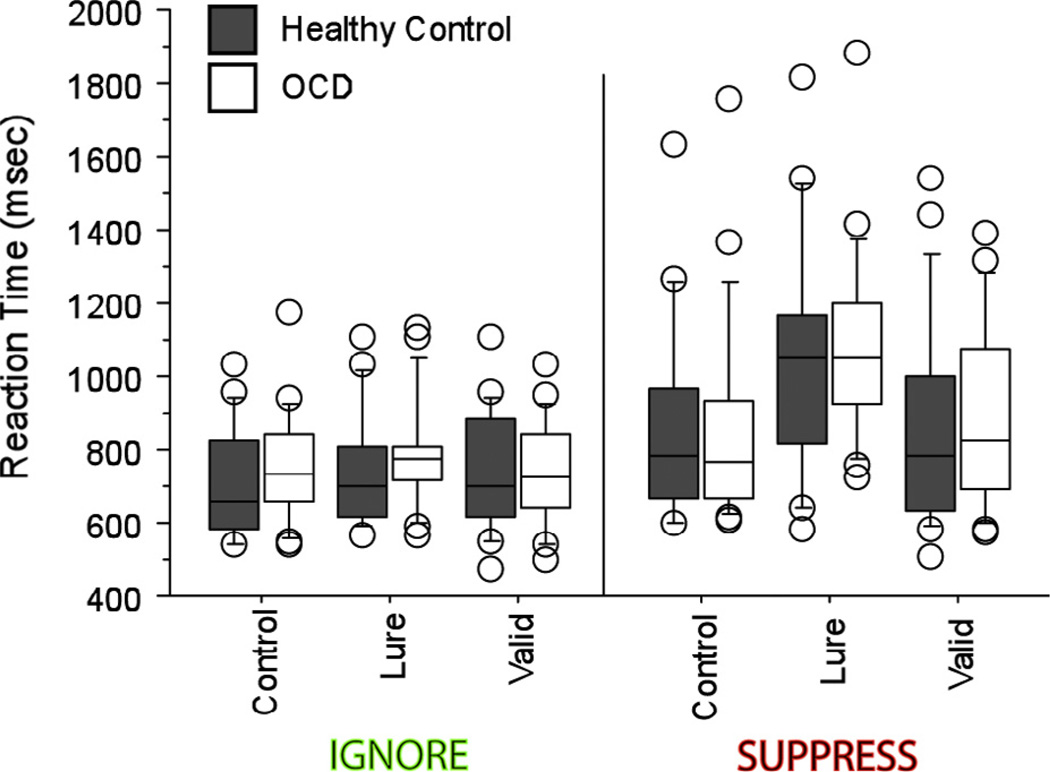
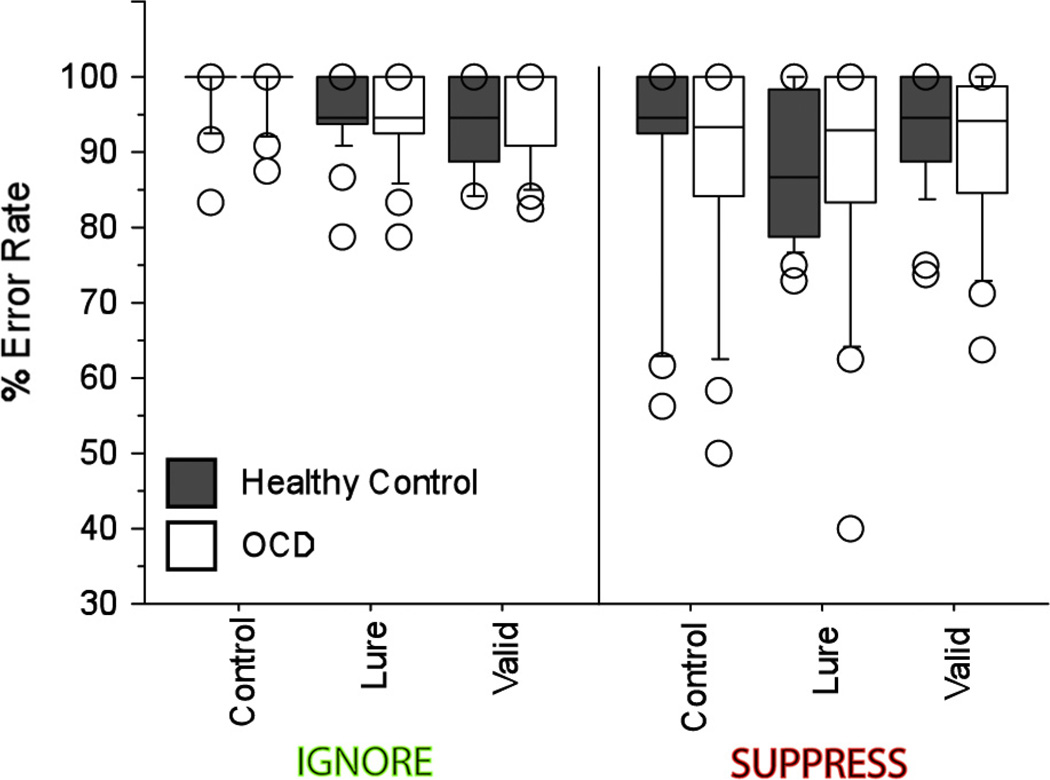
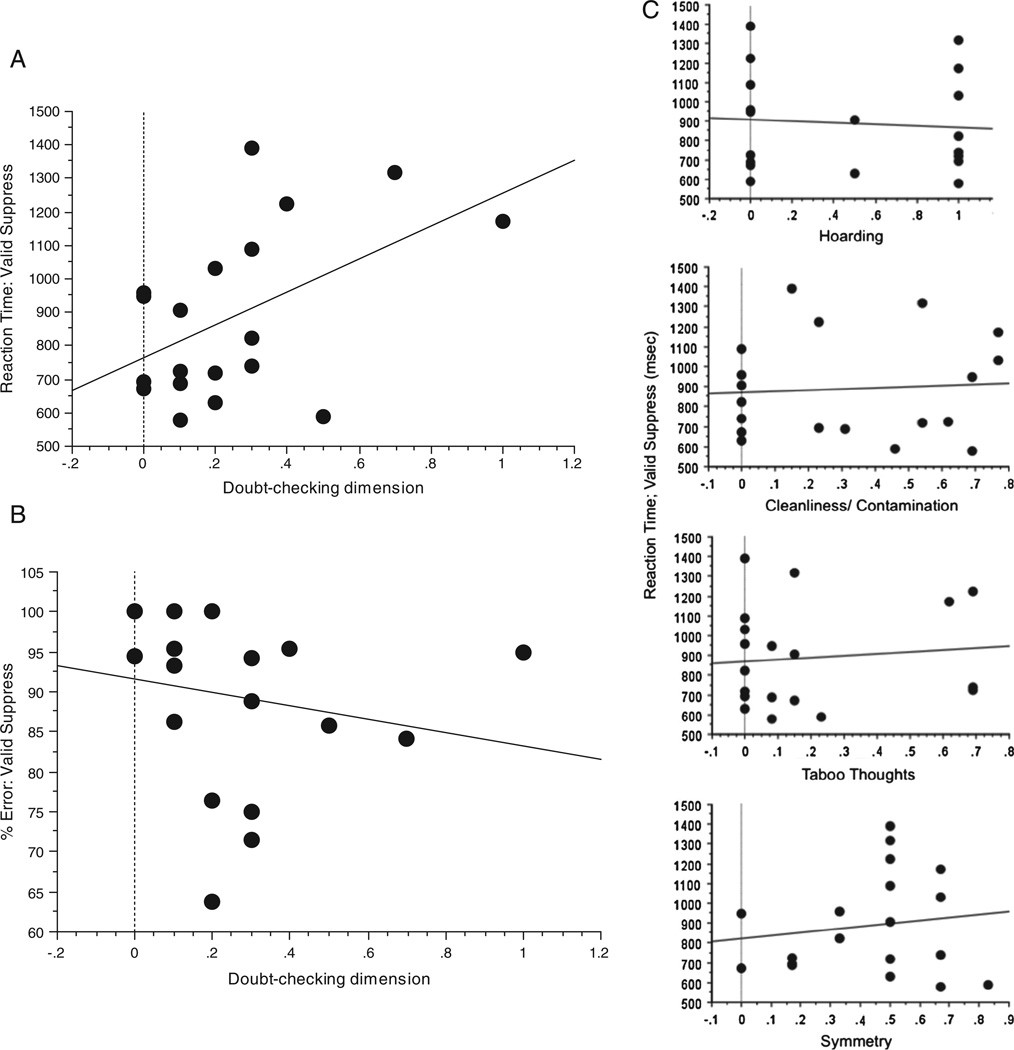
It has been challenging to identify core neurocognitive deficits that are consistent across multiple studies in patients with Obsessive Compulsive Disorder (OCD). In turn, this leads to difficulty in translating findings from human studies into animal models to dissect pathophysiology. In this article, we use primary data from a working memory task in OCD patients to illustrate this issue. Working memory deficiencies have been proposed as an explanatory model for the evolution of checking compulsions in a subset of OCD patients. However, findings have been mixed due to variability in task design, examination of spatial vs. verbal working memory, and heterogeneity in patient populations. Two major questions therefore remain: first, do OCD patients have disturbances in working memory? Second, if there are working memory deficits in OCD, do they cause checking compulsions? In order to investigate these questions, we tested 19 unmedicated OCD patients and 23 matched healthy controls using a verbal working memory task that has increased difficulty/task-load compared to classic digit-span tasks. OCD patients did not significantly differ in their performance on this task compared to healthy controls, regardless of the outcome measure used (i.e. reaction time or accuracy). Exploratory analyses suggest that a subset of patients with predominant doubt/checking symptoms may have decreased memory confidence despite normal performance on trials with the highest working memory load. These results suggest that other etiologic factors for checking compulsions should be considered. In addition, they serve as a touchstone for discussion, and therefore help us to generate a roadmap for increasing consensus in the assessment of neurocognitive function in psychiatric disorders.
Keywords: Checking; Ignore-Suppress; Neurocognitive; Obsessive Compulsive Disorder (OCD); Serotonin reuptake inhibitors (SRIs); Working memory.
Copyright © 2014 Elsevier Inc. All rights reserved.
Figures
References
-
- Abbruzzese M, Ferri S, Scarone S. The selective breakdown of frontal functions in patients with obsessive-compulsive disorder and in patients with schizophrenia: A double dissociation experimental finding. Neuropsychologia. 1997;35:907–912. pii: S0028-3932(96)00095-4. - PubMed
-
- Abramovitch A, Abramowitz JS, Mittelman A. The neuropsychology of adult obsessive-compulsive disorder: A meta-analysis. Clinical Psychology Review. 2013;33:1163–1171. pii: 10.1016/j.cpr.2013.09.004S0272-7358(13)00130-X. - PubMed
-
- Alderson RM, Kasper LJ, Hudec KL, Patros CH. Attention-deficit/hyperactivity disorder (ADHD) and working memory in adults: A meta-analytic review. Neuropsychology. 2013;27:287–302. pii: 10.1037/a00323712013-16996-001. - PubMed
Publication types
MeSH terms
Grants and funding
LinkOut - more resources
Full Text Sources
Other Literature Sources
Medical
