


The destiny of Ca(2+) released by mitochondria
- PMID: 24994533
- PMCID: PMC4276810
- DOI: 10.1007/s12576-014-0326-7
The destiny of Ca(2+) released by mitochondria
Abstract
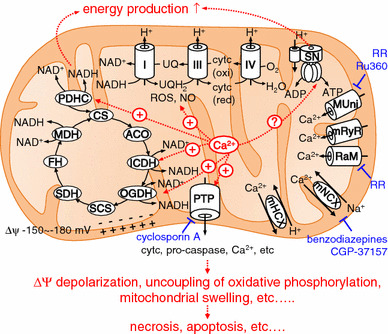
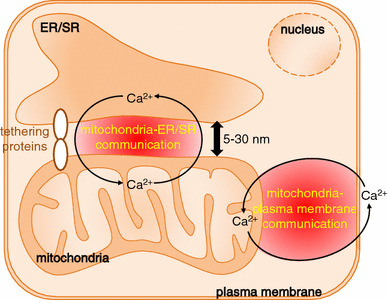
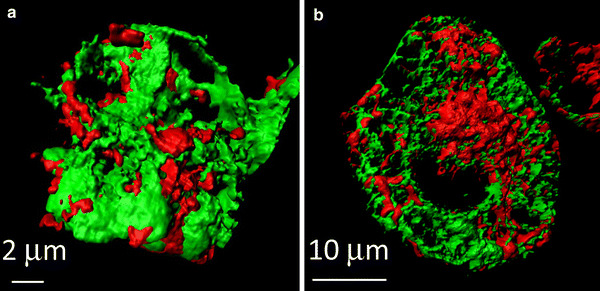
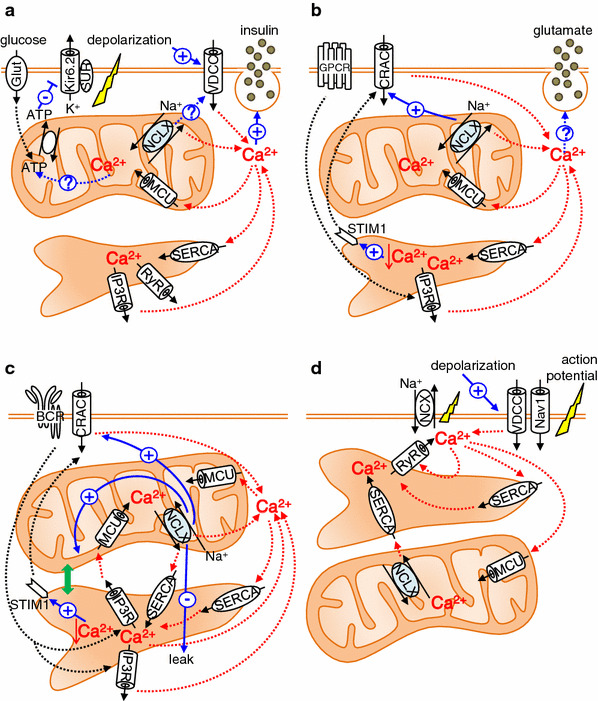
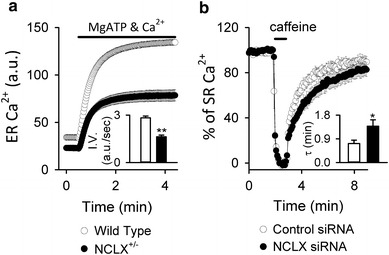
Mitochondrial Ca(2+) is known to regulate diverse cellular functions, for example energy production and cell death, by modulating mitochondrial dehydrogenases, inducing production of reactive oxygen species, and opening mitochondrial permeability transition pores. In addition to the action of Ca(2+) within mitochondria, Ca(2+) released from mitochondria is also important in a variety of cellular functions. In the last 5 years, the molecules responsible for mitochondrial Ca(2+) dynamics have been identified: a mitochondrial Ca(2+) uniporter (MCU), a mitochondrial Na(+)-Ca(2+) exchanger (NCLX), and a candidate for a mitochondrial H(+)-Ca(2+) exchanger (Letm1). In this review, we focus on the mitochondrial Ca(2+) release system, and discuss its physiological and pathophysiological significance. Accumulating evidence suggests that the mitochondrial Ca(2+) release system is not only crucial in maintaining mitochondrial Ca(2+) homeostasis but also participates in the Ca(2+) crosstalk between mitochondria and the plasma membrane and between mitochondria and the endoplasmic/sarcoplasmic reticulum.
Conflict of interest statement
The authors declare that they have no conflict of interest.
Figures
References
-
- Bernardi P. Mitochondrial transport of cations: channels, exchangers, and permeability transition. Physiol Rev. 1999;79:1127–1155. - PubMed
Publication types
MeSH terms
Substances
LinkOut - more resources
Full Text Sources
Other Literature Sources
Miscellaneous
