


Functional characterization of G-protein-coupled receptors: a bioinformatics approach
- PMID: 24997265
- PMCID: PMC4164567
- DOI: 10.1016/j.neuroscience.2014.06.049
Functional characterization of G-protein-coupled receptors: a bioinformatics approach
Abstract
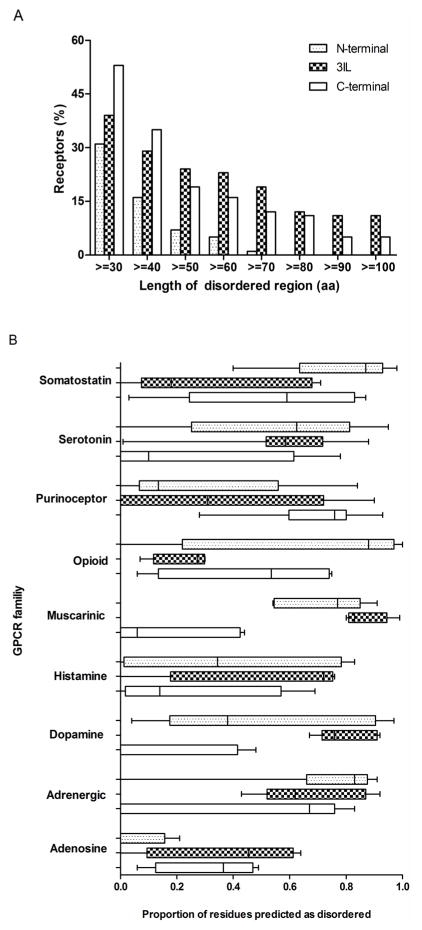
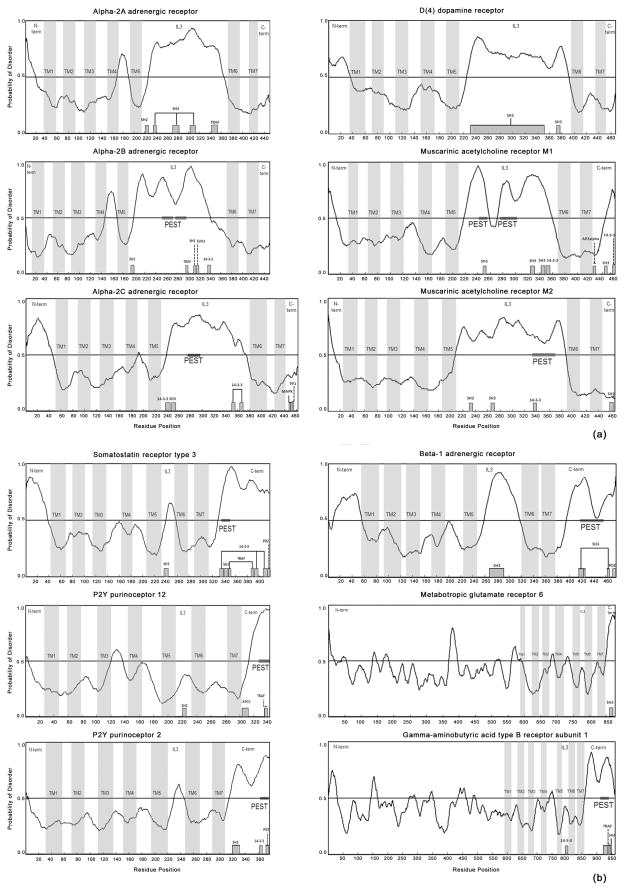
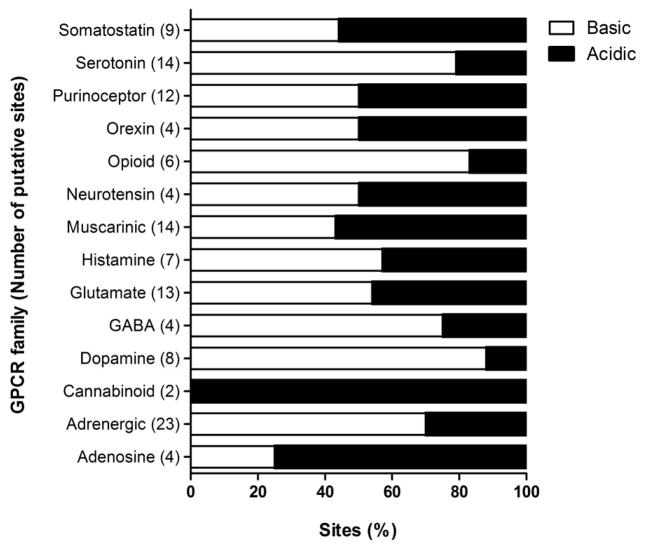
Complex molecular and cellular mechanisms regulate G protein-coupled receptors (GPCRs). It is suggested that proteins intrinsically disordered regions (IDRs) are to play a role in GPCR's intra and extracellular regions plasticity, due to their potential for post-translational modification and interaction with other proteins. These regions are defined as lacking a stable three-dimensional (3D) structure. They are rich in hydrophilic and charged, amino acids and are capable to assume different conformations which allow them to interact with multiple partners. In this study we analyzed 75 GPCR involved in synaptic transmission using computational tools for sequence-based prediction of IDRs within a protein. We also evaluated putative ligand-binding motifs using receptor sequences. The disorder analysis indicated that neurotransmitter GPCRs have a significant amount of disorder in their N-terminus, third intracellular loop (3IL) and C-terminus. About 31%, 39% and 53% of human GPCR involved in synaptic transmission are disordered in these regions. Thirty-three percent of receptors show at least one predicted PEST motif, this being statistically greater than the estimate for the rest of human GPCRs. About 90% of the receptors had at least one putative site for dimerization in their 3IL or C-terminus. ELM instances sampled in these domains were 14-3-3, SH3, SH2 and PDZ motifs. In conclusion, the increased flexibility observed in GPCRs, added to the enrichment of linear motifs, PEST and heteromerization sites, may be critical for the nervous system's functional plasticity.
Keywords: GPCR; disordered proteins; linear motifs; noncovalent interactions; pest motifs.
Published by Elsevier Ltd.
Conflict of interest statement
Dr Rohde was on the speakers’ bureau and/or acted as consultant for Eli-Lilly, Janssen-Cilag, Novartis and Shire in the last 3 years. The ADHD and Juvenile Bipolar Disorder Outpatient Programs chaired by him received unrestricted educational and research support from the following pharmaceutical companies in the last 3 years: Abbott, Eli-Lilly, Janssen-Cilag, Shire and Novartis. He also receives royalties for authorship from ArtMed and Oxford Press.
Figures
References
-
- Adams CL, Cowen MS, Short JL, Lawrence AJ. Combined antagonism of glutamate mGlu5 and adenosine A2A receptors interact to regulate alcohol-seeking in rats. Int J Neuropsychopharmacol. 2008;11(2):229–41. - PubMed
-
- Agnati LF, Ferre S, Lluis C, Franco R, Fuxe K. Molecular mechanisms and therapeutical implications of intramembrane receptor/receptor interactions among heptahelical receptors with examples from the striatopallidal GABA neurons. Pharmacol Rev. 2003;55(3):509–50. - PubMed
-
- Agnati LF, et al. Allosteric modulation of dopamine D2 receptors by homocysteine. J Proteome Res. 2006;5(11):3077–83. - PubMed
-
- Agnati LF, et al. Structural plasticity in G-protein coupled receptors as demonstrated by the allosteric actions of homocysteine and computer-assisted analysis of disordered domains. Brain Res Rev. 2008;58(2):459–74. - PubMed
Publication types
MeSH terms
Substances
Grants and funding
LinkOut - more resources
Full Text Sources
Other Literature Sources
