


Totally inverted cervix due to a huge prolapsed cervical myoma simulating chronic non-puerperal uterine inversion
- PMID: 24997386
- PMCID: PMC4147577
- DOI: 10.1016/j.ijscr.2013.12.014
Totally inverted cervix due to a huge prolapsed cervical myoma simulating chronic non-puerperal uterine inversion
Abstract
Introduction: Inversion of the uterus is an extremely rare complication of the non-puerperal period and is commonly caused by benign submucous, especially fundal, leiomyomas. A case of a totally inverted cervix due to a prolapsed huge cervical leiomyoma mimicking chronic non-puerperal uterine inversion in a perimenopausal woman is presented.
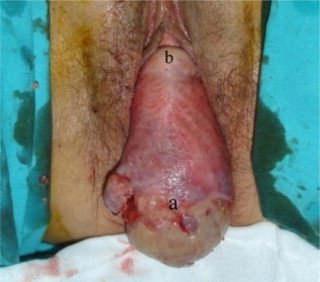
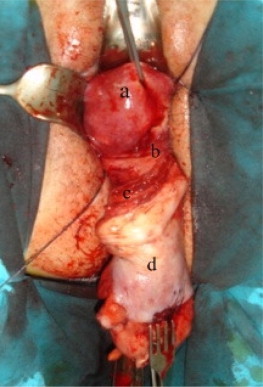
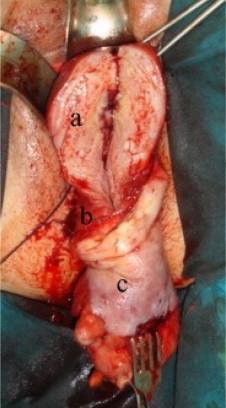
Presentation of case: A 52-year-old perimenopausal woman was admitted to our clinic with an ulcerated, necrotic, infected and swollen prolapsed mass. Gynecologic history revealed that she was advised myomectomy because of her cervical myoma 2 years ago but she refused to have an operation as she believed that her positive thoughts would shrink the myoma. Presumed diagnosis before surgery was chronic non-puerperal uterine inversion. An intraoperative diagnosis was totally inverted cervix due to a huge cervical leiomyoma. Vaginal hysterectomy without adnexectomy, was performed.
Conclusion: This is the first case in the literature which a totally inverted cervix due to a prolapsed huge cervical leiomyoma. Cervical fibroids can grow in perimenopausal period and in extremely rare cases can cause total cervical inversion.
Keywords: Cervical inversion; Prolapsed leiomyoma; Uterine inversion; Vaginal hysterectomy.
Copyright © 2014 The Authors. Published by Elsevier Ltd.. All rights reserved.
Figures
References
-
- Buttram V.C., Jr., Reiter R.C. Uterine leiomyomata: etiology, symptomatology, and management. Fertil Steril. 1981;36:433–445. - PubMed
-
- Ben-Baruch G., Schiff E., Menashe Y., Menczer J. Immediate and late outcome of vaginal myomectomy for prolapsed pedunculated submucous myoma. Obstet Gynecol. 1988;72:858–861. - PubMed
-
- Golan A., Zachalka N., Lurie S., Sagiv R., Glezerman M. Vaginal removal of prolapsed pedunculated submucous myoma: a short, simple, and definitive procedure with minimal morbidity. Arch Gynecol Obstet. 2005;271:11–13. - PubMed
-
- Tiltman A.J. Leiomyomas of the uterine cervix: a study of frequency. Int J Gynecol Pathol. 1998;17:231–234. - PubMed
LinkOut - more resources
Full Text Sources
Other Literature Sources
