Cluster randomized trial of text message reminders to retail staff in tanzanian drug shops dispensing artemether-lumefantrine: effect on dispenser knowledge and patient adherence
- PMID: 25002300
- PMCID: PMC4183415
- DOI: 10.4269/ajtmh.14-0126
Cluster randomized trial of text message reminders to retail staff in tanzanian drug shops dispensing artemether-lumefantrine: effect on dispenser knowledge and patient adherence
Abstract
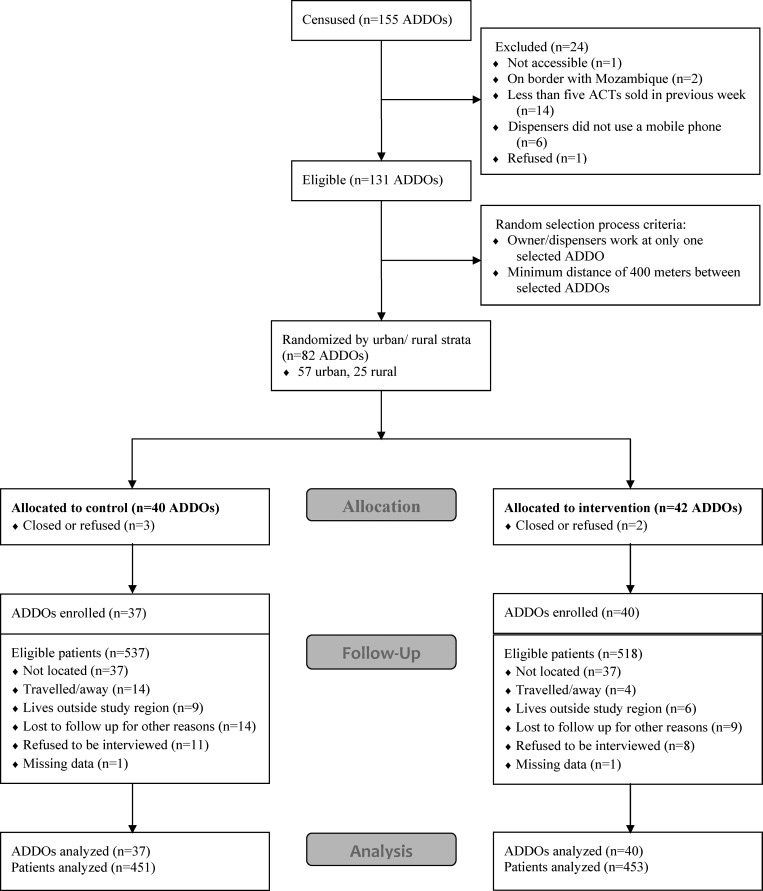
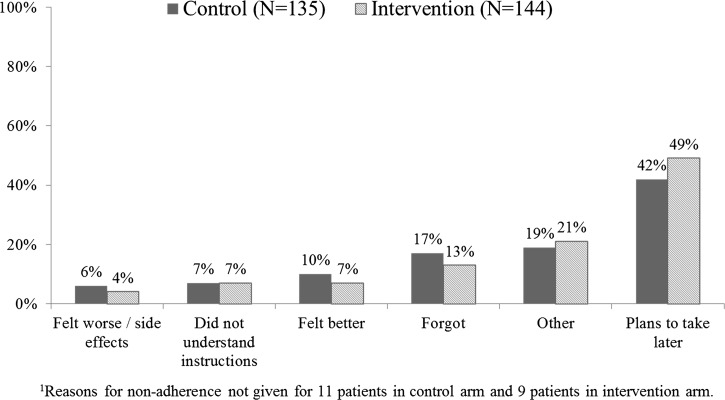
Artemisinin combination therapies are available in private outlets, but patient adherence might be compromised by poor advice from dispensers. In this cluster randomized trial in drug shops in Tanzania, 42 of 82 selected shops were randomized to receive text message reminders about what advice to provide when dispensing artemether-lumefantrine (AL). Eligible patients purchasing AL at shops in both arms were followed up at home and questioned about each dose taken. Dispensers were interviewed regarding knowledge of AL dispensing practices and receipt of the malaria-related text messages. We interviewed 904 patients and 110 dispensers from 77 shops. Although there was some improvement in dispenser knowledge, there was no difference between arms in adherence measured as completion of all doses (intervention 68.3%, control 69.8%, p [adjusted] = 0.6), or as completion of each dose at the correct time (intervention 33.1%, control 32.6%, p [adjusted] = 0.9). Further studies on the potential of text messages to improve adherence are needed.
© The American Society of Tropical Medicine and Hygiene.
Figures
References
Publication types
MeSH terms
Substances
Grants and funding
LinkOut - more resources
Full Text Sources
Other Literature Sources
Medical