


Effects of siRNA targeting BMPR-II on the biological activities of human liver cancer cells and its mechanism
- PMID: 25002834
- PMCID: PMC4083141
- DOI: 10.1186/1475-2867-14-55
Effects of siRNA targeting BMPR-II on the biological activities of human liver cancer cells and its mechanism
Abstract
Background: Bone morphogenetic protein receptor II (BMPR-II) plays an important role in tumor's invasion and proliferation. In this study, we observed the effects of small interfering RNA (siRNA) targeting bone morphogenetic protein receptor II (BMPR-II) on the biological activities of human liver cells and explore its mechanism.
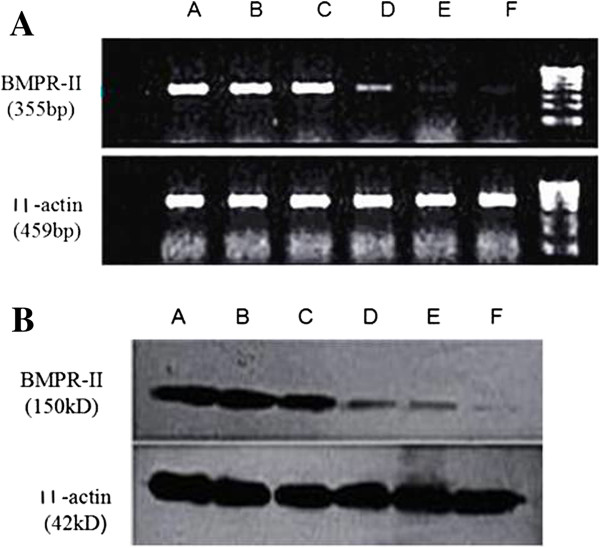
Methods: The molecular sequences of three siRNA targeting BMPR-IIwere designed and synthesized. In this study, there were 6 groups including group I (normal control), group II (blank control), group III (negative control) and group IV-VI (BMPR-II-siRNA-a, siRNA-b and siRNA-c-transfected cells, respectively). The levels of mRNA and protein of BMPR-II were determined to select the best sequence for BMPR-II silence. After liver cancer cells were transfected with the best sequence, proliferation and invasion of transfected cells were assessed, and apoptosis and cell cycle were detected. The expressions of mitogen-activated protein kinases (MAPKs) signal pathway-related VEGF-C protein were observed after BMPR-II silence and BMPR-II silence combined with inhibiting MAPKs signal pathway, respectively.
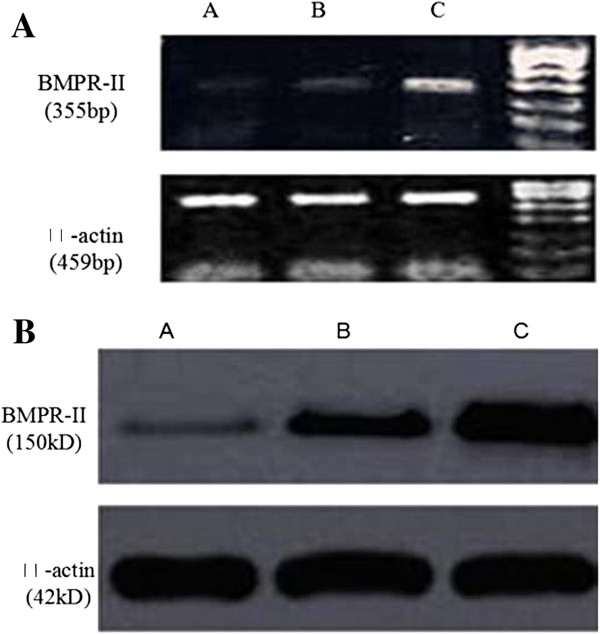
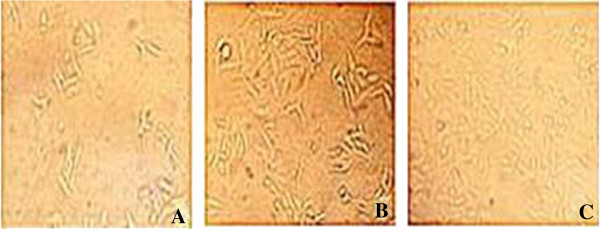
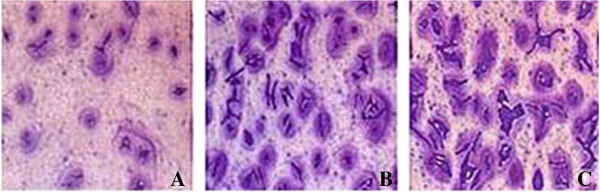
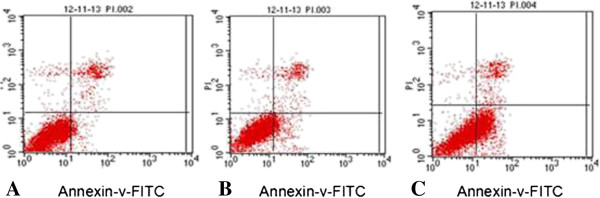
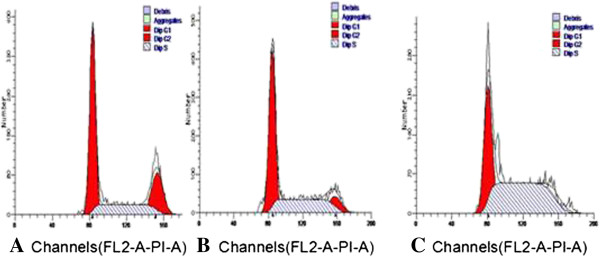
Results: RT-PCR and Western blot indicated that BMPR-II expression was the highest in HepG2 among the three liver cancer lines (P < 0.01) and the lowest in group IV among the six groups (P < 0.01). MTT assay and transwell assay revealed that the numbers of cell growth and cell transmembrane were significantly lower in group IV than in control groups 48 h after cells were transfected (P < 0.05). Flow cytometer showed that apoptosis was the highest and cells were significantly blocked in S phase 48 h after cells were transfected in group IV (P < 0.01). Western blot indicated that the protein levels of p-P38 (P < 0.01) and vascular endothelial growth factor-C (VEGF-C) (P < 0.01) were significantly decreased after BMPR-II silence. The protein level of VEGF-C was significantly decreased in PD98059 + siRNA-BMPR-II-a and SB203580 + siRNA-BMPR-II-a groups (P < 0.01), especially in SB203580 + siRNA-BMPR-II-a group (P < 0.01).
Conclusions: siRNA targeting BMPR-IIcan markedly inhibit HepG2 proliferation and invasion, promote apoptosis and block HepG2 in S phase. Its mechanism may be that BMPR-II silence down-regulates VEGF-C expression through MAPK/P38 and MAPK/ERK1/2 pathways, especially MAPK/P38. This study provides a new targeted therapy for liver cancer.
Keywords: Bone morphogenetic protein receptor II; Liver cancer; Mitogen-activated protein kinases; Small interfering RNA; Vascular endothelial growth factor-C.
Figures
References
-
- Heinke J, Kerber M, Rahner S, Mnich L, Lassmann S, Helbing T, Heinke J, Kerber M, Rahner S, Mnich L, Lassmann S, Helbing T, Werner M, Patterson C, Bode C, Moser M. Bone morphogenetic protein modulator BMPER is highly expressed in malignant tumors and controls invasive cell behavior. Oncogene. 2012;31:2919–2930. doi: 10.1038/onc.2011.473. - DOI - PMC - PubMed
-
- Song G, Li Y, Zhang Z, Ren X, Li H, Zhang W, Song G, Li Y, Zhang Z, Ren X, Li H, Zhang W, Wei R, Pan S, Shi L, Bi K, Jiang G. C-myc but not Hif-1α-dependent down-regulation of VEGF influences the proliferation and differentiation of HL-60 cells induced by ATRA. Oncol Rep. 2013;29:2378–2384. - PubMed
-
- Pi X, Schmitt CE, Xie L, Portbury AL, Wu Y, Lockyer P, Pi X, Schmitt CE, Xie L, Portbury AL, Wu Y, Lockyer P, Dyer LA, Moser M, Bu G, Flynn EJ 3rd, Jin SW, Patterson C. LRP1-dependent endocytic mechanism governs the signaling output of the bmp system in endothelial cells and inangiogenesis. Circ Res. 2012;111:564–574. doi: 10.1161/CIRCRESAHA.112.274597. - DOI - PMC - PubMed
LinkOut - more resources
Full Text Sources
Other Literature Sources
Molecular Biology Databases
Miscellaneous
