


Neurobehavioral, neuropathological and biochemical profiles in a novel mouse model of co-morbid post-traumatic stress disorder and mild traumatic brain injury
- PMID: 25002839
- PMCID: PMC4067099
- DOI: 10.3389/fnbeh.2014.00213
Neurobehavioral, neuropathological and biochemical profiles in a novel mouse model of co-morbid post-traumatic stress disorder and mild traumatic brain injury
Abstract
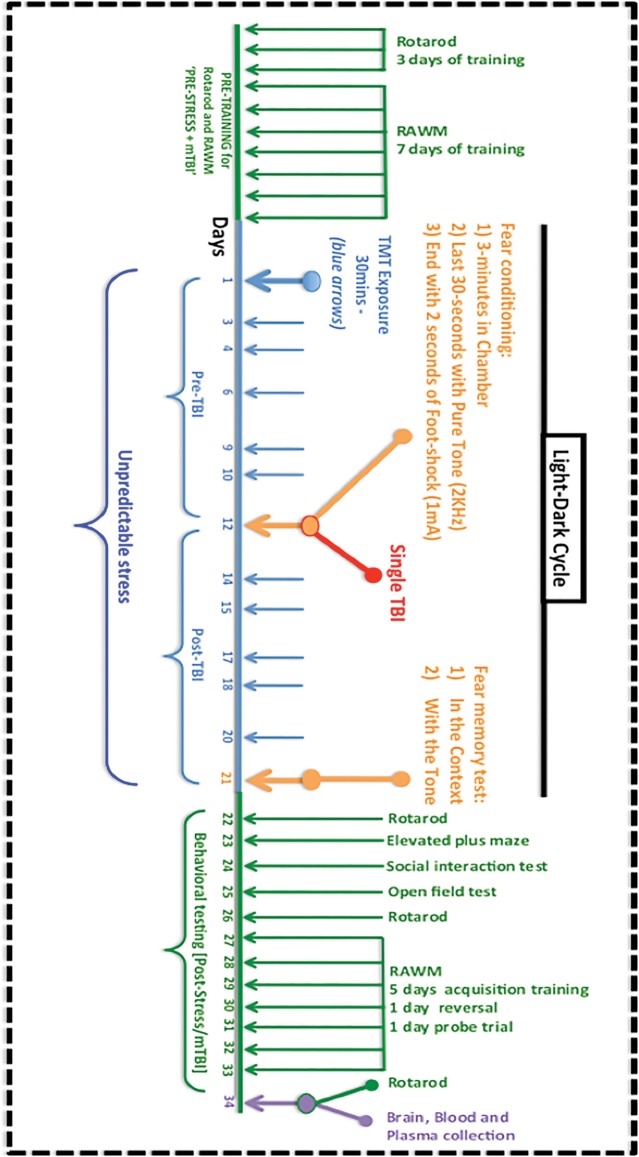
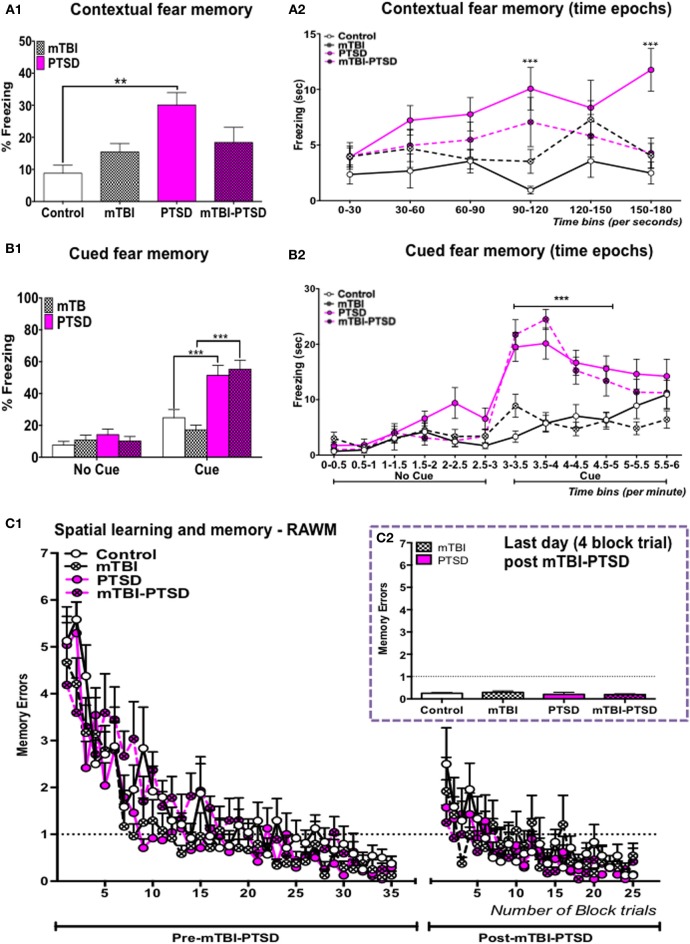
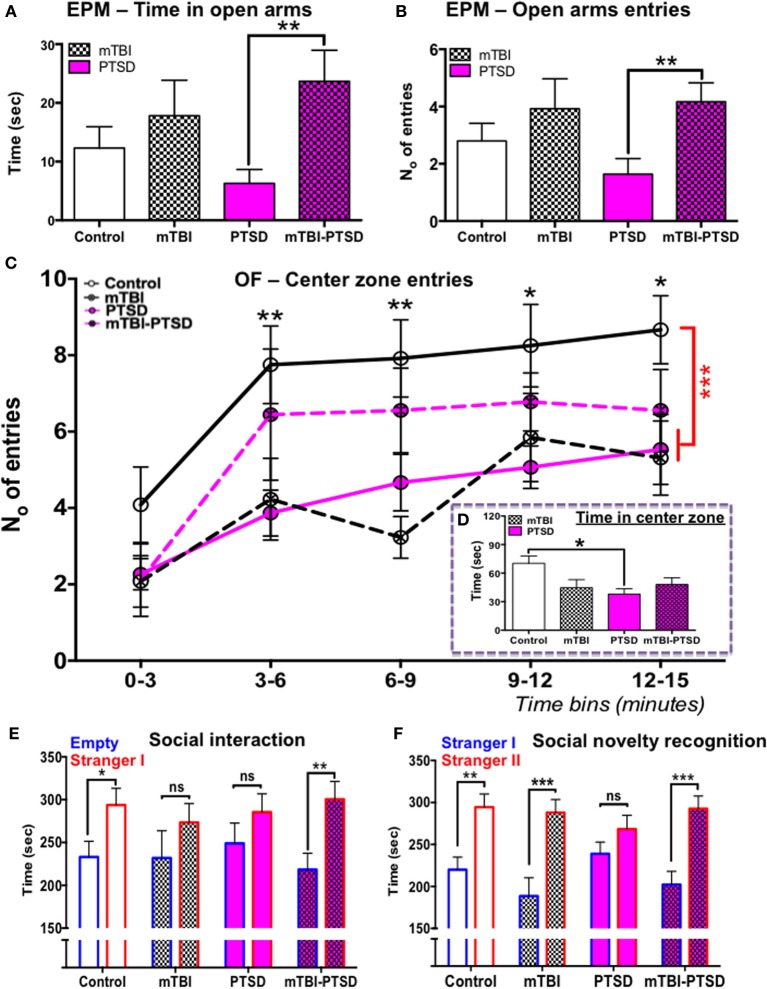
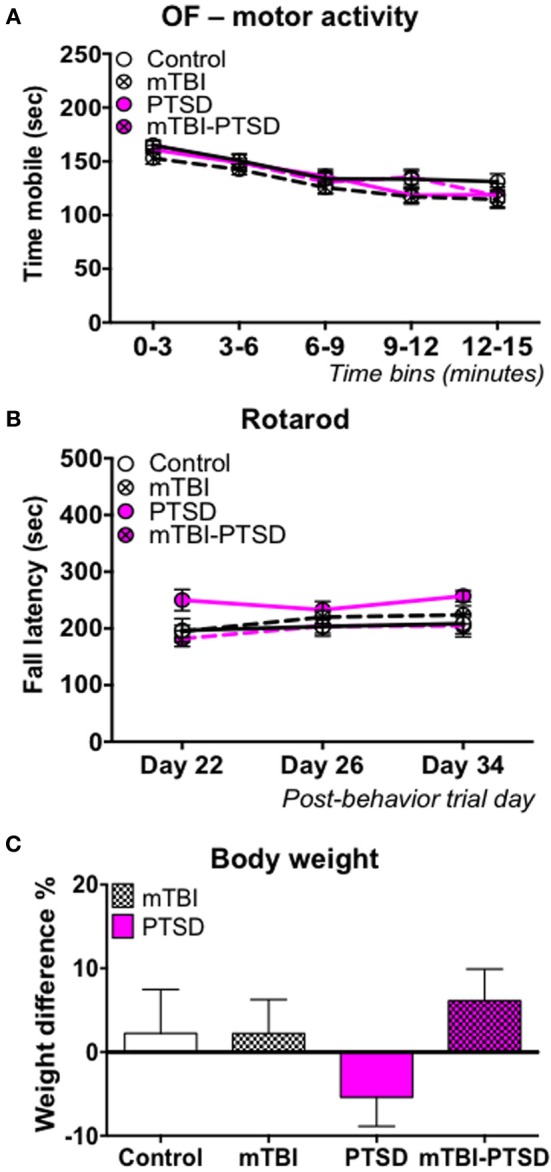
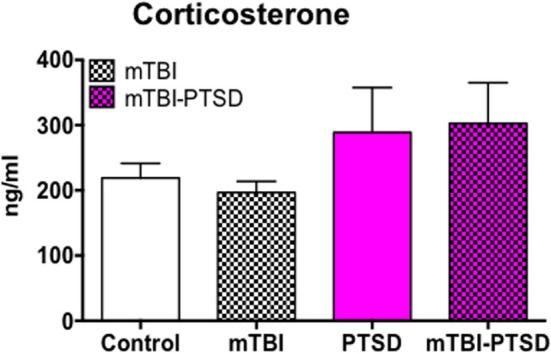
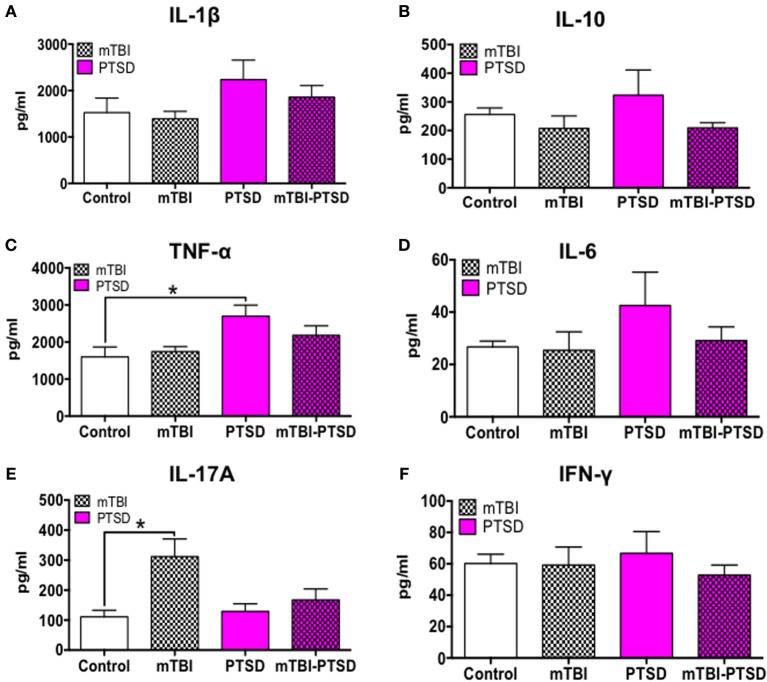
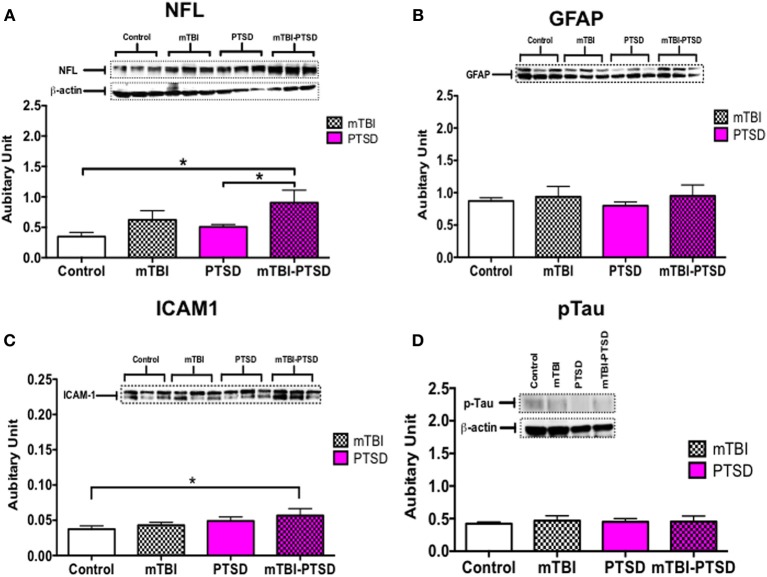
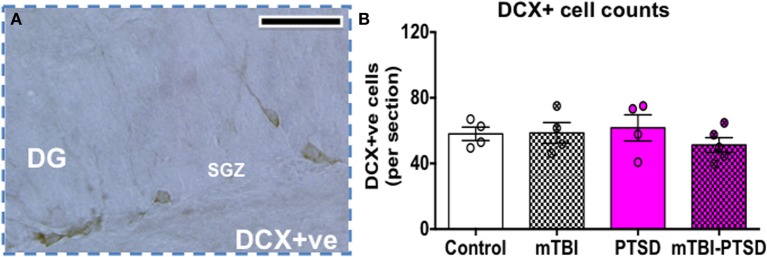
Co-morbid mild traumatic brain injury (mTBI) and post-traumatic stress disorder (PTSD) has become the signature disorder for returning combat veterans. The clinical heterogeneity and overlapping symptomatology of mTBI and PTSD underscore the need to develop a preclinical model that will enable the characterization of unique and overlapping features and allow discrimination between both disorders. This study details the development and implementation of a novel experimental paradigm for PTSD and combined PTSD-mTBI. The PTSD paradigm involved exposure to a danger-related predator odor under repeated restraint over a 21 day period and a physical trauma (inescapable footshock). We administered this paradigm alone, or in combination with a previously established mTBI model. We report outcomes of behavioral, pathological and biochemical profiles at an acute timepoint. PTSD animals demonstrated recall of traumatic memories, anxiety and an impaired social behavior. In both mTBI and combination groups there was a pattern of disinhibitory like behavior. mTBI abrogated both contextual fear and impairments in social behavior seen in PTSD animals. No major impairment in spatial memory was observed in any group. Examination of neuroendocrine and neuroimmune responses in plasma revealed a trend toward increase in corticosterone in PTSD and combination groups, and an apparent increase in Th1 and Th17 proinflammatory cytokine(s) in the PTSD only and mTBI only groups respectively. In the brain there were no gross neuropathological changes in any groups. We observed that mTBI on a background of repeated trauma exposure resulted in an augmentation of axonal injury and inflammatory markers, neurofilament L and ICAM-1 respectively. Our observations thus far suggest that this novel stress-trauma-related paradigm may be a useful model for investigating further the overlapping and distinct spatio-temporal and behavioral/biochemical relationship between mTBI and PTSD experienced by combat veterans.
Keywords: anxiety and social behavior; cognitive function; mild traumatic brain injury; mouse models; plasma and brain biomarkers; post-traumatic stress disorder.
Figures
References
-
- Acosta S. A., Tajiri N., Shinozuka K., Ishikawa H., Grimmig B., Diamond D., et al. (2013). Long-term upregulation of inflammation and suppression of cell proliferation in the brain of adult rats exposed to traumatic brain injury using the controlled cortical impact model. PLoS ONE 8:e53376 10.1371/journal.pone.0053376 - DOI - PMC - PubMed
-
- American Psychiatric Association. (2013). Diagnostic and Statistical Manual of Mental Disorders, 5th Edn. Arlington, VA: American Psychiatric Publishing
LinkOut - more resources
Full Text Sources
Other Literature Sources
Miscellaneous
