


Defining a role for laquinimod in multiple sclerosis
- PMID: 25002907
- PMCID: PMC4082303
- DOI: 10.1177/1756285614529615
Defining a role for laquinimod in multiple sclerosis
Abstract
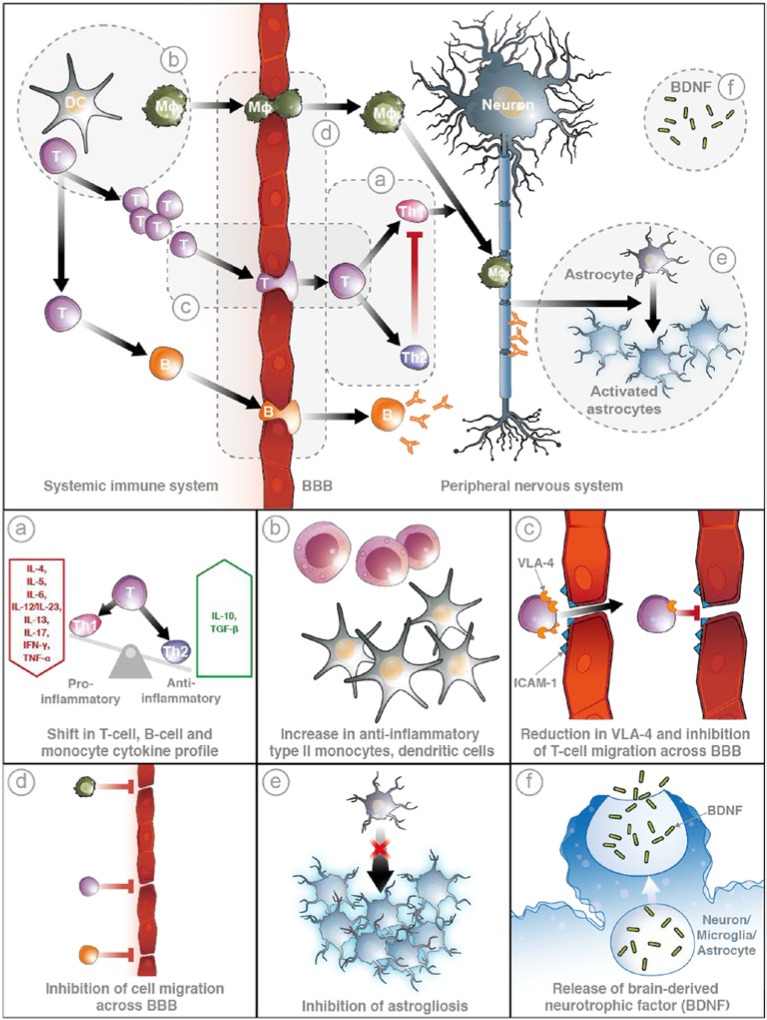
Multiple sclerosis (MS), an inflammatory disease affecting the central nervous system, is considered to exhibit an important neurodegenerative component as well. Laquinimod is an orally administered quinoline-3-carboxamide under development for the treatment of MS. In vitro and animal studies have revealed various mechanisms by which laquinimod may exert its effects on the immune and nervous systems. These include effects on the innate immune system that promote the differentiation of anti-inflammatory/regulatory T cells, the activation of microglia cells, an increase in the expression of brain-derived neurotrophic factor, as well as the prevention of inflammation-induced excitotoxicity. Two phase III studies revealed the clinical benefits of laquinimod in patients with relapsing-remitting MS and exhibited a benign safety profile for this drug. Ongoing clinical trials will help to define the optimal dose and indication for laquinimod in MS. This article reviews current experimental and clinical evidence on the role of laquinimod in patients with this disabling disease.
Keywords: laquinimod; multiple sclerosis; neuroprotection; relapsing–remitting multiple sclerosis.
Conflict of interest statement
Figures
References
-
- Brück W., Wegner C. (2011) Insight into the mechanism of laquinimod action. J Neurol Sci 306: 173–179 - PubMed
-
- Brunmark C., Runström A., Ohlsson L., Sparre B., Brodin T., Aström M., et al. (2002) The new orally active immunoregulator laquinimod (ABR-215062) effectively inhibits development and relapses of experimental autoimmune encephalomyelitis. J Neuroimmunol 130: 163–172 - PubMed
-
- Comi G., Abramsky O., Arbizu T., Boyko A., Gold R., Havrdová E., et al. (2010) Oral laquinimod in patients with relapsing-remitting multiple sclerosis: 36-week double-blind active extension of the multi-centre, randomized, double-blind, parallel-group placebo-controlled study. Mult Scler 16: 1360–1366 - PubMed
Publication types
LinkOut - more resources
Full Text Sources
Other Literature Sources
