Effect of JJYMD-C, a novel synthetic derivative of gallic acid, on proliferation and phenotype maintenance in rabbit articular chondrocytes in vitro
- PMID: 25003544
- PMCID: PMC4165290
- DOI: 10.1590/1414-431x20143935
Effect of JJYMD-C, a novel synthetic derivative of gallic acid, on proliferation and phenotype maintenance in rabbit articular chondrocytes in vitro
Erratum in
-
Erratum for: "Effect of JJYMD-C, a novel synthetic derivative of gallic acid, on proliferation and phenotype maintenance in rabbit articular chondrocytes in vitro" [Braz J Med Biol Res (2014) 47(8): e3935].Braz J Med Biol Res. 2019;52(7):e3935erratum. doi: 10.1590/1414-431X20193935erratum. Braz J Med Biol Res. 2019. PMID: 31291380 Free PMC article.
Abstract
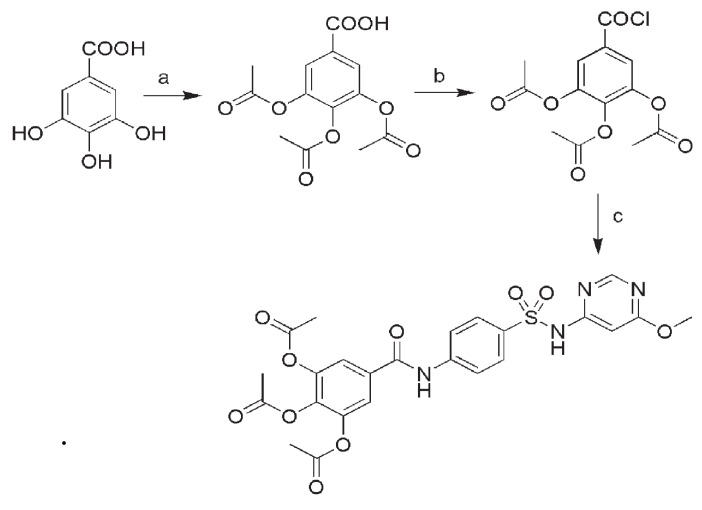
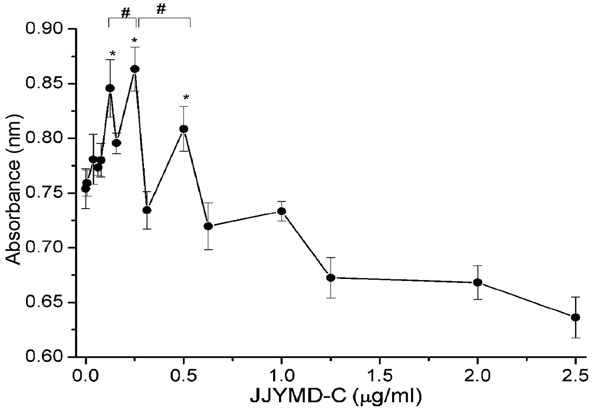
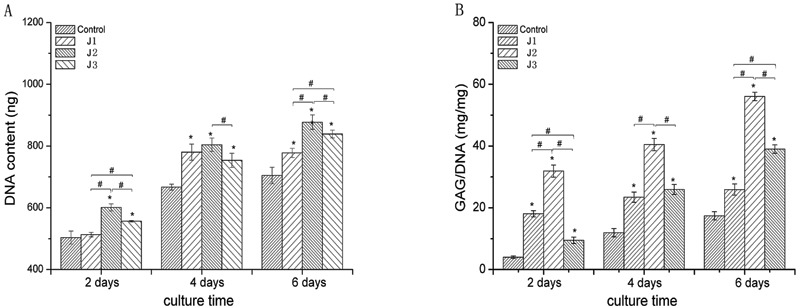
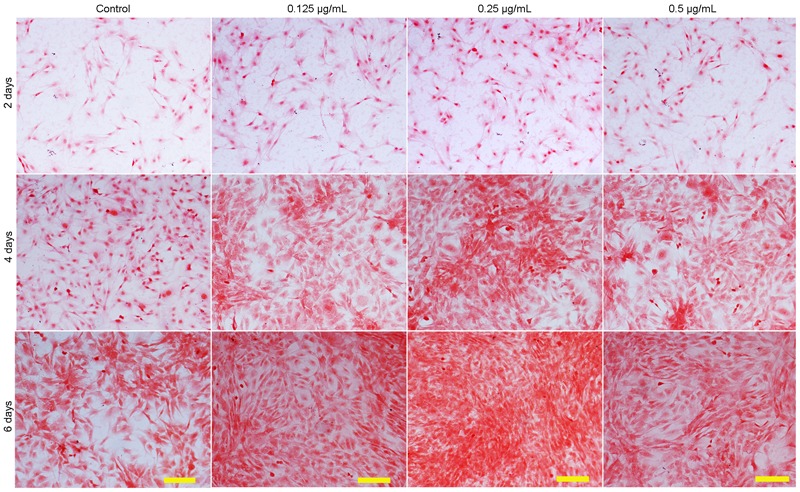
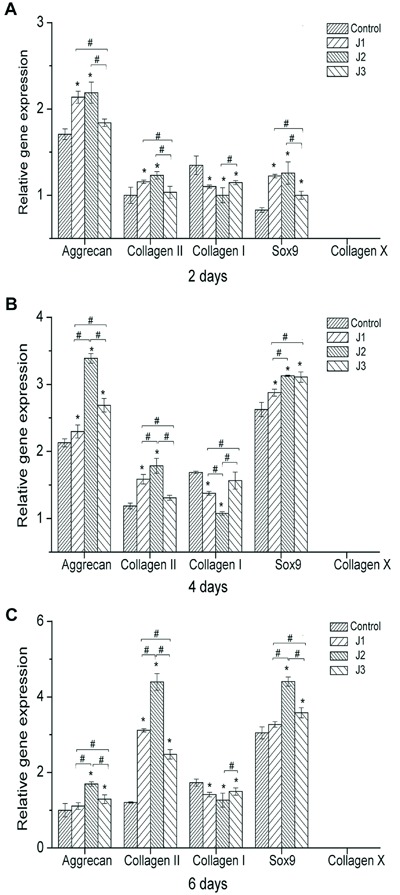
Tissue engineering encapsulated cells such as chondrocytes in the carrier matrix have been widely used to repair cartilage defects. However, chondrocyte phenotype is easily lost when chondrocytes are expanded in vitro by a process defined as "dedifferentiation". To ensure successful therapy, an effective pro-chondrogenic agent is necessary to overcome the obstacle of limited cell numbers in the restoration process, and dedifferentiation is a prerequisite. Gallic acid (GA) has been used in the treatment of arthritis, but its biocompatibility is inferior to that of other compounds. In this study, we modified GA by incorporating sulfamonomethoxine sodium and synthesized a sulfonamido-based gallate, JJYMD-C, and evaluated its effect on chondrocyte metabolism. Our results showed that JJYMD-C could effectively increase the levels of the collagen II, Sox9, and aggrecan genes, promote chondrocyte growth, and enhance secretion and synthesis of cartilage extracellular matrix. On the other hand, expression of the collagen I gene was effectively down-regulated, demonstrating inhibition of chondrocyte dedifferentiation by JJYMD-C. Hypertrophy, as a characteristic of chondrocyte ossification, was undetectable in the JJYMD-C groups. We used JJYMD-C at doses of 0.125, 0.25, and 0.5 µg/mL, and the strongest response was observed with 0.25 µg/mL. This study provides a basis for further studies on a novel agent in the treatment of articular cartilage defects.
Figures
References
-
- Carranza-Bencano A, Garcia-Paino L, Armas Padron JR, Cayuela Dominguez A. Neochondrogenesis in repair of full-thickness articular cartilage defects using free autogenous periosteal grafts in the rabbit. A follow-up in six months. Osteoarthritis Cartilage. 2000;8:351–358. doi: 10.1053/joca.1999.0309. - DOI - PubMed
-
- Buckwalter JA, Mankin HJ. Articular cartilage: tissue design and chondrocyte-matrix interactions. Instr Course Lect. 1998;47:477–486. - PubMed
Publication types
MeSH terms
Substances
LinkOut - more resources
Full Text Sources
Other Literature Sources
Research Materials