


Temporal profile and mechanisms of the prompt sympathoexcitation following coronary ligation in Wistar rats
- PMID: 25006809
- PMCID: PMC4090177
- DOI: 10.1371/journal.pone.0101886
Temporal profile and mechanisms of the prompt sympathoexcitation following coronary ligation in Wistar rats
Abstract
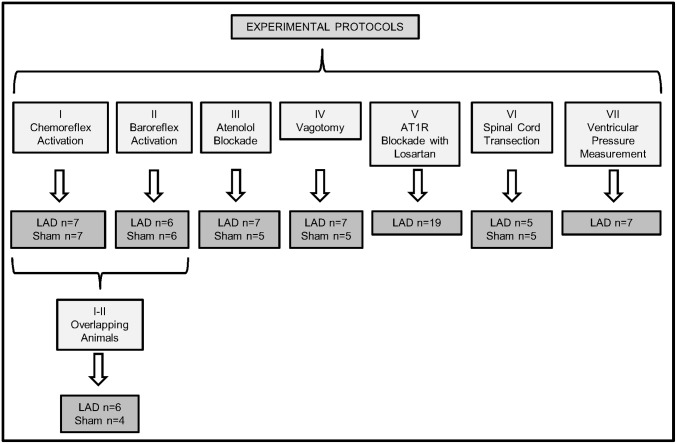
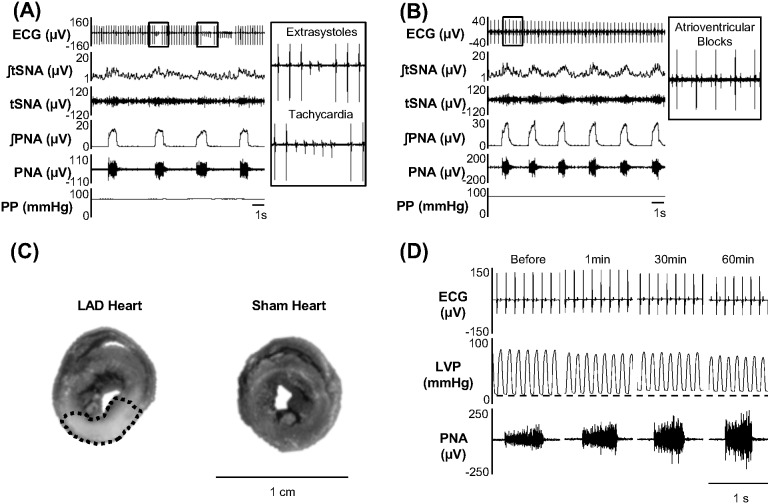
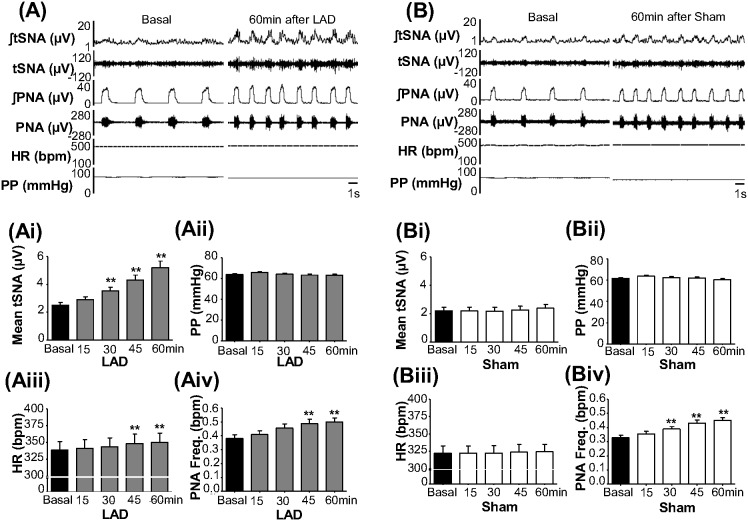
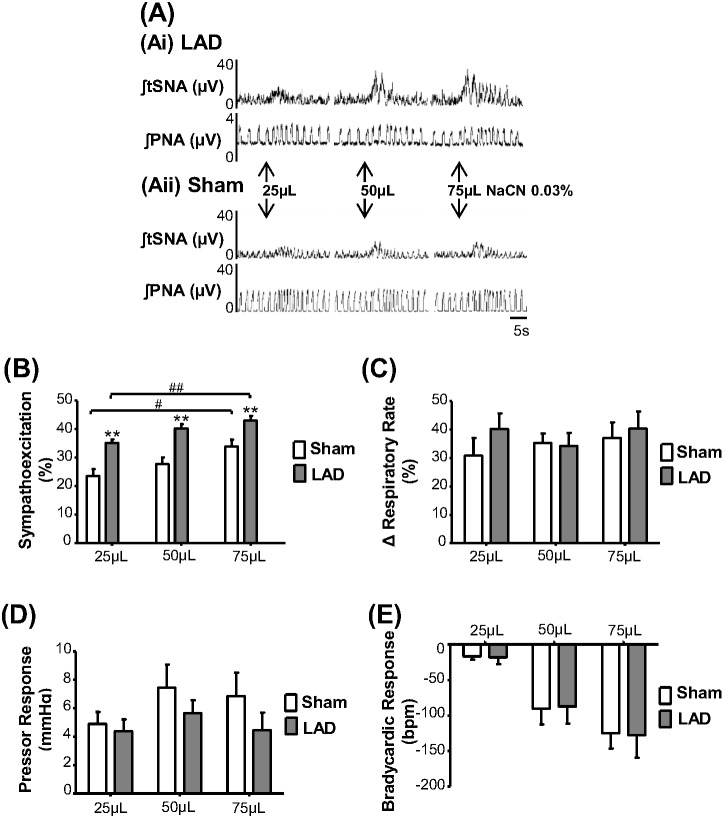
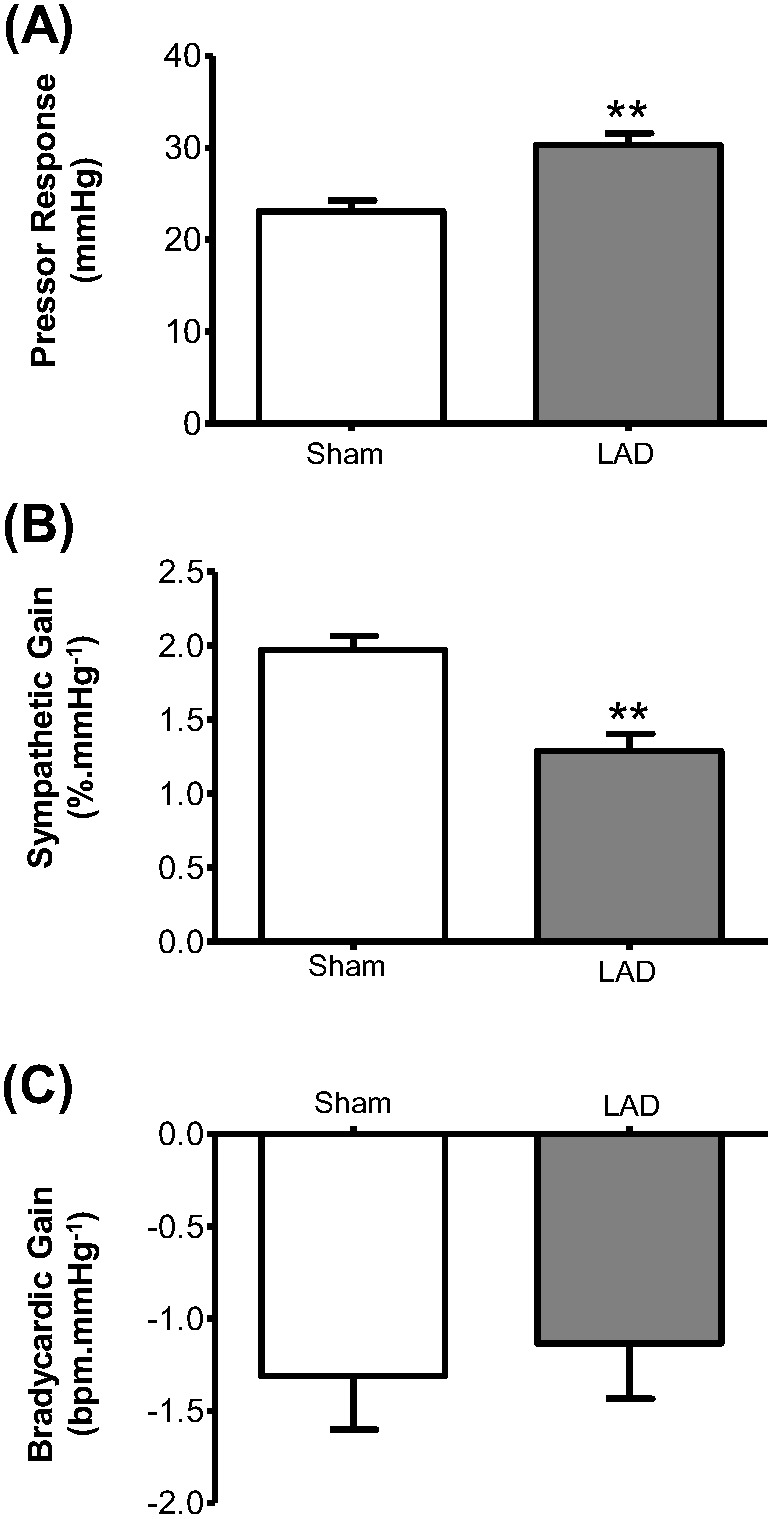
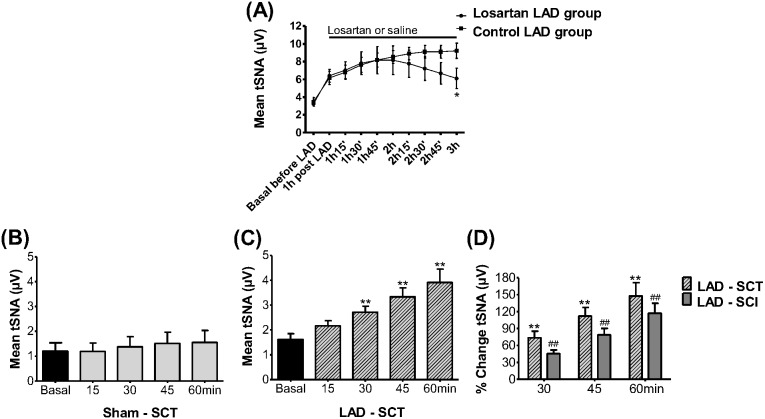
Our aim was to assess the timing and mechanisms of the sympathoexcitation that occurs immediately after coronary ligation. We recorded thoracic sympathetic (tSNA) and phrenic activities, heart rate (HR) and perfusion pressure in Wistar rats subjected to either ligation of the left anterior descending coronary artery (LAD) or Sham operated in the working heart-brainstem preparation. Thirty minutes after LAD ligation, tSNA had increased (basal: 2.5±0.2 µV, 30 min: 3.5±0.3 µV), being even higher at 60 min (5.2±0.5 µV, P<0.01); while no change was observed in Sham animals. HR increased significantly 45 min after LAD (P<0.01). Sixty minutes after LAD ligation, there was: (i) an augmented peripheral chemoreflex - greater sympathoexcitatory response (50, 45 and 27% of increase to 25, 50 and 75 µL injections of NaCN 0.03%, respectively, when compared to Sham, P<0.01); (ii) an elevated pressor response (32±1 versus 23±1 mmHg in Sham, P<0.01) and a reduced baroreflex sympathetic gain (1.3±0.1 versus Sham 2.0±0.1%.mmHg-1, P<0.01) to phenylephrine injection; (iii) an elevated cardiac sympathetic tone (ΔHR after atenolol: -108±8 versus -82±7 bpm in Sham, P<0.05). In contrast, no changes were observed in cardiac vagal tone and bradycardic response to both baroreflex and chemoreflex between LAD and Sham groups. The immediate sympathoexcitatory response in LAD rats was dependent on an excitatory spinal sympathetic cardiocardiac reflex, whereas at 3 h an angiotensin II type 1 receptor mechanism was essential since Losartan curbed the response by 34% relative to LAD rats administered saline (P<0.05). A spinal reflex appears key to the immediate sympathoexcitatory response after coronary ligation. Therefore, the sympathoexcitatory response seems to be maintained by an angiotensinergic mechanism and concomitant augmentation of sympathoexcitatory reflexes.
Conflict of interest statement
Figures
References
-
- Lombardi F, Sandrone G, Spinnler MT, Torzillo D, Lavezzaro GC, et al. (1996) Heart rate variability in the early hours of an acute myocardial infarction. Am J Cardiol 77: 1037–1044. - PubMed
-
- Graham LN, Smith PA, Stoker JB, Mackintosh AF, Mary DA (2002) Time course of sympathetic neural hyperactivity after uncomplicated acute myocardial infarction. Circulation 106: 793–797. - PubMed
-
- Pantridge JF, Webb SW, Adgey AA (1981) Arrhythmias in the first hours of acute myocardial infarction. Prog Cardiovasc Dis 23: 265–278. - PubMed
-
- Jardine DL, Charles CJ, Frampton CM, Richards AM (2007) Cardiac sympathetic nerve activity and ventricular fibrillation during acute myocardial infarction in a conscious sheep model. Am J Physiol Heart Circ Physiol 293: H433–439. - PubMed
-
- Floras JS (2009) Sympathetic nervous system activation in human heart failure: clinical implications of an updated model. J Am Coll Cardiol 54: 375–385. - PubMed
Publication types
MeSH terms
Substances
Grants and funding
LinkOut - more resources
Full Text Sources
Other Literature Sources
