Digital breast tomosynthesis: observer performance of clustered microcalcification detection on breast phantom images acquired with an experimental system using variable scan angles, angular increments, and number of projection views
- PMID: 25007048
- PMCID: PMC4314116
- DOI: 10.1148/radiol.14132722
Digital breast tomosynthesis: observer performance of clustered microcalcification detection on breast phantom images acquired with an experimental system using variable scan angles, angular increments, and number of projection views
Abstract
Purpose: To investigate the dependence of microcalcification cluster detectability on tomographic scan angle, angular increment, and number of projection views acquired at digital breast tomosynthesis ( DBT digital breast tomosynthesis ).
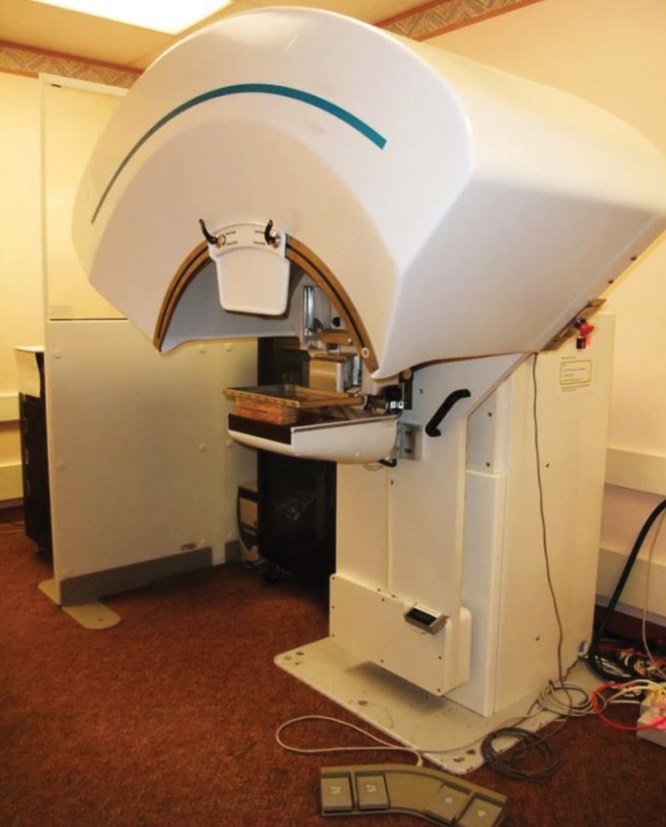
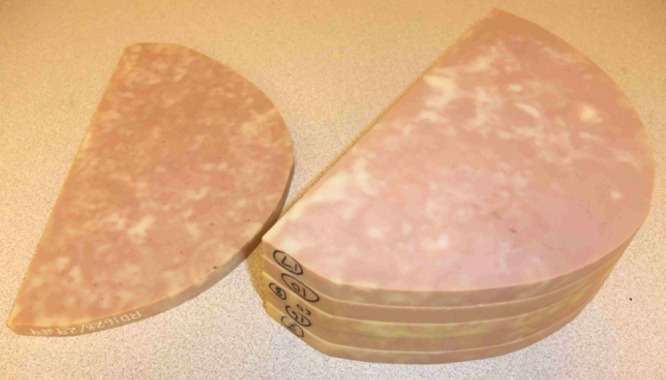
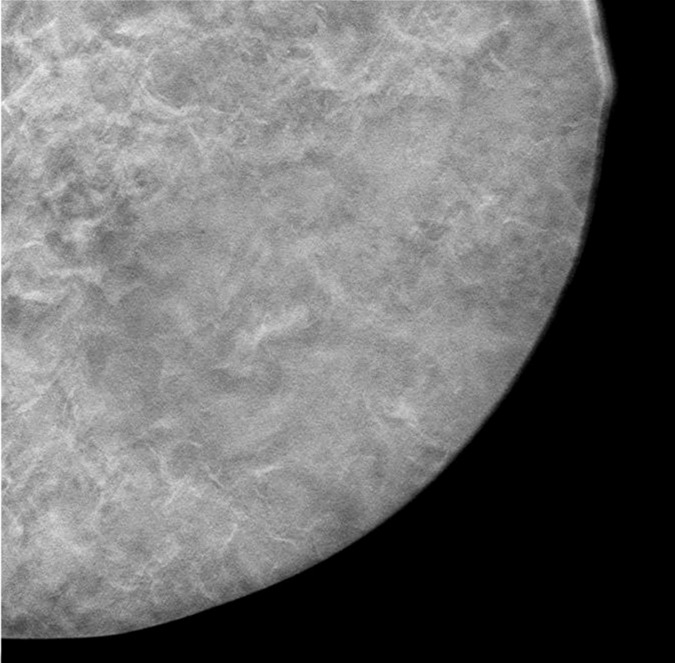
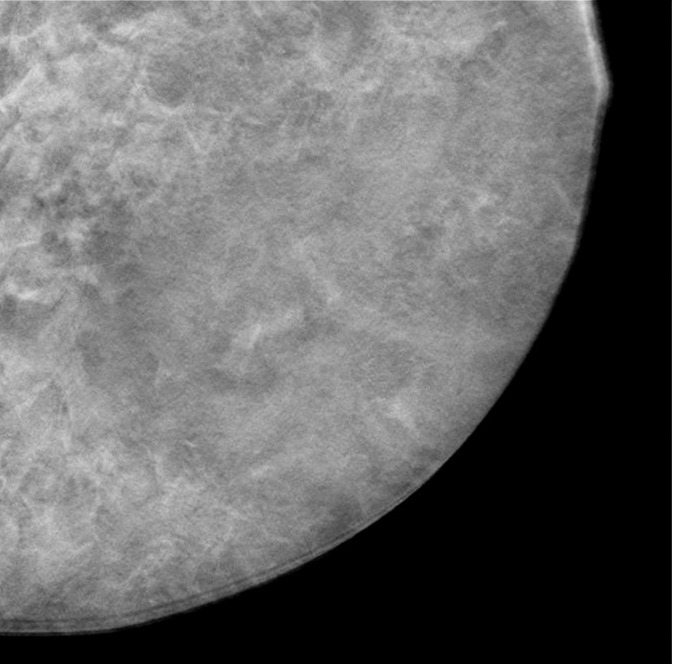
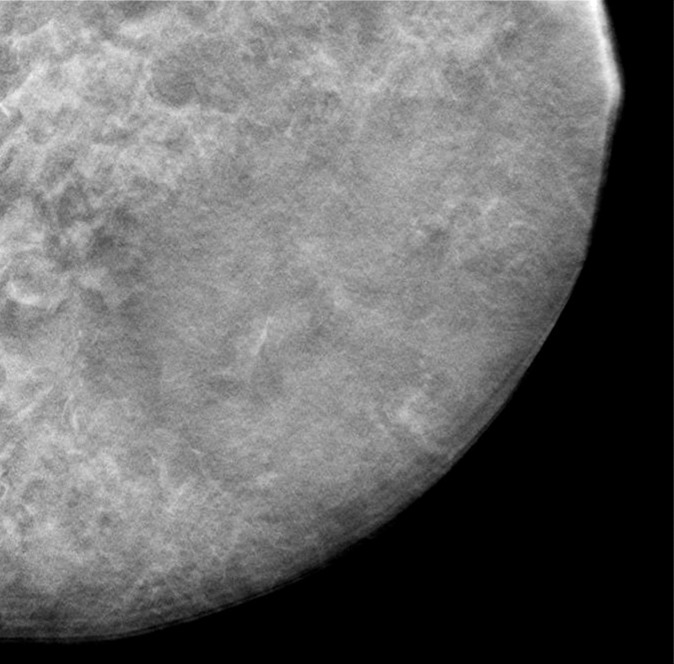
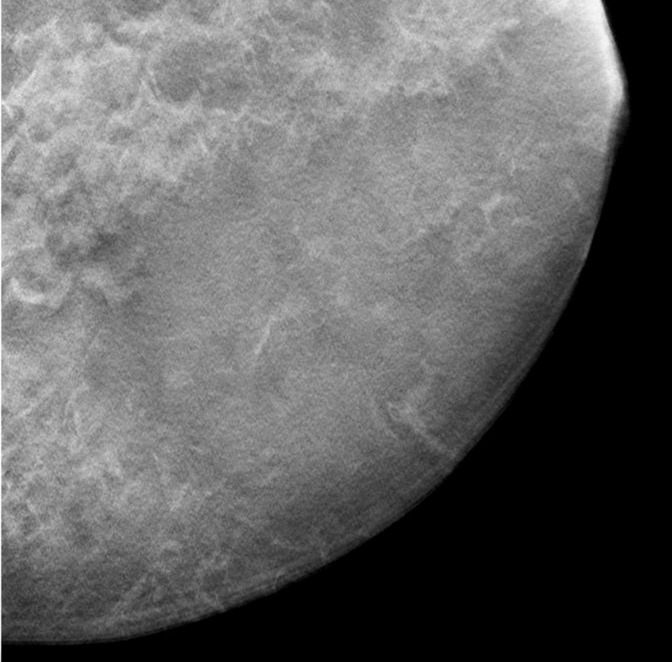
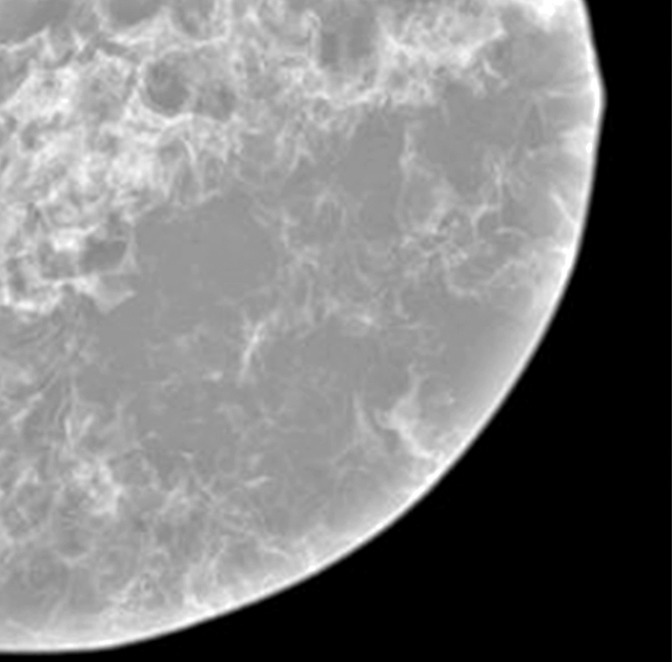
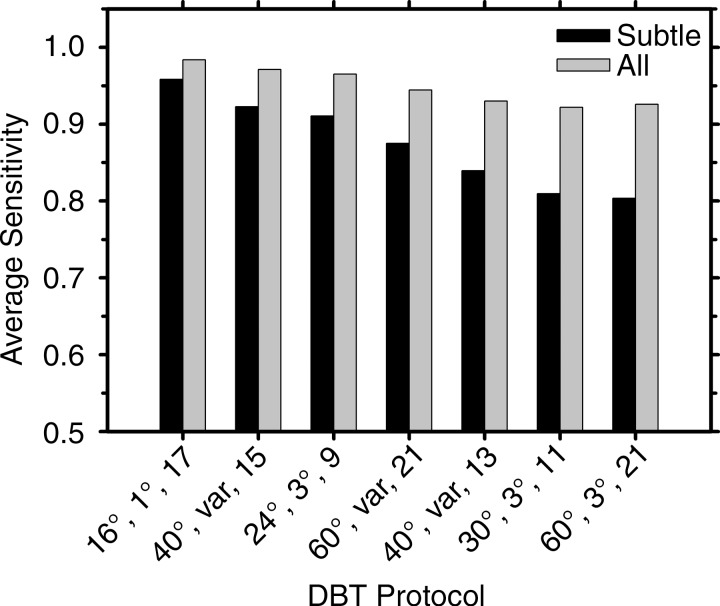
Materials and methods: A prototype DBT digital breast tomosynthesis system operated in step-and-shoot mode was used to image breast phantoms. Four 5-cm-thick phantoms embedded with 81 simulated microcalcification clusters of three speck sizes (subtle, medium, and obvious) were imaged by using a rhodium target and rhodium filter with 29 kV, 50 mAs, and seven acquisition protocols. Fixed angular increments were used in four protocols (denoted as scan angle, angular increment, and number of projection views, respectively: 16°, 1°, and 17; 24°, 3°, and nine; 30°, 3°, and 11; and 60°, 3°, and 21), and variable increments were used in three (40°, variable, and 13; 40°, variable, and 15; and 60°, variable, and 21). The reconstructed DBT digital breast tomosynthesis images were interpreted by six radiologists who located the microcalcification clusters and rated their conspicuity.
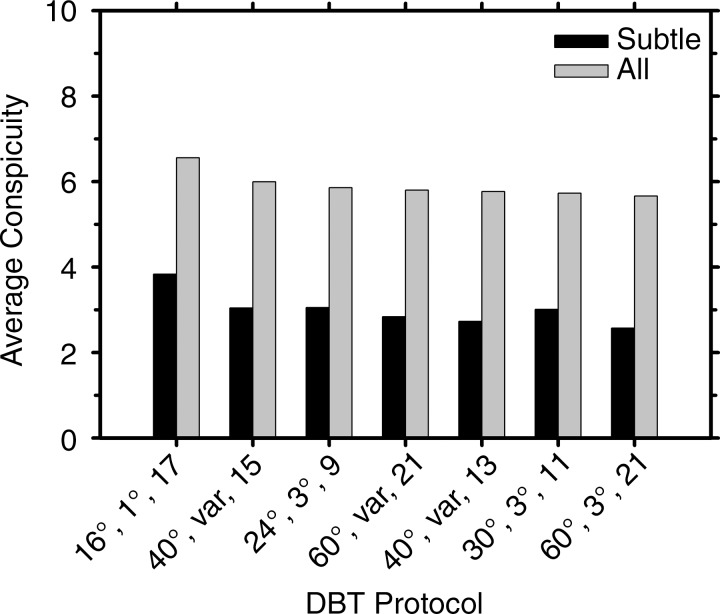
Results: The mean sensitivity for detection of subtle clusters ranged from 80% (22.5 of 28) to 96% (26.8 of 28) for the seven DBT digital breast tomosynthesis protocols; the highest sensitivity was achieved with the 16°, 1°, and 17 protocol (96%), but the difference was significant only for the 60°, 3°, and 21 protocol (80%, P < .002) and did not reach significance for the other five protocols (P = .01-.15). The mean sensitivity for detection of medium and obvious clusters ranged from 97% (28.2 of 29) to 100% (24 of 24), but the differences fell short of significance (P = .08 to >.99). The conspicuity of subtle and medium clusters with the 16°, 1°, and 17 protocol was rated higher than those with other protocols; the differences were significant for subtle clusters with the 24°, 3°, and nine protocol and for medium clusters with 24°, 3°, and nine; 30°, 3°, and 11; 60°, 3° and 21; and 60°, variable, and 21 protocols (P < .002).
Conclusion: With imaging that did not include x-ray source motion or patient motion during acquisition of the projection views, narrow-angle DBT digital breast tomosynthesis provided higher sensitivity and conspicuity than wide-angle DBT digital breast tomosynthesis for subtle microcalcification clusters.
© RSNA, 2014.
Figures
Comment in
-
Digital breast tomosynthesis might not be the optimal modality for detecting microcalcification.Radiology. 2015 May;275(2):618-9. doi: 10.1148/radiol.2015142752. Radiology. 2015. PMID: 25906307 No abstract available.
-
Response.Radiology. 2015 May;275(2):619. Radiology. 2015. PMID: 26090538 Free PMC article. No abstract available.
References
-
- Niklason LT, Christian BT, Niklason LE, et al. Digital tomosynthesis in breast imaging. Radiology 1997;205(2):399–406. - PubMed
-
- Poplack SP, Tosteson TD, Kogel CA, Nagy HM. Digital breast tomosynthesis: initial experience in 98 women with abnormal digital screening mammography. AJR Am J Roentgenol 2007;189(3):616–623. - PubMed
-
- Gur D, Abrams GS, Chough DM, et al. Digital breast tomosynthesis: observer performance study. AJR Am J Roentgenol 2009;193(2):586–591. - PubMed
-
- Skaane P, Bandos AI, Gullien R, et al. Comparison of digital mammography alone and digital mammography plus tomosynthesis in a population-based screening program. Radiology 2013;267(1):47–56. - PubMed
Publication types
MeSH terms
Grants and funding
LinkOut - more resources
Full Text Sources
Other Literature Sources
Medical