


Prevalence and predictors for periodontitis among adults in China, 2010
- PMID: 25008055
- PMCID: PMC4090366
- DOI: 10.3402/gha.v7.24503
Prevalence and predictors for periodontitis among adults in China, 2010
Abstract
Background: Although the interrelationship between poor oral health and chronic diseases is well established, few related studies are available in China. In this study, the prevalence of severe periodontitis and its association with chronic diseases among adults in China have been explored.
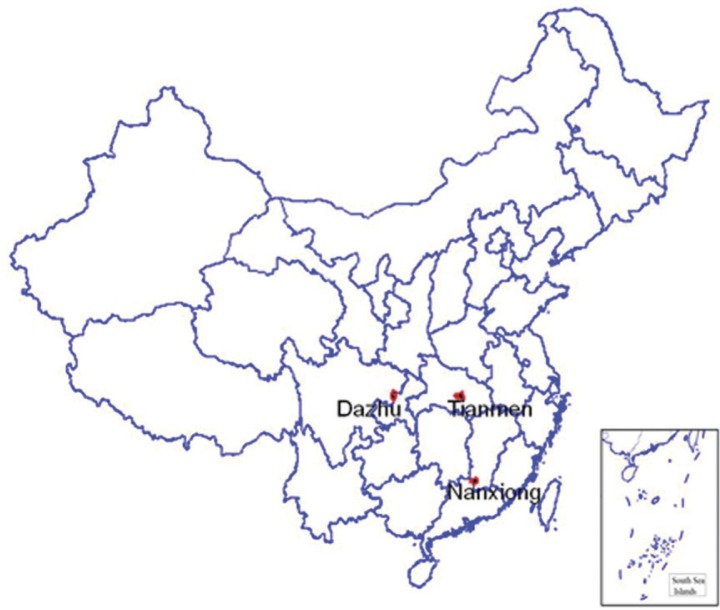
Design: During China's 2010 Chronic Disease and Risk Factor Surveillance (CCDRFS) survey among adults aged 18 and older, 3 out of 162 surveillance points and the entire sample from each point (600×3=1,800 subjects) were selected as pilot study sites in which oral examination was performed. Basic demographic information, chronic diseases status, and results of oral examination were collected from 2010 CCDRFS data. A standard oral examination was conducted by trained staff. Periodontitis was defined as moderate (4-5 mm pockets) or severe (≥6 mm pockets). Chronic disease status was determined by using standard methods and criteria. Multivariate logistic analysis was used to identify the independent association of various factors with severe periodontitis.
Results: Of 1,800 subjects, 1,728 subjects (96%) provided complete information. The prevalence of severe periodontitis was 1.9% (32/1,728) (95% CI=1.2-2.5). In multivariate model, participants with diabetes were 2.4 times (OR=2.4, 95% CI=1.1-5.6) more likely to have severe periodontitis. Being male was significantly associated with severe periodontitis (OR=3.5, 95% CI=1.6-7.7). Living in a rural area was related to an increased chance of having severe periodontitis (OR=2.1, 95% CI=1.0- 4.9). Attainment of at least 6 years of education was inversely associated with severe periodontitis (OR=0.3, 95% CI=0.1-0.8).
Conclusions: According to this pilot project, prevalence of severe periodontitis was low. Control measures should be particularly emphasized for high-risk groups such as less educated people (<6 years of education), people living in rural areas, men, and diabetes patients. Population-based studies, including oral examination by trained staff, are feasible and should be done in order to understand the burden of periodontitis and to provide an effective response to this key oral health issue.
Keywords: adults; periodontitis; predictors; prevalence.
Figures
References
-
- Patel R. State of oral health in Europe; Report Commissioned by the Platform for Better Oral Health in Europe; 2012. Available from: http://www.oralhealthplatform.eu/resource/platform-documents?page=1 [cited 3 January 2014].
-
- Eke PI, Dye BA, Wei L, Thornton-Evans GO, Genco RJ. Prevalence of periodontitis in adults in the United States: 2009 and 2010. J Dent Res. 2012;91:914–20. - PubMed
-
- Holtfreter B, Kocher T, Hoffmann T, Desvarieux M, Micheelis W. Prevalence of periodontal disease and treatment demands based on a German dental survey (DMS IV) J Clin Periodontol. 2010;37:211–19. - PubMed
-
- Mattila PT, Niskanen MC, Vehkalahti MM, Nordblad A, Knuuttila ML. Prevalence and simultaneous occurrence of periodontitis and dental caries. J Clin Periodontol. 2010;37:962–7. - PubMed
Publication types
MeSH terms
LinkOut - more resources
Full Text Sources
Other Literature Sources
