


How population structure shapes neighborhood segregation
- PMID: 25009360
- PMCID: PMC4084600
- DOI: 10.1086/675411
How population structure shapes neighborhood segregation
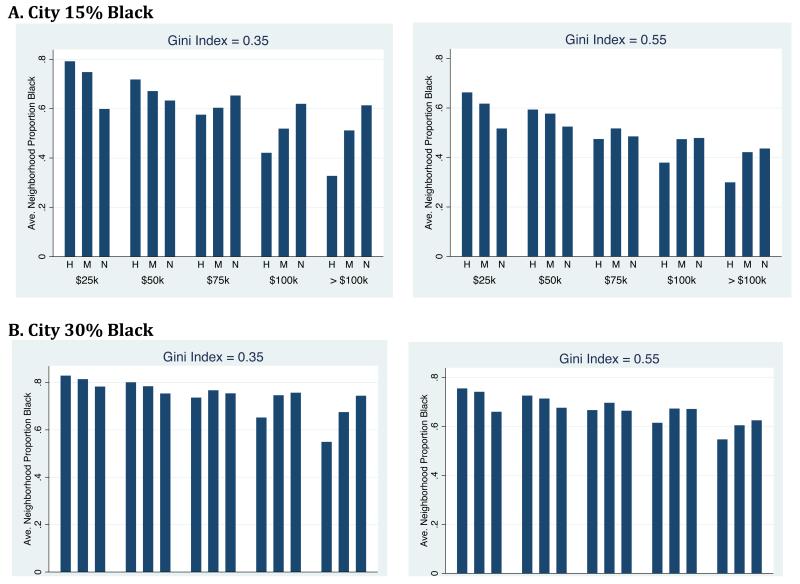
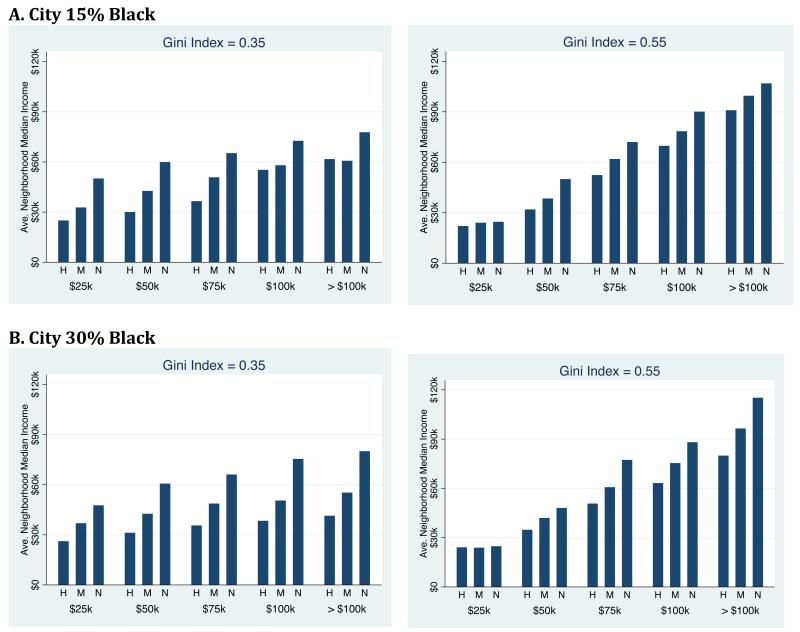
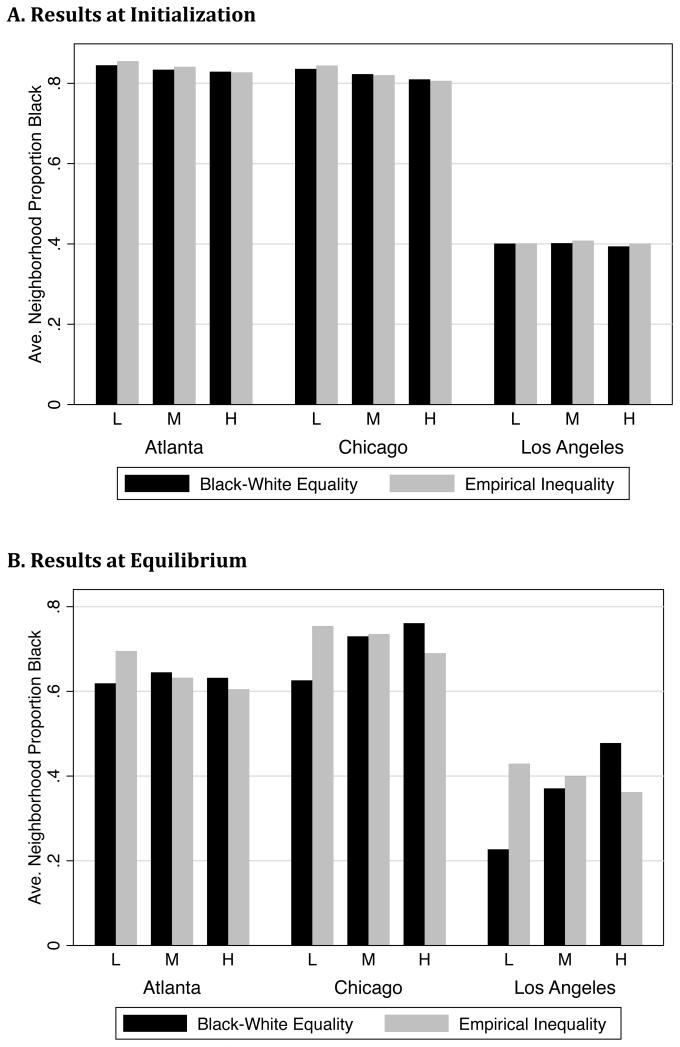
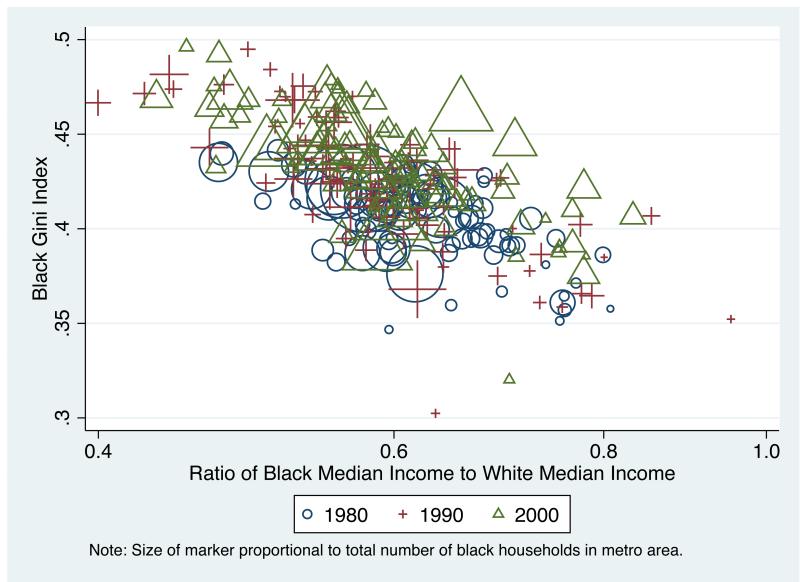
Abstract
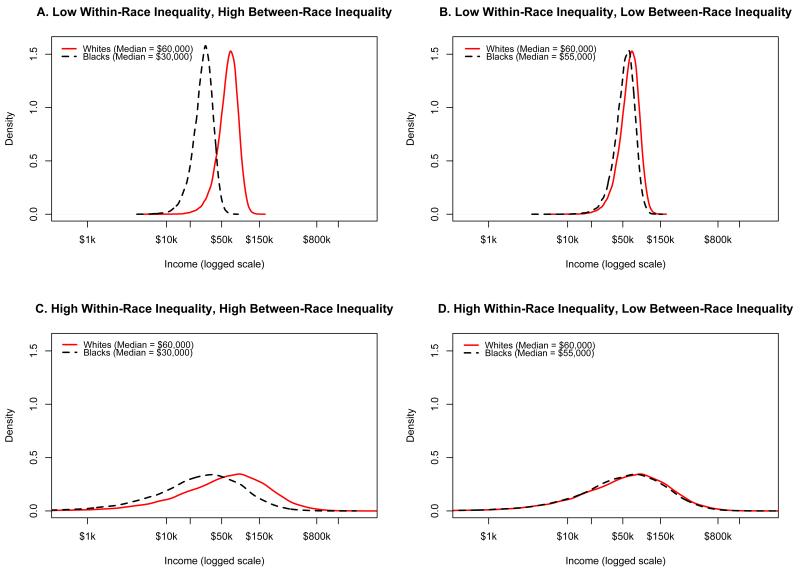
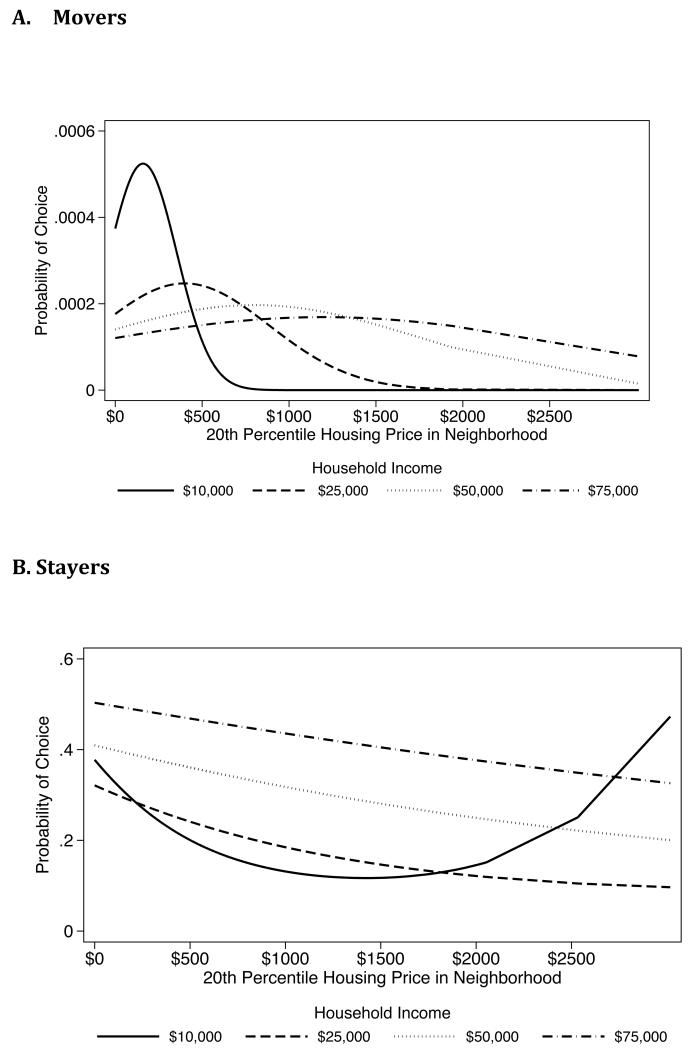
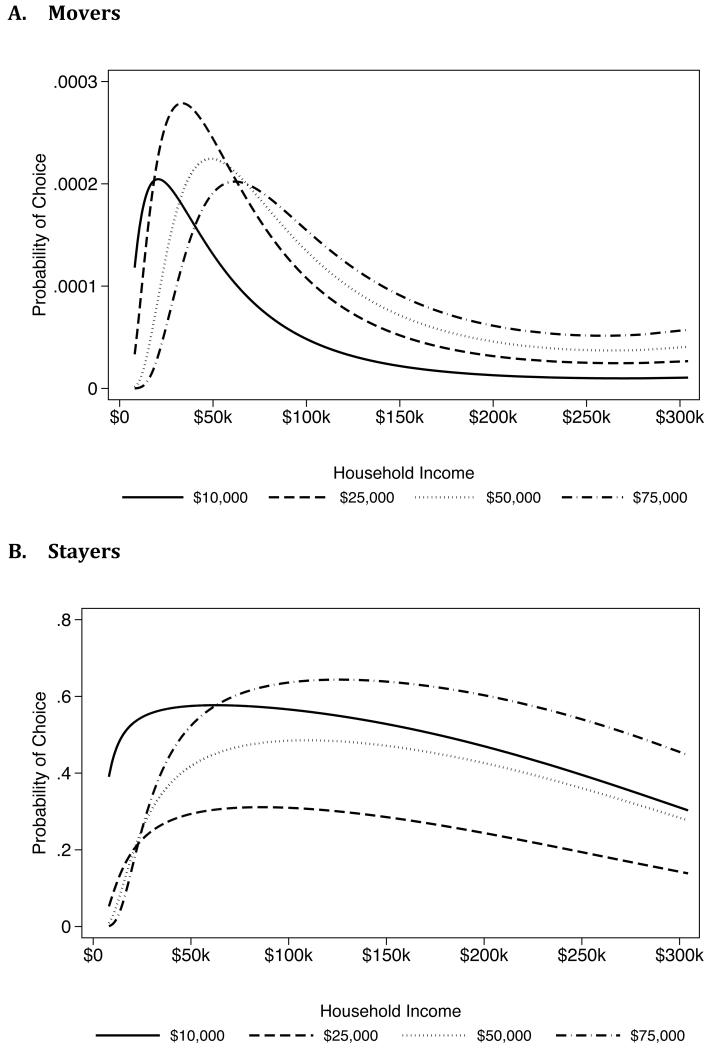
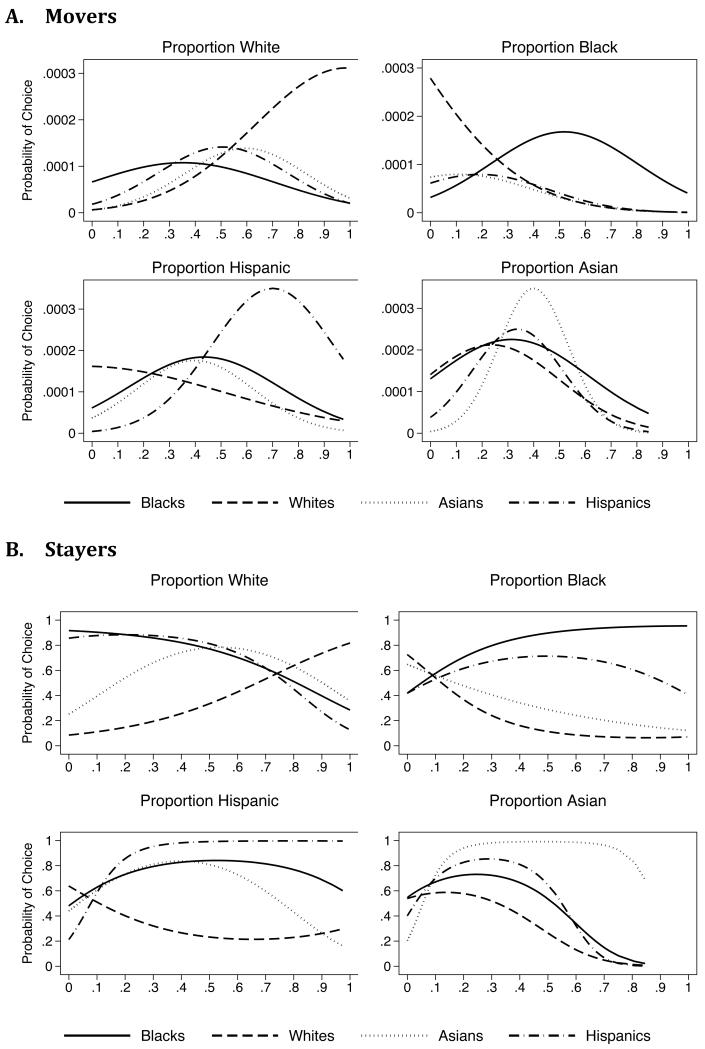
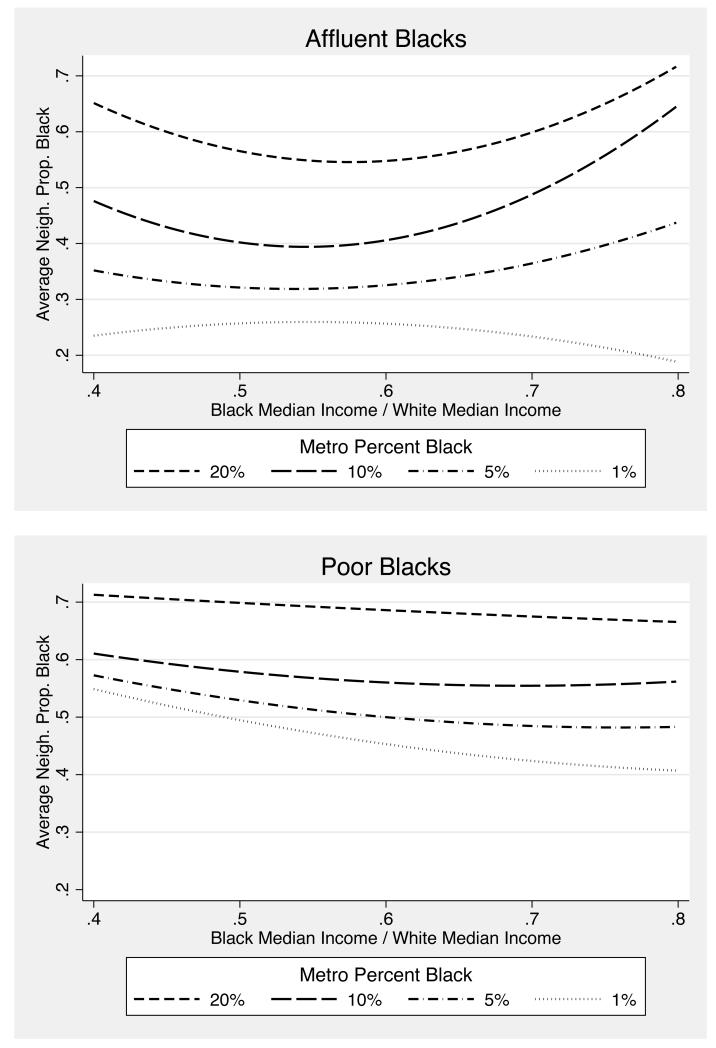
This study provides a framework for understanding how population composition conditions the relationship between individuals' choices about group affiliation and aggregate patterns of social separation or integration. The substantive focus is the role of income inequality in racial residential segregation. The author identifies three population parameters--between-group inequality, within-group inequality, and relative group size--that determine how income inequality between race groups affects racial segregation. She uses data from the Panel Study of Income Dynamics to estimate models of individual-level residential mobility and incorporates these estimates into agent-based models. She then simulates segregation dynamics under alternative assumptions about (1) the relative size of minority groups and (2) the degree of correlation between race and income among individuals. The author finds that income inequality can have offsetting effects at the high and low ends of the income distribution. She demonstrates the empirical relevance of the simulation results using fixed-effects, metro-level regressions applied to 1980-2000 U.S. census data.
Figures
References
-
- Alba Richard, Logan John, Stults Brian. How Segregated Are Middle-Class African Americans? Social Problems. 2000;47:543–58.
-
- Alba Richard, Logan John. Minority Proximity to Whites in Suburbs: An Individual-Level Analysis of Segregation. American Journal of Sociology. 1993;98:1388–1427.
-
- Autor David, Katz Lawrence, Kearney Melissa. The Polarization of the U.S. Labor Market. American Economic Review. 2006;96:189–94.
-
- Autor David, Katz Lawrence, Kearney Melissa. Trends in U.S. Wage Inequality: Revising the Revisionists. Review of Economics and Statistics. 2008;90:300–323.
-
- Bayer Patrick, Fang Hanming, McMillan Robert. Separate When Equal? Racial Inequality and Residential Segregation. 2011. Economic Research Initiatives at Duke Working Paper Series No. 100.
Publication types
MeSH terms
Grants and funding
LinkOut - more resources
Full Text Sources
Other Literature Sources