


Prolonged high-pressure balloon angioplasty of femoropopliteal lesions: Impact on stent implantation rate and mid-term outcome
- PMID: 25009562
- PMCID: PMC4076452
- DOI: 10.3969/j.issn.1671-5411.2014.02.012
Prolonged high-pressure balloon angioplasty of femoropopliteal lesions: Impact on stent implantation rate and mid-term outcome
Abstract
Objectives: To assess the impact on stent implantation rate and mid-term outcomes of prolonged high pressure angioplasty of femoropopliteal lesions.
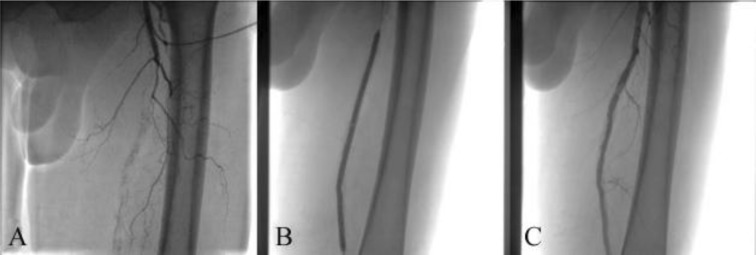
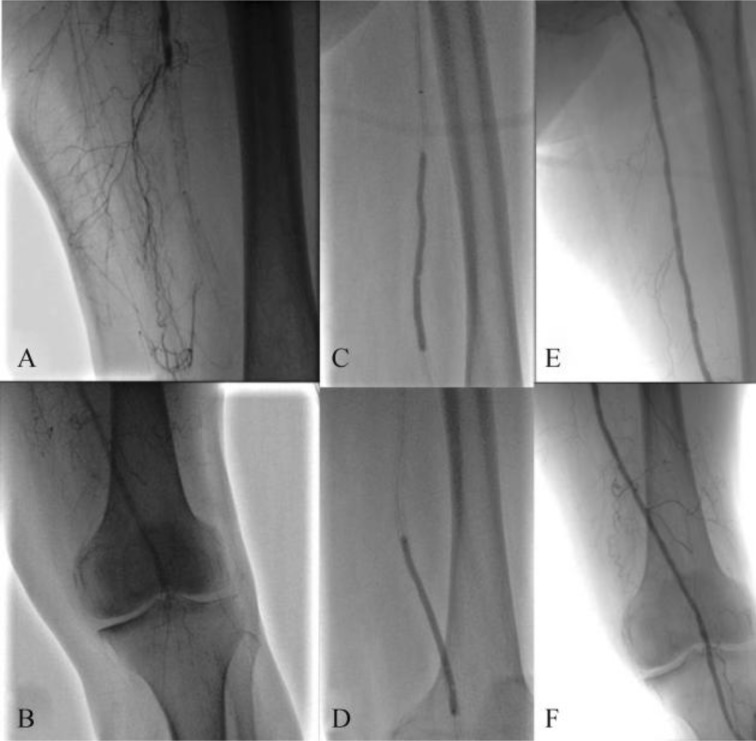
Methods: We retrospectively enrolled 620 consecutive patients from January 2011 to December 2011 (75.6 ± 12.3 years, 355 males, 76.5% in Rutherford class 5-6), referred for critical limb ischemia and submitted to prolonged high-pressure angioplasty of femoropopliteal lesions. The definition of prolonged high-pressure angioplasty includes dilation to at least 18 atm for at least 120 s. Procedural data, and clinical and instrumental follow-up were analyzed to assess stent implantation rate and mid-term outcomes.
Results: The preferred approach was ipsilateral femoral antegrade in 433/620 patients (69.7%) and contralateral cross-over in 164/620 (26.4%) and popliteal retrograde + femoral antegrade in 23/620 (3.7%). Techniques included subintimal angioplasty in 427/620 patients (68.8%) and endoluminal angioplasty in 193/620 patients (31.2%). The prolonged high pressure balloon angioplasty procedure was successful in 86.2% (minor intra-procedural complications rate 15.7 %), stent implantation was performed in 74 patients (11.9%), with a significant improvement of ankle-brachial index (0.29 ± 0.6 vs. 0.88 ± 0.3, P < 00.1) and Rutherford class (5.3 ± 0.8 vs. 0.7 ± 1.9, P < 0.01), a primary patency rate of 86.7%, restenosis of 18.6 % on Doppler ultrasound and a target lesion revascularization of 14.8% at a mean follow-up of 18.1 ± 6.4 months (range 1-24 months). Secondary patency rate was 87.7%.
Conclusions: Prolonged high pressure angioplasty of femoropopliteal lesions appears to be safe and effective allowing for an acceptable patency and restenosis rates on mid-term.
Keywords: Angioplasty; Balloon; Peripheral artery disease; Stent.
Figures
References
-
- BASIL trial investigators Bypass versus angioplasty in severe ischemia of the leg (BASIL): multicentre, randomised controlled trial. Lancet. 2005;366:1925–1934. - PubMed
-
- Acin F, de Haro J, Bleda S, et al. Primary nitinol stenting in femoropopliteal occlusive disease: a meta-analysis of randomized controlled trials. J Endovasc Ther. 2012;19:585–595. - PubMed
-
- Davaine JM, Quérat J, Guyomarch B, et al. Incidence and the clinical impact of stent fractures after primary stenting for TASC C and D femoropopliteal lesions at 1 year. Eur J Vasc Endovasc Surg. 2013;46:201–212. - PubMed
-
- Liistro F, Grotti S, Porto I, et al. Drug-eluting balloon in peripheral intervention for the superficial femoral artery: the DEBATE-SFA randomized trial (Drug Eluting Balloon in Peripheral Intervention for the Superficial Femoral Artery) JACC Cardiovasc Interv. 2013;6:1295–1302. - PubMed
-
- Fusaro M, Cassese S, Ndrepepa G, et al. Paclitaxel-coated balloon or primary bare nitinol stent for revascularization of femoropopliteal artery: a meta-analysis of randomized trials versus uncoated balloon and an adjusted indirect comparison. Int J Cardiol. 2013;168:4002–4009. - PubMed
LinkOut - more resources
Full Text Sources
Research Materials
Miscellaneous