


RCAN1 regulates mitochondrial function and increases susceptibility to oxidative stress in mammalian cells
- PMID: 25009690
- PMCID: PMC4070399
- DOI: 10.1155/2014/520316
RCAN1 regulates mitochondrial function and increases susceptibility to oxidative stress in mammalian cells
Abstract
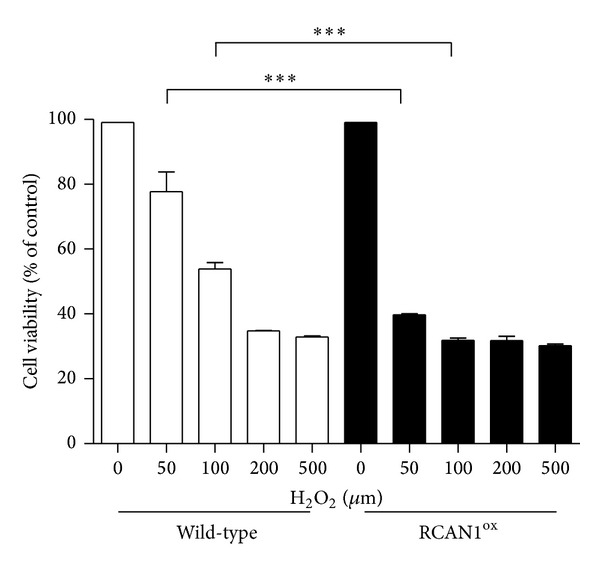
Mitochondria are the primary site of cellular energy generation and reactive oxygen species (ROS) accumulation. Elevated ROS levels are detrimental to normal cell function and have been linked to the pathogenesis of neurodegenerative disorders such as Down's syndrome (DS) and Alzheimer's disease (AD). RCAN1 is abundantly expressed in the brain and overexpressed in brain of DS and AD patients. Data from nonmammalian species indicates that increased RCAN1 expression results in altered mitochondrial function and that RCAN1 may itself regulate neuronal ROS production. In this study, we have utilized mice overexpressing RCAN1 (RCAN1(ox)) and demonstrate an increased susceptibility of neurons from these mice to oxidative stress. Mitochondria from these mice are more numerous and smaller, indicative of mitochondrial dysfunction, and mitochondrial membrane potential is altered under conditions of oxidative stress. We also generated a PC12 cell line overexpressing RCAN1 (PC12(RCAN1)). Similar to RCAN1(ox) neurons, PC12(RCAN1) cells have an increased susceptibility to oxidative stress and produce more mitochondrial ROS. This study demonstrates that increasing RCAN1 expression alters mitochondrial function and increases the susceptibility of neurons to oxidative stress in mammalian cells. These findings further contribute to our understanding of RCAN1 and its potential role in the pathogenesis of neurodegenerative disorders such as AD and DS.
Figures


References
-
- Fuentes J-J, Pritchard MA, Planas AM, Bosch A, Ferrer I, Estivill X. A new human gene from the down syndrome critical region encodes a proline-rich protein highly expressed in fetal brain and heart. Human Molecular Genetics. 1995;4(10):1935–1944. - PubMed
-
- Ermak G, Morgan TE, Davies KJA. Chronic overexpression of the calcineurin inhibitory gene DSCR1 (Adapt78) is associated with Alzheimer’s disease. The Journal of Biological Chemistry. 2001;276(42):38787–38794. - PubMed
-
- Peiris H, Raghupathi R, Jessup CF, et al. Increased expression of the glucose-responsive gene, RCAN1, causes hypoinsulinemia, β-cell dysfunction, and diabetes. Endocrinology. 2012;153(11):5212–5221. - PubMed
-
- Fuentes JJ, Genescà L, Kingsbury TJ, et al. DSCR1, overexpressed in Down syndrome, is an inhibitor of calcineurin-mediated signaling pathways. Human Molecular Genetics. 2000;9(11):1681–1690. - PubMed
-
- Yang J, Rothermel B, Vega RB, et al. Independent signals control expression of the calcineurin inhibitory proteins MCIP1 and MCIP2 in striated muscles. Circulation Research. 2000;87(12):E61–E68. - PubMed
Publication types
MeSH terms
Substances
LinkOut - more resources
Full Text Sources
Other Literature Sources
