. 2014 Jul 10;9(7):e101957.
doi: 10.1371/journal.pone.0101957. eCollection 2014.

SOX2 expression is regulated by BRAF and contributes to poor patient prognosis in colorectal cancer

Affiliations

SOX2 expression is regulated by BRAF and contributes to poor patient prognosis in colorectal cancer

Ida V Lundberg et al. PLoS One. .

Abstract

Sporadic colorectal cancer (CRC) is a common malignancy and also one of the main causes of cancer deaths worldwide. Aberrant expression of the transcription factor SOX2 has recently been observed in several cancer types, but its role in CRC has not been fully elucidated. Here we studied the expression of SOX2 in 441 CRC patients by immunohistochemistry and related the expression to clinicopathological and molecular variables and patient prognosis. SOX2 was expressed in 11% of the tumors and was significantly associated to BRAFV600E mutation, but not to KRAS mutations (codon 12 and 13). SOX2 positivity was correlated to poor patient survival, especially in BRAFV600E mutated cases. In vitro studies showed that cells expressing the constitutively active BRAFV600E had increased SOX2 expression, a finding not found in cells expressing KRASG12V. Furthermore, blocking downstream BRAF signalling using a MEK-inhibitor resulted in a decreased expression of SOX2. Since SOX2 overexpression has been correlated to increased migration and invasion, we investigated the SOX2 expression in human CRC liver metastasis and found that a SOX2 positive primary CRC also had SOX2 expression in corresponding liver metastases. Finally we found that cells overexpressing SOX2 in vitro showed enhanced expression of FGFR1, which has been reported to correlate with liver metastasis in CRC. Our novel findings suggest that SOX2 expression is partly regulated by BRAF signalling, and an increased SOX2 expression may promote CRC metastasis and mediate a poor patient prognosis.


Conflict of interest statement

Competing Interests: The authors have declared that no competing interests exist.

Figures

Figure 1
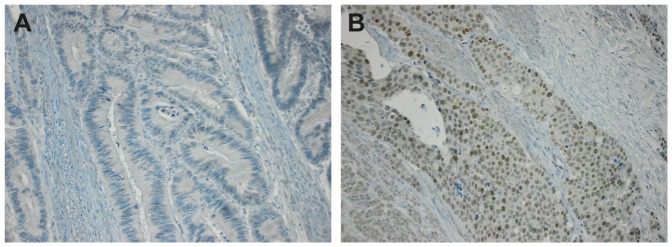
Figure 1. Representative immunohistochemical stainings of SOX2 expression in CRC tissue.
(A) Negative nuclear SOX2 staining in a moderately differentiated CRC. (B) Positive nuclear SOX2 staining in a poorly differentiated CRC.
Figure 2
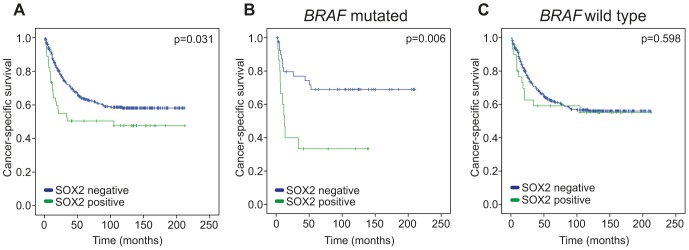
Figure 2. Cancer-specific survival analysis according to SOX2 expression.
Shown are Kaplan-Meier plots of cancer-specific survival in (A) all CRC patients, (B) BRAFV600E mutated CRC patients or (C) BRAF wild type CRC patients.
Figure 3
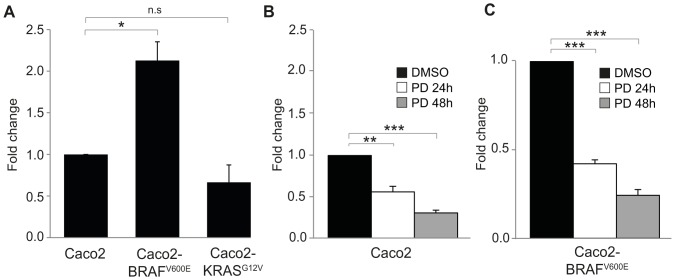
Figure 3. Real Time PCR analyses of SOX2 expression in CRC cell lines.
(A) Caco2 cells, Caco2 cells stably expressing BRAF mutation (Caco2-BRAFV600E) and Caco2 cells stably expressing KRAS mutation (Caco2-KRASG12V). SOX2 expression in Caco2 was set as 1. (B) Caco2 after cultivation with MEK-inhibitor, 24 or 48 h, or DMSO for 48 h as control. SOX2 expression in Caco2 treated with DMSO was set as 1. (C) Caco2-BRAFV600E after cultivation with MEK-inhibitor, 24 or 48 h, or DMSO for 48 h as control. SOX2 expression in Caco2-BRAFV600E treated with DMSO was set as 1. PD: PD98059 (MEK-inhibitor), *p<0.05, **p<0.01, ***p<0.001, n.s: non-significant p-value.
Figure 4
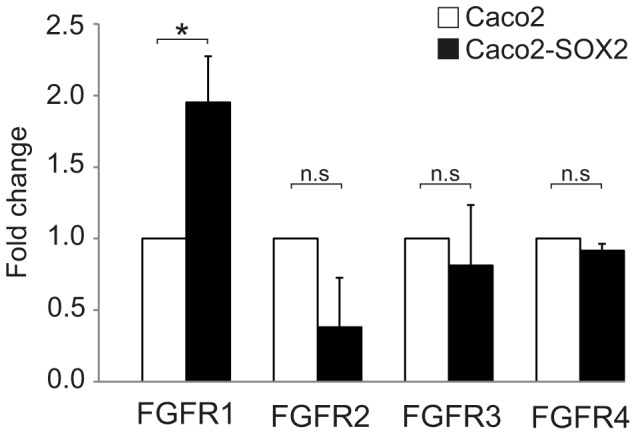
Figure 4. Expression of FGFR1 is increased in Caco2-SOX2 compared to Caco2.
Expression of FGFR1, FGFR2, FGFR3 and FGFR4 by RT-PCR analysis in Caco2 cells and Caco2 cells stably overexpressing SOX2 (Caco2-SOX2). The expression in Caco2 was set as 1. *p<0.05, n.s: non-significant p-value.

References

    1. Fearon ER, Vogelstein B (1990) A genetic model for colorectal tumorigenesis. Cell 61: 759–767. - PubMed
    1. Sarkar A, Hochedlinger K (2013) The sox family of transcription factors: versatile regulators of stem and progenitor cell fate. Cell Stem Cell 12: 15–30. - PMC - PubMed
    1. Avilion AA, Nicolis SK, Pevny LH, Perez L, Vivian N, et al. (2003) Multipotent cell lineages in early mouse development depend on SOX2 function. Genes Dev 17: 126–140. - PMC - PubMed
    1. Takahashi K, Yamanaka S (2006) Induction of pluripotent stem cells from mouse embryonic and adult fibroblast cultures by defined factors. Cell 126: 663–676. - PubMed
    1. Basu-Roy U, Seo E, Ramanathapuram L, Rapp TB, Perry JA, et al. (2012) Sox2 maintains self renewal of tumor-initiating cells in osteosarcomas. Oncogene 31: 2270–2282. - PMC - PubMed

Publication types

MeSH terms

Substances