


Immunologic strategies for HIV-1 remission and eradication
- PMID: 25013067
- PMCID: PMC4096716
- DOI: 10.1126/science.1255512
Immunologic strategies for HIV-1 remission and eradication
Abstract
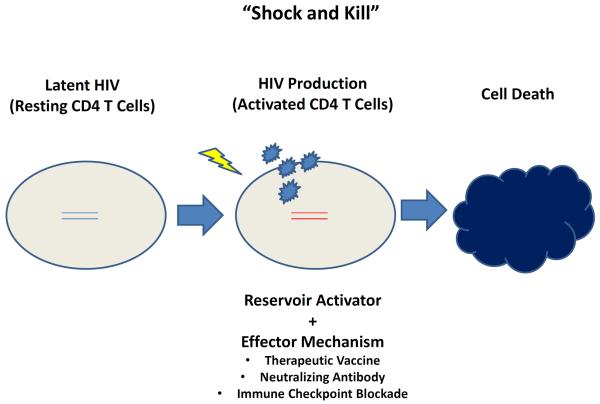
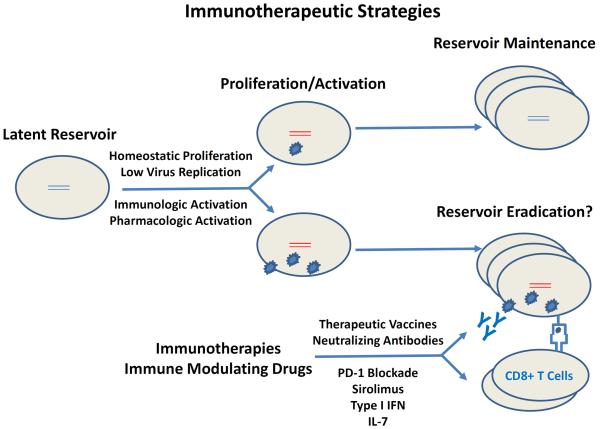
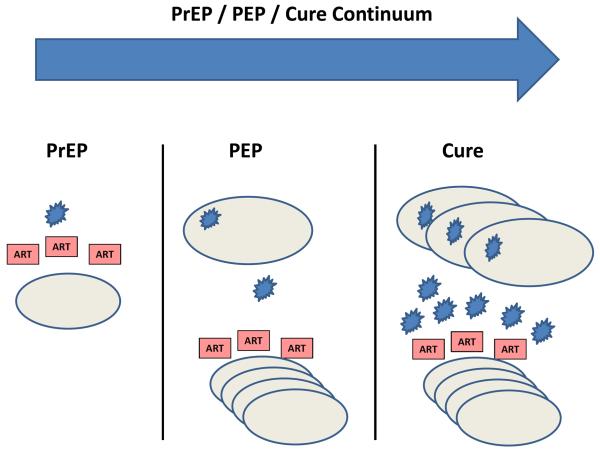
Antiretroviral therapy (ART) is able to suppress HIV-1 replication indefinitely in individuals who have access to these medications, are able to tolerate these drugs, and are motivated to take them daily for life. However, ART is not curative. HIV-1 persists indefinitely during ART as quiescent integrated DNA within memory CD4(+) T cells and perhaps other long-lived cellular reservoirs. In this Review, we discuss the role of the immune system in the establishment and maintenance of the latent HIV-1 reservoir. A detailed understanding of how the host immune system shapes the size and distribution of the viral reservoir should lead to the development of a new generation of immune-based therapeutics, which may eventually contribute to a curative intervention.
Copyright © 2014, American Association for the Advancement of Science.
Figures
References
Publication types
MeSH terms
Substances
Grants and funding
- U19 AI078526/AI/NIAID NIH HHS/United States
- AI096040/AI/NIAID NIH HHS/United States
- U19 AI096109/AI/NIAID NIH HHS/United States
- R01 AI084794/AI/NIAID NIH HHS/United States
- AI078526/AI/NIAID NIH HHS/United States
- AI100663/AI/NIAID NIH HHS/United States
- OD011170/OD/NIH HHS/United States
- R01 OD011170/OD/NIH HHS/United States
- UM1 AI100663/AI/NIAID NIH HHS/United States
- AI095985/AI/NIAID NIH HHS/United States
- AI084794/AI/NIAID NIH HHS/United States
- U19 AI095985/AI/NIAID NIH HHS/United States
- U19 AI096040/AI/NIAID NIH HHS/United States
- AI096109/AI/NIAID NIH HHS/United States
LinkOut - more resources
Full Text Sources
Other Literature Sources
Medical
Research Materials
