


Electrolytes Disturbance and Cyclosporine Blood Levels among Kidney Transplant Recipients
- PMID: 25013642
- PMCID: PMC4089299
Electrolytes Disturbance and Cyclosporine Blood Levels among Kidney Transplant Recipients
Abstract
Background: Kidney transplantation is associated with various biochemical abnormalities such as changes in serum blood level of sodium (Na), potassium (K), calcium (Ca), and phosphorous (P). Although cyclosporine (CsA) is used commonly, the prevalence of its side effects, including electrolytes disturbance, is not well understood.
Objective: To find the prevalence of electrolytes disturbance and its relation to CsA blood levels.
Methods: In a retrospective study, 3308 kidney transplant recipients transplanted between 2008 and 2011 were studied. We evaluated the relation between serum Ca, P, Na, K and CsA trough (C0) and 2-hour post-dose (C2) levels.
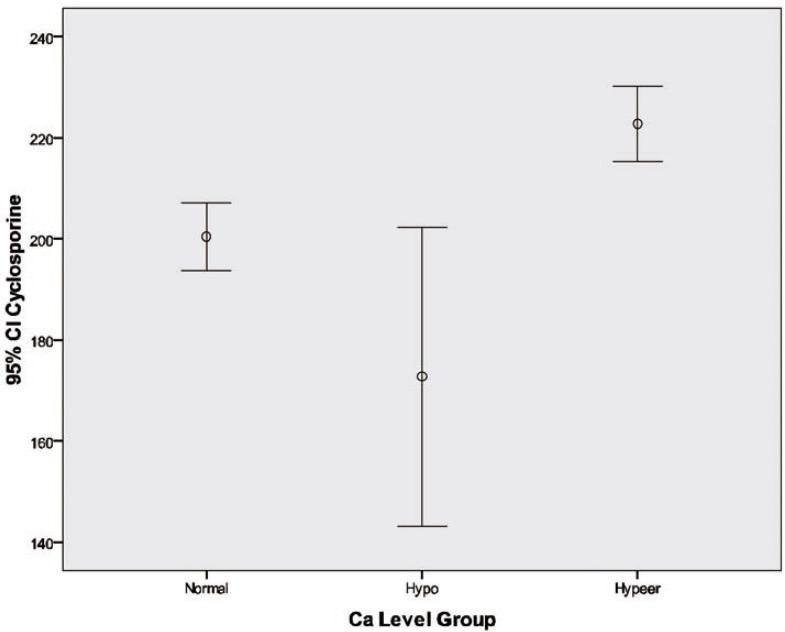
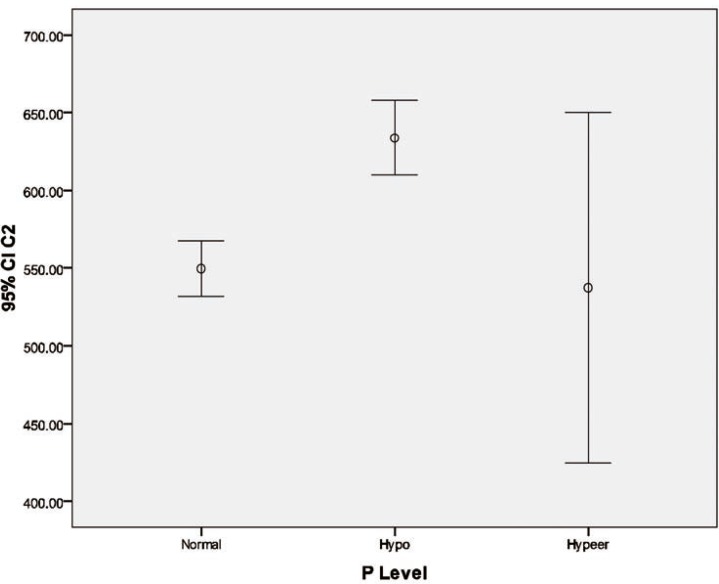
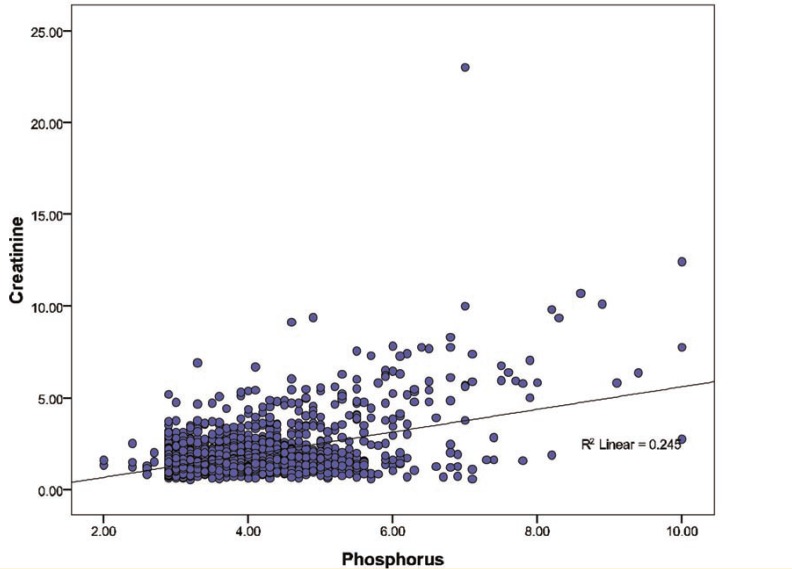
Results: The mean±SD age of recipients was 37±15 years; 63% of patients were male. Overall, C2 levels had correlation with Ca blood level (p=0.018; OR: 1.13, 95%CI: 1.02-1.25), C0 levels had also correlation with blood levels of P and Cr (p<0.001; OR: 1.83, 95% CI: 1.59-2.11).
Conclusion: Electrolyte disturbances are prevalent. Higher serum levels of CsA can worsen the allograft function by disturbing the serum P and Ca levels.
Keywords: Cyclosporine; electrolytes; kidney; transplantation.
Figures
References
-
- El-Agroudy A, Ismail A, Nassar M, Ghoneim M. Cyclosporine therapeutic monitoring with Cmax in kidney transplant recipients: does it fit for all populations? Experimental and clinical transplantation. journal of the Middle East Society for Organ Transplantation. 2008;6:282. - PubMed
-
- Rostami Z, Einollahi B. Cyclosporine monitoring in organ transplantation: Do we need a new concept? . Nephro-Urol Mon. 2011;3:97–8.
-
- Melnikov S, Mayan H, Uchida S, et al. Cyclosporine metabolic side effects: association with the WNK4 system. Eur J Clin Invest . 2011 - PubMed
-
- Tekgündüz E, ApaydIn S, Seyahi N, AltIparmak M. Electrolyte Free Water Clearance Could Be an Early Sign of Renal Dysfunction in Renal Transplant Patients. 2009:3726–30. - PubMed
LinkOut - more resources
Full Text Sources
Miscellaneous