


Residential greenness and birth outcomes: evaluating the influence of spatially correlated built-environment factors
- PMID: 25014041
- PMCID: PMC4181932
- DOI: 10.1289/ehp.1308049
Residential greenness and birth outcomes: evaluating the influence of spatially correlated built-environment factors
Abstract
Background: Half the world's population lives in urban areas. It is therefore important to identify characteristics of the built environment that are beneficial to human health. Urban greenness has been associated with improvements in a diverse range of health conditions, including birth outcomes; however, few studies have attempted to distinguish potential effects of greenness from those of other spatially correlated exposures related to the built environment.
Objectives: We aimed to investigate associations between residential greenness and birth outcomes and evaluate the influence of spatially correlated built environment factors on these associations.
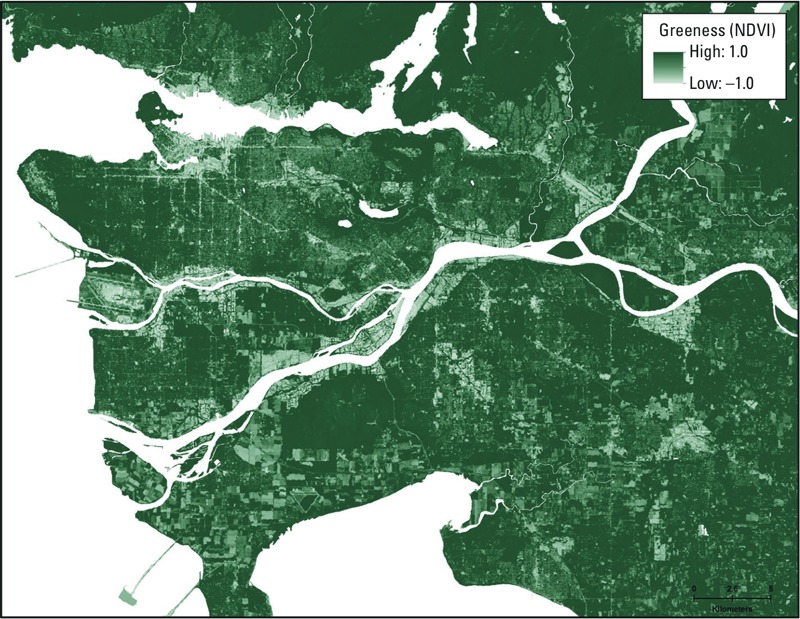
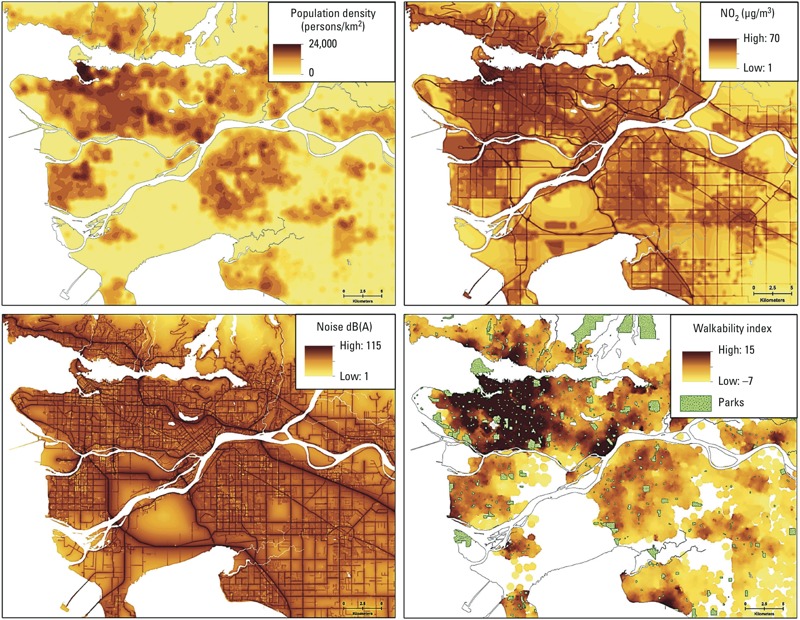
Methods: We examined associations between residential greenness [measured using satellite-derived Normalized Difference Vegetation Index (NDVI) within 100 m of study participants' homes] and birth outcomes in a cohort of 64,705 singleton births (from 1999-2002) in Vancouver, British Columbia, Canada. We also evaluated associations after adjusting for spatially correlated built environmental factors that may influence birth outcomes, including exposure to air pollution and noise, neighborhood walkability, and distance to the nearest park.
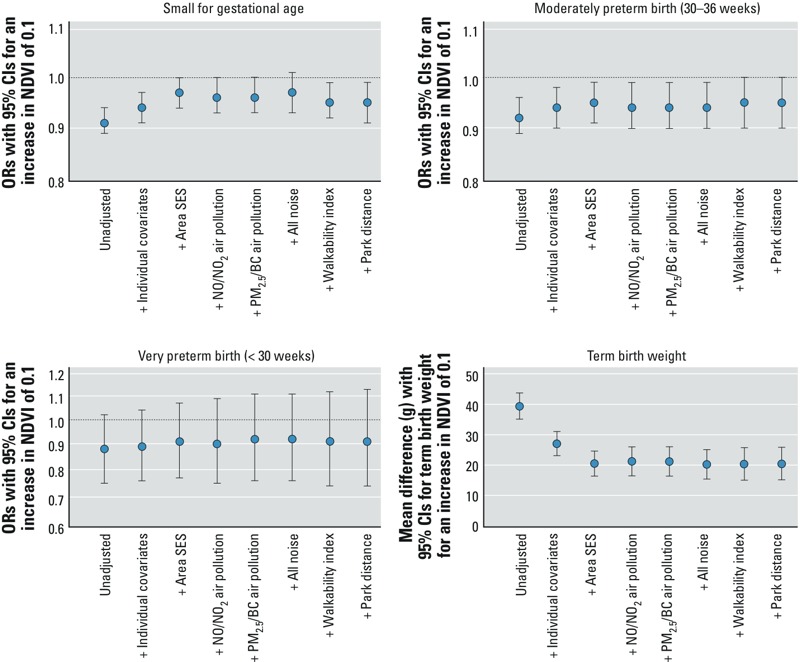
Results: An interquartile increase in greenness (0.1 in residential NDVI) was associated with higher term birth weight (20.6 g; 95% CI: 16.5, 24.7) and decreases in the likelihood of small for gestational age, very preterm (< 30 weeks), and moderately preterm (30-36 weeks) birth. Associations were robust to adjustment for air pollution and noise exposures, neighborhood walkability, and park proximity.
Conclusions: Increased residential greenness was associated with beneficial birth outcomes in this population-based cohort. These associations did not change after adjusting for other spatially correlated built environment factors, suggesting that alternative pathways (e.g., psychosocial and psychological mechanisms) may underlie associations between residential greenness and birth outcomes.
Conflict of interest statement
The authors declare they have no actual or potential competing financial interests.
Figures
Comment in
-
Beyond spatial relationships: residential greenness and birth outcomes.Environ Health Perspect. 2014 Oct;122(10):A281. doi: 10.1289/ehp.122-A281. Environ Health Perspect. 2014. PMID: 25271404 Free PMC article. No abstract available.
References
-
- BC (British Columbia) Ministry of Health. Medical Services Plan (MSP) Payment Information File. V2. Population Data BC. 2009a. Available: https://www.popdata.bc.ca/data/internal/health/msp [accessed 17 June 2014]
-
- BC (British Columbia) Ministry of Health. PharmaNet. 2009b. Available: https://www.popdata.bc.ca/data/external/PharmaNet [accessed 17 June 2014]
-
- BC (British Columbia) Ministry of Health. The Health and Well-being of Women in British Columbia. 2011. Available: http://www.health.gov.bc.ca/pho/pdf/phoannual2008.pdf [accessed 17 June 2013]
Publication types
MeSH terms
LinkOut - more resources
Full Text Sources
Other Literature Sources