Female ageing and reproductive outcome in assisted reproduction cycles
- PMID: 25017405
- PMCID: PMC4294057
- DOI: 10.11622/smedj.2014081
Female ageing and reproductive outcome in assisted reproduction cycles
Abstract
Introduction: Fertility in women declines with increasing age. With the deferment of marriage and childbearing, couples are turning to assisted reproductive technology to counteract this decline. We aimed to evaluate the results of in vitrofertilisation (IVF)/intracytoplasmic sperm injection (ICSI) in women of different age groups, and highlight the cost-effectiveness of IVF treatment in these groups while assessing its implications on the national healthcare provision model.
Methods: Retrospective analysis of 3,412 stimulated IVF/ICSI cycles in a hospital-based IVF centre was performed from January 2008 to December 2010. Patients were stratified into seven age groups: < 30 years; 30-35 years; 36-37 years; 38 years; 39 years; 40-44 years; and ≥ 45 years.
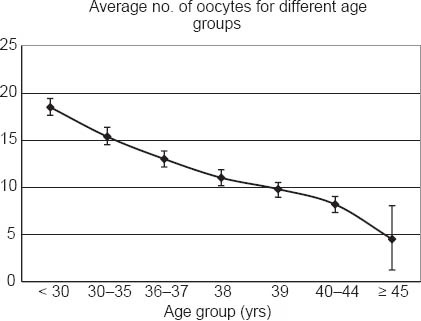
Results: Age had a significant effect on the number of cycles leading to embryo transfer (p < 0.001). The number of oocytes retrieved decreased across the various age groups (p < 0.001) and was the highest among women aged < 30 (mean 18.5 ± 10.3) years. With increasing age, there was a trend toward a lower fertilisation rate. Age also had a significant effect on the rates of clinical pregnancy, live birth and multiple pregnancies (p < 0.001).
Conclusion: Patients aged < 30 years had the best IVF outcomes, reflecting optimal reproductive capacity. Age-related decline in fertility starts after 30 years. Women opting for IVF should be counselled about age-specific success rates while taking into account individual risk factors.
Figures



References
-
- Speroff L. The effect of aging on fertility. Curr Opin Obstet Gynecol. 1994;6:115–20. - PubMed
-
- Dicker D, Goldman JA, Ashkenazi J, et al. Age and pregnancy rates in in-vitro fertilization. J In Vitro Fert Embryo Transf. 1991;8:141–4. - PubMed
-
- Scwartz D, Mayaux MJ. Female fecundity as a function of age: results of artificial insemination in 2193 nulliparous women with azoospermic husbands. Federation CECOS. N Engl J Med. 1982;306:404–6. - PubMed
-
- London: Human Fertilization and Embryo Authority; 1996. Human Fertilization and Embryo Authority. The patients’ guide to DI and IVF clinic.
MeSH terms
LinkOut - more resources
Full Text Sources
Medical