


Acute changes in mood induced by subthalamic deep brain stimulation in Parkinson disease are modulated by psychiatric diagnosis
- PMID: 25017671
- PMCID: PMC4167923
- DOI: 10.1016/j.brs.2014.06.002
Acute changes in mood induced by subthalamic deep brain stimulation in Parkinson disease are modulated by psychiatric diagnosis
Abstract
Background: Deep brain stimulation of the subthalamic nucleus (STN DBS) reduces Parkinson disease (PD) motor symptoms but has unexplained, variable effects on mood.
Objective: The study tested the hypothesis that pre-existing mood and/or anxiety disorders or increased symptom severity negatively affects mood response to STN DBS.
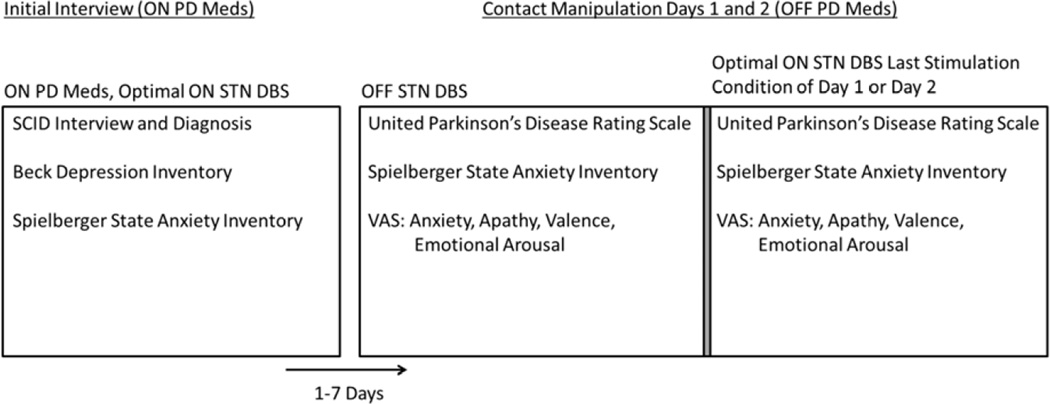
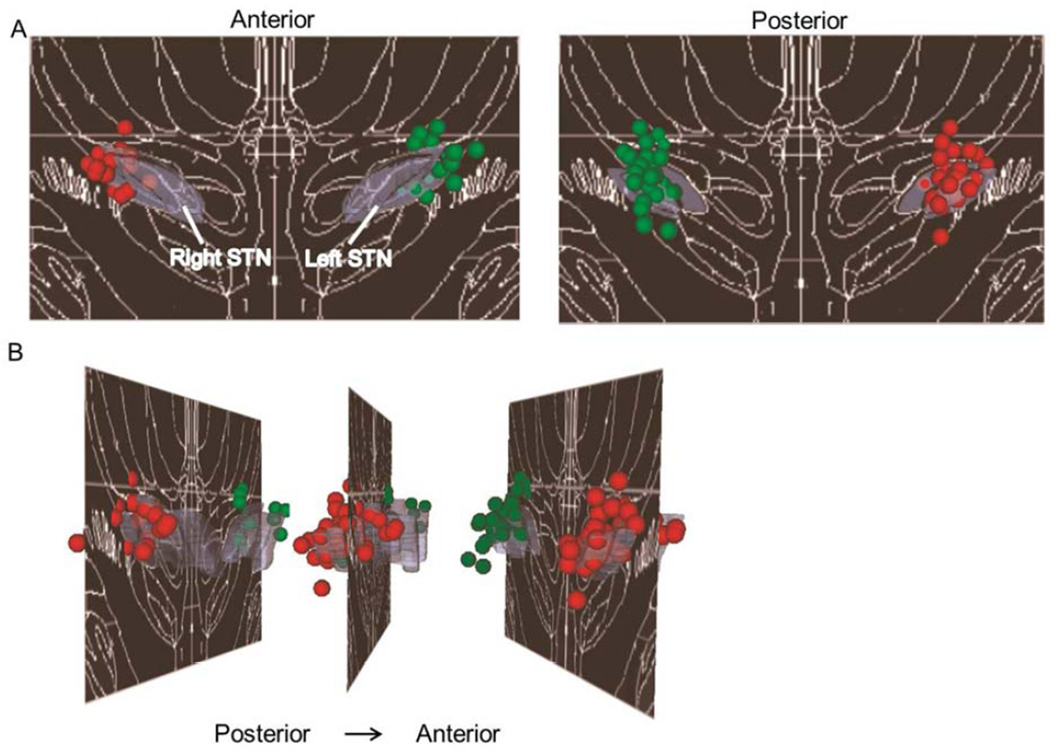
Methods: Thirty-eight PD participants with bilateral STN DBS and on PD medications were interviewed with Structured Clinical Interview for DSM-IV-TR Axis I Disorders (SCID) and completed Beck Depression Inventory (BDI) and Spielberger State Anxiety Inventory (SSAI) self-reports. Subsequently, during OFF and optimal ON (clinical settings) STN DBS conditions and while off PD medications, motor function was assessed with the United Parkinson Disease Rating Scale (UPDRS, part III), and participants rated their mood with Visual Analogue Scales (VAS), and again completed SSAI. VAS mood variables included anxiety, apathy, valence and emotional arousal.
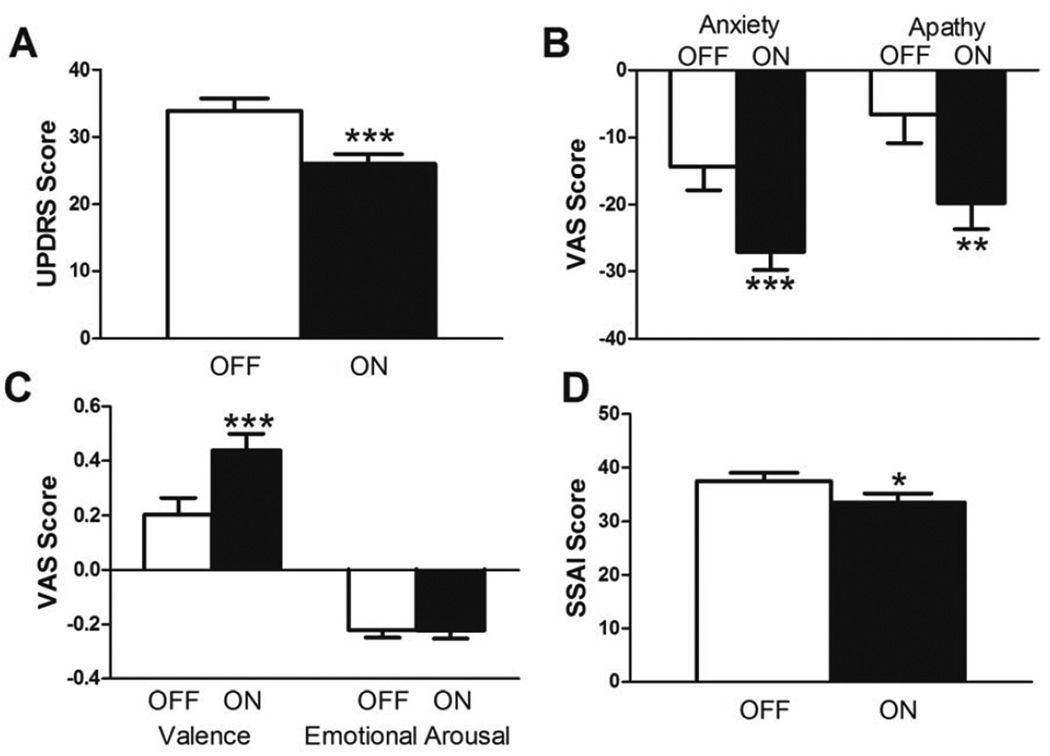
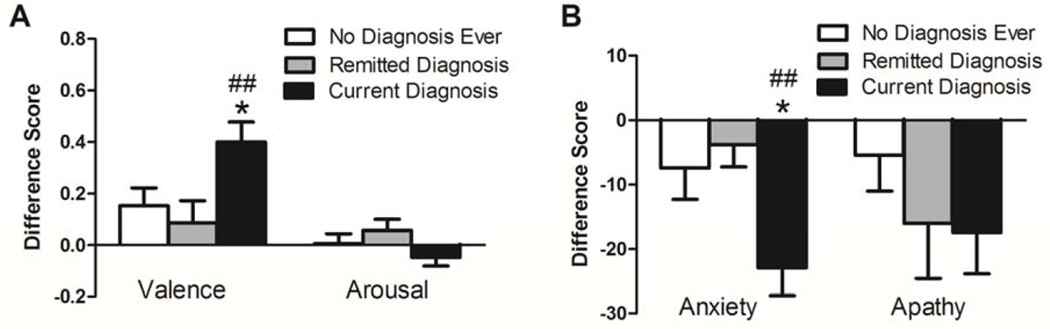
Results: STN DBS improved UPDRS scores and mood. Unexpectedly, PD participants diagnosed with current anxiety or mood disorders experienced greater STN DBS-induced improvement in mood than those diagnosed with remitted disorders or who were deemed as having never met threshold criteria for diagnosis. BDI and SSAI scores did not modulate mood response to STN DBS, indicating that clinical categorical diagnosis better differentiates mood response to STN DBS than self-rated symptom severity. SCID diagnosis, BDI and SSAI scores did not modulate motor response to STN DBS.
Conclusions: PD participants diagnosed with current mood or anxiety disorders are more sensitive to STN DBS-induced effects on mood, possibly indicating altered basal ganglia circuitry in this group.
Keywords: Anxiety disorder; Deep brain stimulation; Mood; Mood disorder; Parkinson disease; Subthalamic nucleus.
Copyright © 2014 Elsevier Inc. All rights reserved.
Conflict of interest statement
Figures
References
-
- Black KJ, Pandya A. Depression in Parkinson disease. In: Gilliam F, Sheline YI, editors. Depression and Brain Dysfunction. Oxon, UK: Parthenon Publishing; 2005. pp. 199–237.
-
- Cummings JL. Depression and Parkinson’s disease: a review. Am J Psychiatry. 1992;149:443–454. - PubMed
-
- Lee RG. Physiology of the basal ganglia and pathophysiology of Parkinson’s disease. Can J Neurol Sci. 1987;14:373–380. - PubMed
-
- Siddiqui MS, Ellis T, Tatter SS, Foote KD, Okun MS. Deep Brain Stimulation: Patient Selection in Parkinson’s Disease, Other Movement Disorders, and Neuropsychiatric Disorders. In: Tarsy D, Vitek JL, Starr PA, Okun MS, editors. Deep Brain Stimulation in Neurological and Psychiatric Disorders. Totowa, NJ: Humana Press; 2008. pp. 83–98.
Publication types
MeSH terms
Grants and funding
LinkOut - more resources
Full Text Sources
Other Literature Sources
Medical
Miscellaneous
