


Central nervous system relapse in adults with acute lymphoblastic leukemia after allogeneic hematopoietic stem cell transplantation
- PMID: 25017763
- PMCID: PMC4346133
- DOI: 10.1016/j.bbmt.2014.07.005
Central nervous system relapse in adults with acute lymphoblastic leukemia after allogeneic hematopoietic stem cell transplantation
Abstract
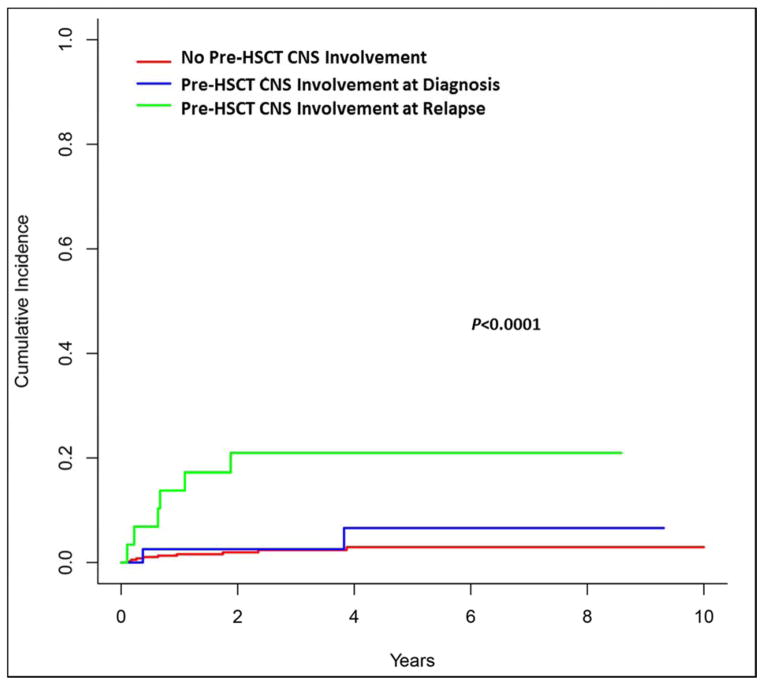
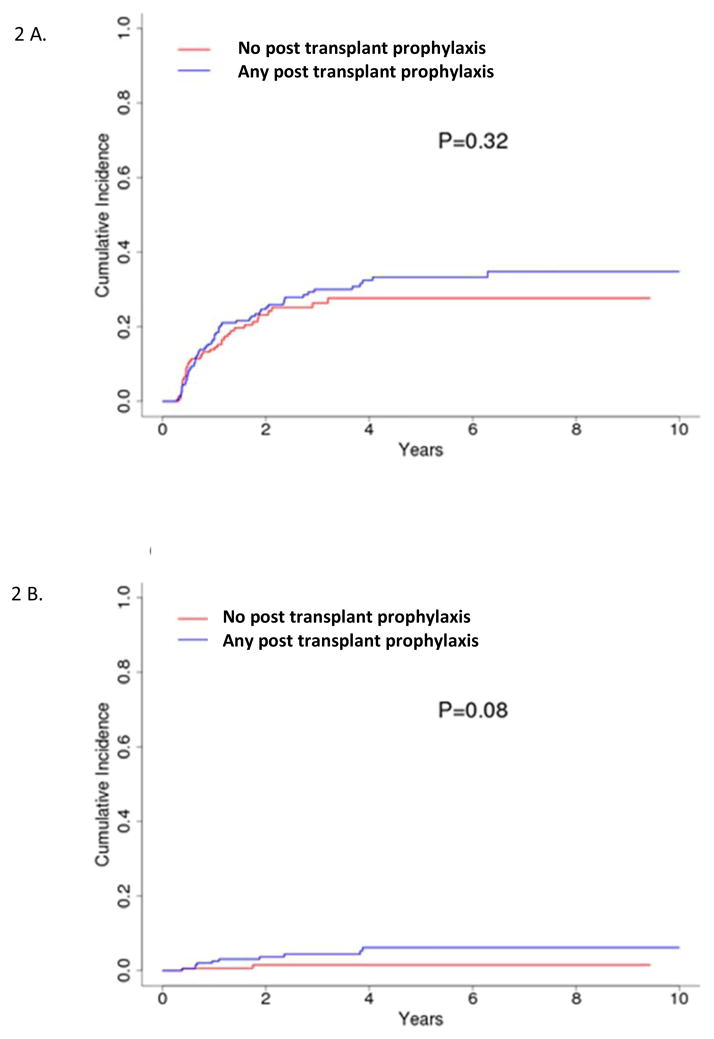
Central nervous system (CNS) relapse after allogeneic hematopoietic stem cell transplantation (HSCT) confers a poor prognosis in adult patients with acute lymphoblastic leukemia (ALL). Preventing CNS relapse after HSCT remains a therapeutic challenge, and criteria for post-HSCT CNS prophylaxis have not been addressed. In a 3-center retrospective analysis, we reviewed the data for 457 adult patients with ALL who received a first allogeneic HSCT in first or second complete remission (CR). All patients received CNS prophylaxis as part of their upfront therapy for ALL, but post-transplantation CNS prophylaxis practice varied by institution and was administered to 48% of the patients. Eighteen patients (4%) developed CNS relapse after HSCT (isolated CNS relapse, n = 8; combined bone marrow and CNS relapse, n = 10). Patients with a previous history of CNS involvement with leukemia had a significantly higher rate for CNS relapse (P = .002), and pretransplantation CNS involvement was the only risk factor for post-transplantation CNS relapse found in this study. We failed to find a significant effect of post-transplantation CNS prophylaxis to prevent relapse after transplantation. Furthermore, no benefit for post-transplantation CNS prophylaxis could be detected when a subgroup analysis of patients with (P = .10) and without previous CNS involvement (P = .52) was performed. Finally, we could not find any significant effect for intensity of the transplantation conditioning regimen on CNS relapse after HSCT. In conclusion, CNS relapse is an uncommon event after HSCT for patients with ALL in CR1 or CR2, but with higher risk among patients with CNS involvement before transplantation. Furthermore, neither the use of post-HSCT CNS prophylaxis nor the intensity of the HSCT conditioning regimen made a significant difference in the rate of post-HSCT CNS relapse.
Keywords: Acute lymphoblastic leukemia; Allogeneic hematopoietic stem cell transplantation; Central nervous system relapse.
Copyright © 2014 American Society for Blood and Marrow Transplantation. Published by Elsevier Inc. All rights reserved.
Figures
References
-
- Goldstone AH, Richards SM, Lazarus HM, Tallman MS, Buck G, Fielding AK, et al. In adults with standard-risk acute lymphoblastic leukemia, the greatest benefit is achieved from a matched sibling allogeneic transplantation in first complete remission, and an autologous transplantation is less effective than conventional consolidation/maintenance chemotherapy in all patients: final results of the International ALL Trial (MRC UKALL XII/ECOG E2993) Blood. 2008 Feb 15;111(4):1827–33. - PubMed
-
- Gratwohl A, Brand R, Frassoni F, Rocha V, Niederwieser D, Reusser P, et al. Cause of death after allogeneic haematopoietic stem cell transplantation (HSCT) in early leukaemias: An EBMT analysis of lethal infectious complications and changes over calendar time. Bone Marrow Transplantation. 2005;36(9):757–69. - PubMed
-
- Spyridonidis A, Labopin M, Schmid C, Volin L, Yakoub-Agha I, Stadler M, et al. Outcomes and prognostic factors of adults with acute lymphoblastic leukemia who relapse after allogeneic hematopoietic cell transplantation. An analysis on behalf of the Acute Leukemia Working Party of EBMT. Leukemia. 2012 Jun;26(6):1211–7. print. - PubMed
-
- Cortes J, O’Brien SM, Pierce S, Keating MJ, Freireich EJ, Kantarjian HM. The value of high-dose systemic chemotherapy and intrathecal therapy for central nervous system prophylaxis in different risk groups of adult acute lymphoblastic leukemia. Blood. 1995 Sep 15;86(6):2091–7. - PubMed
Publication types
MeSH terms
Grants and funding
LinkOut - more resources
Full Text Sources
Other Literature Sources
