


Why Virginity Pledges Succeed or Fail: The Moderating Effect of Religious Commitment Versus Religious Participation
- PMID: 25018616
- PMCID: PMC4090803
- DOI: 10.1007/s10826-013-9769-3
Why Virginity Pledges Succeed or Fail: The Moderating Effect of Religious Commitment Versus Religious Participation
Abstract
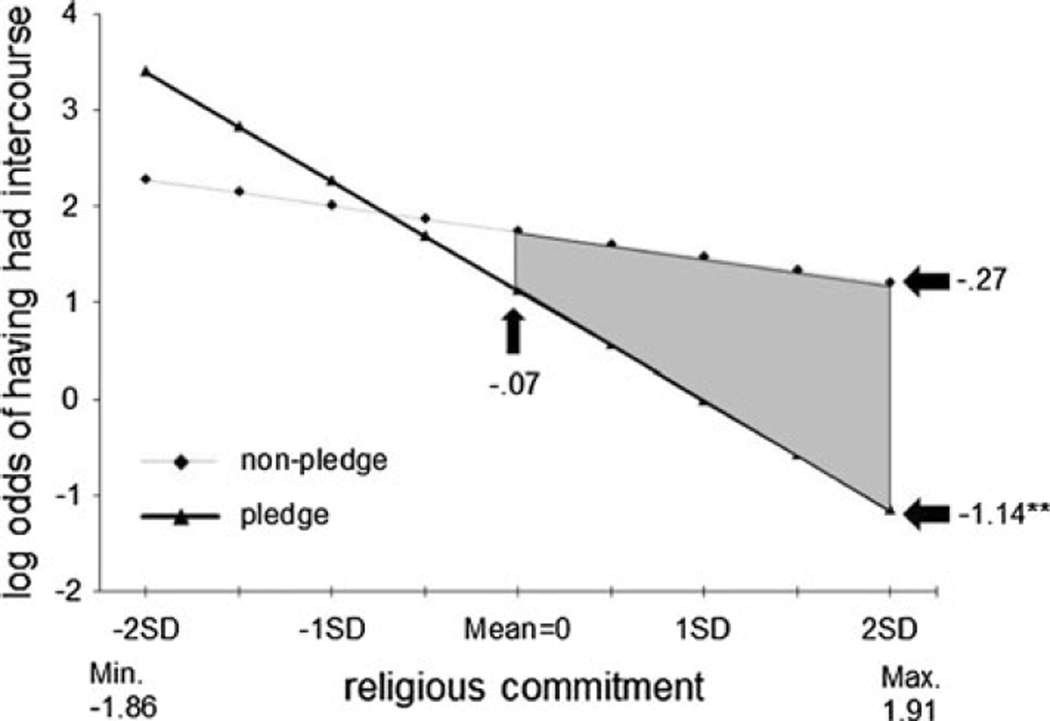
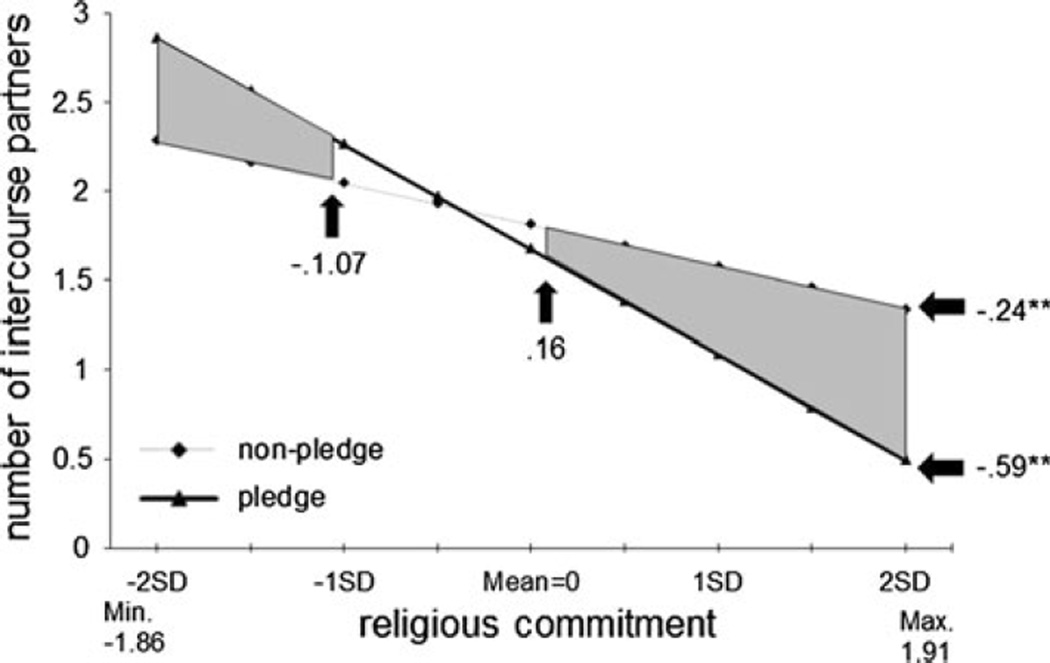
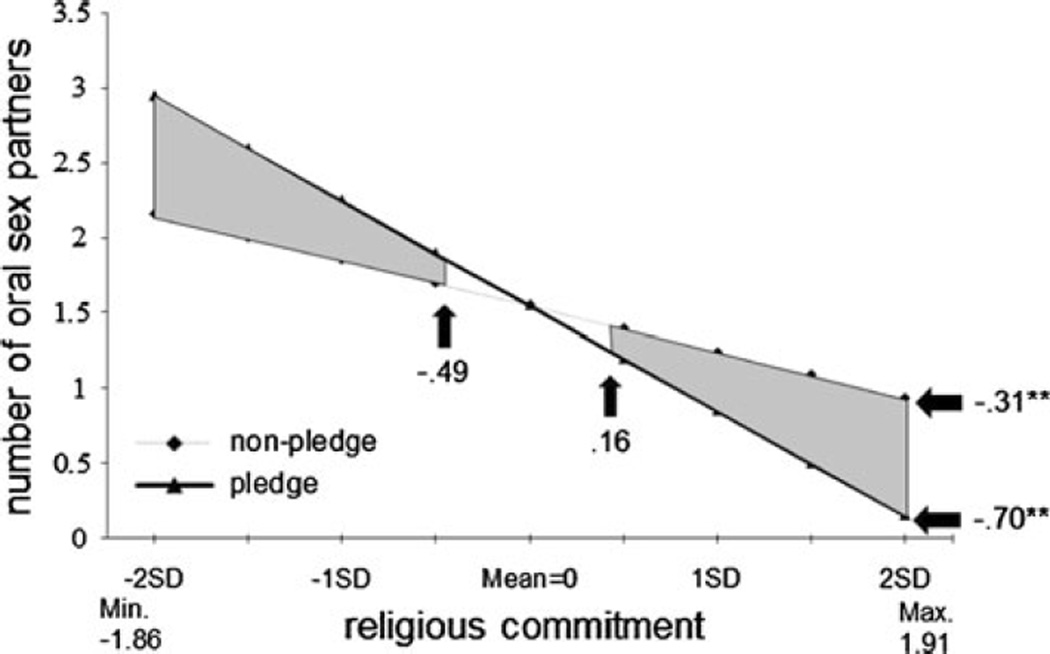
Over the past two decades, virginity pledges have proliferated in the US, despite mixed results regarding their effectiveness. Few studies have examined possible mechanisms that may shed light on why pledges work for some individuals but not others. Using a sample of emerging-adults aged 18-24 years old (n = 1,380),we examine the influence of religiosity on pledge signing and adherence, specifically whether the effectiveness of pledges is moderated by religiosity. Findings show that while religious participation is positively associated with signing a pledge, there is amoderating effect of religious commitment. That is, when religious commitment is high, adherence to the pledge is greater. However, for pledge signers with low religious commitment, there are unintended negative consequences with regard to increased participation in risky sexual behaviors, whether compared to other people who signed the pledge who are equally committed to their religion or to individuals who have never taken such a pledge. Implications for research and policy are discussed.
Keywords: Emerging adults; Health behavior; Religiosity; Sexual behavior; Virginity pledges.
Figures
References
-
- Aiken LS, West SG. Multiple regression: Testing and interpreting interactions. London: Sage; 1991.
-
- Arnett JJ. Emerging adulthood: A theory of development from the late teens through the twenties. American Psychologist. 2000;55:469–480. - PubMed
-
- Baier CJ, Wright BR. If you love me, keep my commandments: A meta-analysis of the effect of religion on crime. Journal of Research on Crime and Delinquency. 2001;38:3–21.
-
- Bauer DJ, Curran PJ. Probing interactions in fixed and multilevel regression: Inferential and graphical techniques. Multivariate Behavioral Research. 2005;40:373–400. - PubMed
-
- Baumer EP, South SJ. Community effects on youth sexual activity. Journal of Marriage and the Family. 2001;63:540–554.
Grants and funding
LinkOut - more resources
Full Text Sources
Other Literature Sources
Miscellaneous