


Childhood obesity prevention: a life-course framework
- PMID: 25018875
- PMCID: PMC4089584
- DOI: 10.1038/ijosup.2013.2
Childhood obesity prevention: a life-course framework
Abstract
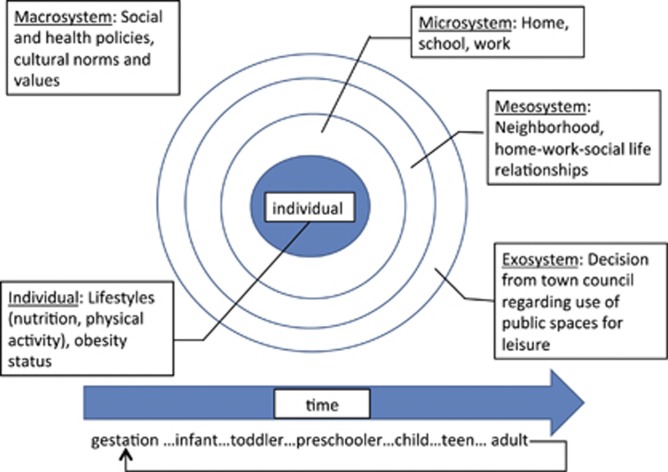
Overweight/obese women are more likely to deliver newborns that also have a predisposition to store excessive amounts of fat since the early infancy period. Two evidence-based cycles are considered on the explanation of the maternal-child life-course approach for obesity prevention. The 'maternal' cycle indicates that pre-pregnancy overweight primiparous women are more likely to gain excessive weight during gestation and to retain excessive weight postpartum. The 'offspring' cycle indicates that newborns of pre-pregnancy overweight/obese women are more likely themselves to store excessive body fat starting very early on in life. The social ecological model (SEM) has been adopted as the framework needed to guide obesity prevention initiatives. The SEM considers the complex interrelationship among highly interconnected systems embedded within each other and having the individual on its inner most. Recommendations to women should include prevention of overweight/obesity prenatally, to attain adequate gestational weight and to lose the weight normally gained as part of the physiological response to pregnancy in the postpartum period. For the 'offspring' the aims should be to promote optimal breastfeeding and complementary feeding practices, and to foster physical activity and adequate dietary habits. Well-coordinated inter-sectorial national obesity prevention programs built upon the life-course framework foundation requires in-depth early life systems analyses driven by the SEM.
Keywords: childhood; life-course; prevention; social ecological model.
Figures
References
-
- Flegal KM, Carroll MD, Kit BK, Ogden CL. Prevalence of obesity and trends in the distribution of body mass index among US adults, 1999–2010. JAMA 2012; 307: 491–497. - PubMed
-
- IOM (Institute of Medicine). Weight Gain during Pregnancy: Reexamining the Guidelines. The National Academies Press: Washington, DC, USA. - PubMed
-
- Nader PR, Huang TT, Gahagan S, Kumanyika S, Hammond RA, Christoffel KK. Next steps in obesity prevention: altering early life systems to support healthy parents, infants, and toddlers. Child Obes 2012; 8: 195–204. - PubMed
Publication types
LinkOut - more resources
Full Text Sources
Other Literature Sources
