


A population-based study on care and clinical outcomes in remote dwellers with heavy proteinuria
- PMID: 25018993
- PMCID: PMC4089650
- DOI: 10.1038/kisup.2013.26
A population-based study on care and clinical outcomes in remote dwellers with heavy proteinuria
Abstract
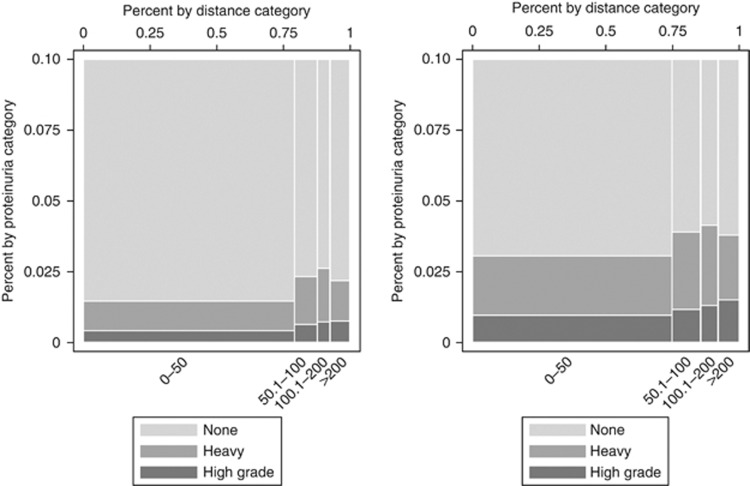
Patients with proteinuria are at high risk of cardiovascular and renal complications. Since this risk can be reduced by appropriate interventions, we hypothesized that remote dwellers, who are known to have lower access to health care, might have a higher risk of complications. Using a database of all adults with at least one measure of urine protein between May 2002 and March 2009, we examined the frequency of heavy proteinuria, quality of care delivery, and rates of adverse clinical outcomes across travel distance categories to the nearest nephrologist. Heavy proteinuria was defined by an albumin:creatinine ratio ⩾60 mg/mmol, protein:creatinine ratio ⩾100 mg/mmol, or protein ⩾2+ on dipstick urinalysis. Of 1,359,330 subjects in the study, 262,209 were remote dwellers. The overall prevalence of proteinuria was 2.3%, 2.9%, and 2.5% in those who live >200, 100.1-200, and 50.1-100 km, respectively, as compared to 1.5% in those who live within 50 km of the nearest nephrologist (P<0.001). Similarly, the prevalence of heavy proteinuria was increased among remote dwellers compared to urban dwellers (P=0.001 for trend). There were no differences in markers of good-quality care or the rate of adverse outcomes (all-cause mortality, heart failure, and renal outcomes) across distance categories. However, the rates of hospitalizations and stroke were significantly higher with increased distance from the nearest nephrologist (P<0.001and 0.02, respectively). In conclusion, heavy proteinuria was common in Alberta residents, especially in remote dwellers. Care seemed similar across distance categories of travel, but with higher risk of hospitalizations and stroke among remote dwellers. Further work is needed to understand the basis for the increased risk of hospitalizations and stroke.
Keywords: adverse clinical outcomes; population; proteinuria; quality of care; remote dwellers.
Figures
References
-
- Levey AS, de Jong PE, Coresh J, et al. The definition, classification, and prognosis of chronic kidney disease: a KDIGO Controversies Conference report. Kidney Int. 2011;80:17–28. - PubMed
-
- Gerstein HC, Mann JF, Yi Q, et al. Albuminuria and risk of cardiovascular events, death, and heart failure in diabetic and nondiabetic individuals. JAMA. 2001;286:421–426. - PubMed
-
- Hemmelgarn BR, Manns BJ, Lloyd A, et al. Relation between kidney function, proteinuria, and adverse outcomes. JAMA. 2010;303:423–429. - PubMed
Grants and funding
LinkOut - more resources
Full Text Sources
Other Literature Sources
