


Effect of citrus flavonoids, naringin and naringenin, on metabolic syndrome and their mechanisms of action
- PMID: 25022990
- PMCID: PMC4085189
- DOI: 10.3945/an.113.005603
Effect of citrus flavonoids, naringin and naringenin, on metabolic syndrome and their mechanisms of action
Abstract
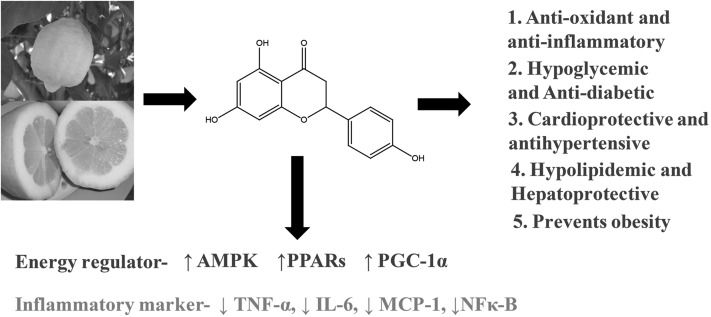
Flavonoids are important natural compounds with diverse biologic activities. Citrus flavonoids constitute an important series of flavonoids. Naringin and its aglycone naringenin belong to this series of flavonoids and were found to display strong anti-inflammatory and antioxidant activities. Several lines of investigation suggest that naringin supplementation is beneficial for the treatment of obesity, diabetes, hypertension, and metabolic syndrome. A number of molecular mechanisms underlying its beneficial activities have been elucidated. However, their effect on obesity and metabolic disorder remains to be fully established. Moreover, the therapeutic uses of these flavonoids are significantly limited by the lack of adequate clinical evidence. This review aims to explore the biologic activities of these compounds, particularly on lipid metabolism in obesity, oxidative stress, and inflammation in context of metabolic syndrome.
© 2014 American Society for Nutrition.
Conflict of interest statement
Author disclosures: M. A. Alam, N. Subhan, M. M. Rahman, S. J. Uddin, H. M. Reza, and S. D. Sarker, no conflicts of interest.
Figures
References
-
- Fogli-Cawley JJ, Dwyer JT, Saltzman E, McCullough ML, Troy LM, Meigs JB, Jacques PF. The 2005 Dietary Guidelines for Americans and risk of the metabolic syndrome. Am J Clin Nutr 2007;86:1193–201 - PubMed
-
- Kesse-Guyot E, Fezeu L, Galan P, Hercberg S, Czernichow S, Castetbon K. Adherence to French nutritional guidelines is associated with lower risk of metabolic syndrome. J Nutr 2011;141:1134–9 - PubMed
-
- Bruce KD, Hanson MA. The developmental origins, mechanisms, and implications of metabolic syndrome. J Nutr 2010;140:648–52 - PubMed
-
- Després JP, Lemieux I. Abdominal obesity and metabolic syndrome. Nature 2006;444:881–7 - PubMed
Publication types
MeSH terms
Substances
LinkOut - more resources
Full Text Sources
Other Literature Sources
Medical
