SHAPS-C: the Snaith-Hamilton pleasure scale modified for clinician administration
- PMID: 25024906
- PMCID: PMC4081294
- DOI: 10.7717/peerj.429
SHAPS-C: the Snaith-Hamilton pleasure scale modified for clinician administration
Abstract
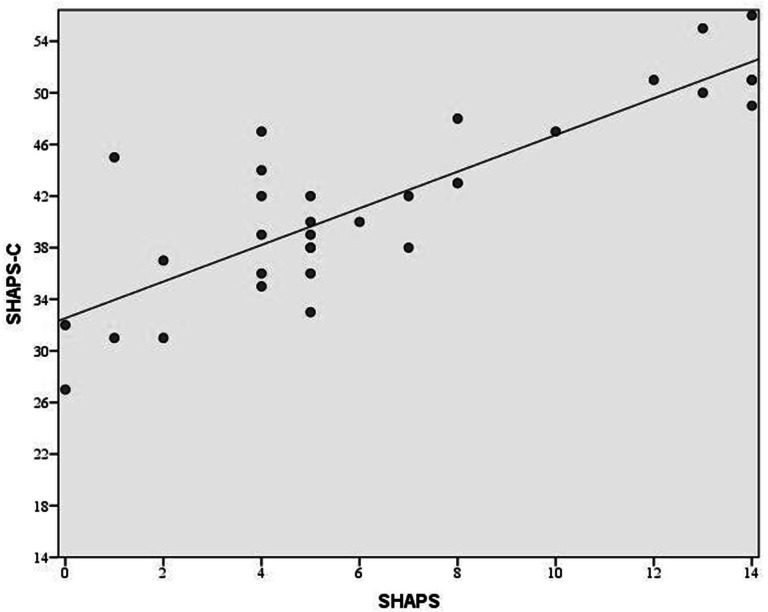
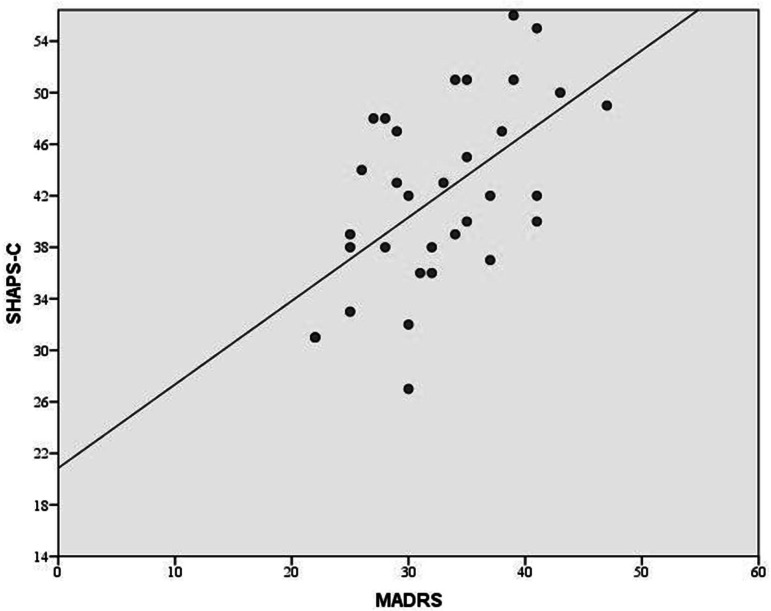
Anhedonia, a diminished or lack of ability to experience and anticipate pleasure represents a core psychiatric symptom in depression. Current clinician assessment of anhedonia is generally limited to one or two all-purpose questions and most well-known psychometric scales of anhedonia are relatively long, self-administered, typically not state sensitive, and are unsuitable for use in clinical settings. A user-friendly tool for a more in-depth clinician assessment of hedonic capacity is needed. The present study assessed the validity and reliability of a clinician administered version of the Snaith-Hamilton Pleasure Scale, the SHAPS-C, in 34 depressed subjects. We compared total and specific item scores on the SHAPS-C, SHAPS (self-report version), Montgomery-Åsberg Depression Rating Scale (MADRS), and the Inventory of Depressive Symptomatology-Self Rating version (IDS-SR). We also examined construct, content, concurrent, convergent, and discriminant validity, internal consistency, and split-half reliability of the SHAPS-C. The SHAPS-C was found to be valid and reliable. The SHAPS and the SHAPS-C were positively correlated with one another, with levels of depression severity, as measured by the MADRS, and the IDS-SR total scores, and with specific items of the MADRS and IDS-SR sensitive to measuring hedonic capacity. Our investigation indicates that the SHAPS-C is a user friendly, reliable, and valid tool for clinician assessment of hedonic capacity in depressed bipolar and unipolar patients.
Keywords: Anhedonia; Clinician administered; Depression; Self-assessment.
Figures
References
LinkOut - more resources
Full Text Sources
Other Literature Sources
Research Materials