


The three receptor tyrosine kinases c-KIT, VEGFR2 and PDGFRα, closely spaced at 4q12, show increased protein expression in triple-negative breast cancer
- PMID: 25025175
- PMCID: PMC4098911
- DOI: 10.1371/journal.pone.0102176
The three receptor tyrosine kinases c-KIT, VEGFR2 and PDGFRα, closely spaced at 4q12, show increased protein expression in triple-negative breast cancer
Abstract
Background: Triple-negative breast cancer (TNBC) is a heterogeneous subgroup of breast cancer with poor prognosis and no targeted therapy available. Receptor tyrosine kinases (RTKs) are emerging targets in anticancer therapy and many RTK-inhibiting drugs are currently being developed. The aim of this study was to elucidate if there is a correlation between the protein expression of three RTKs c-KIT, VEGFR2 and PDGFRα, their gene copy number, and prognosis in TNBC compared to non-TNBC.
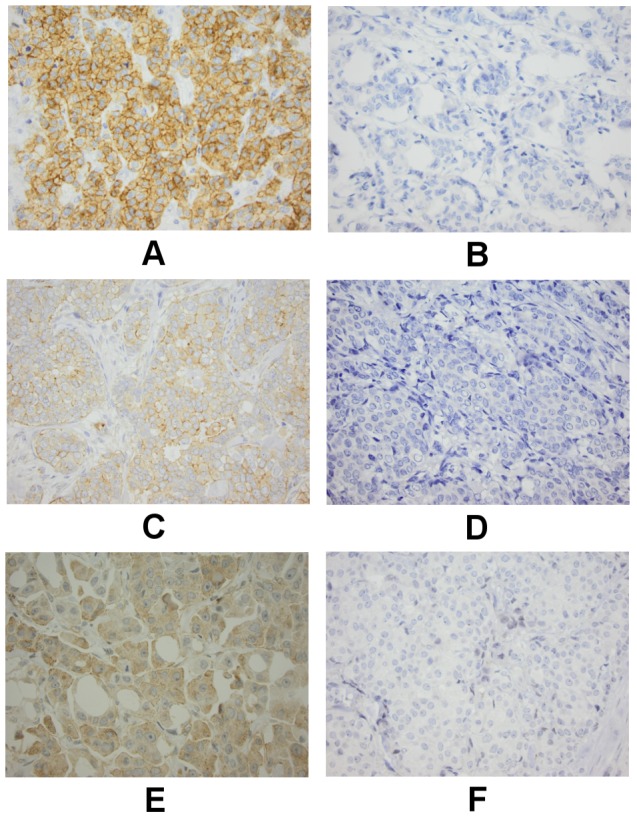
Methods: Tumor tissue samples from patients diagnosed with primary breast cancer were stained with immunohistochemistry (IHC) for protein assessment, and with fluorescence in situ hybridization (FISH) for gene copy number determination. Breast cancer mortality (BCM), measured from the date of surgery to death, was used as endpoint.
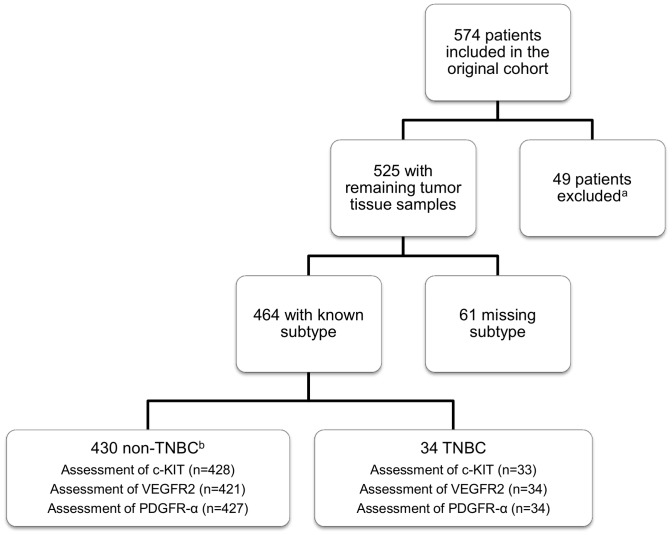
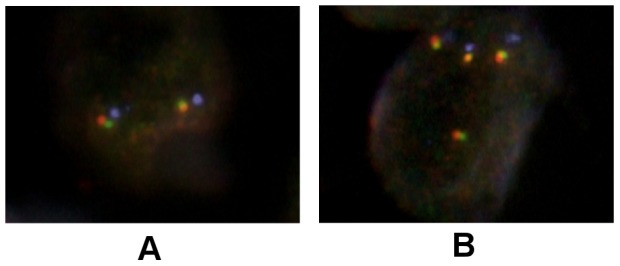
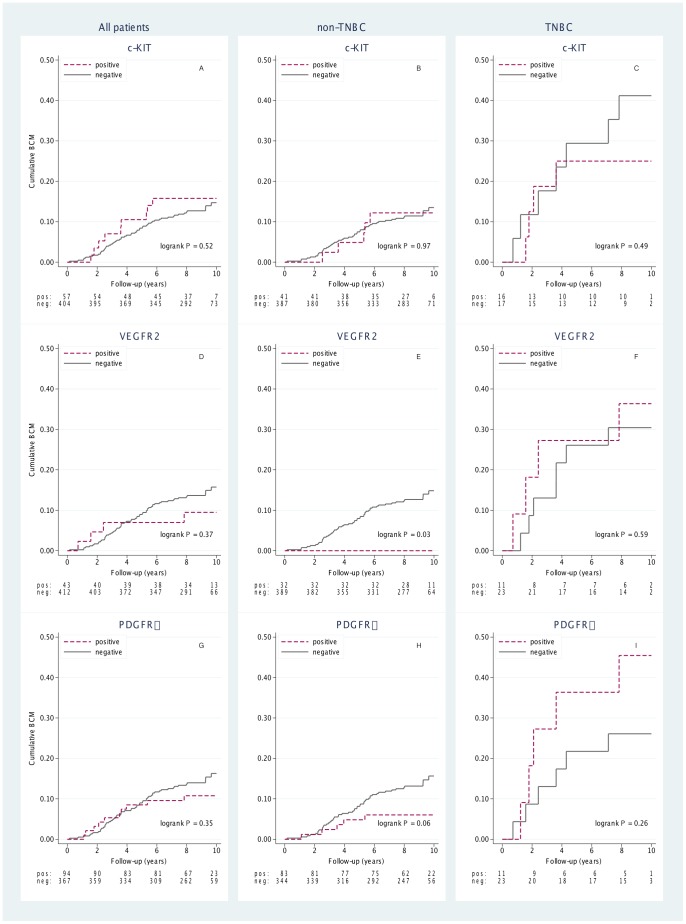
Results: The cohort included 464 patients, out of which 34 (7.3%) had a TNBC. High expression of the three RTKs was more common in TNBC compared to non-TNBC: c-KIT 49% vs. 10% (P<0.001), PDGFRα 32% vs. 19% (P = 0.07) and VEGFR2 32% vs. 6% (P<0.001). The odds ratio (OR) of c-KIT, VEGFR2 and PDGFRα positivity, adjusted for tumor characteristics, was 6.8, 3.6 and 1.3 times higher for TNBC than for non-TNBC. 73.5% of the TNBC had high expression of at least one of the three investigated receptors, compared to 30.0% of the non-TNBC (P<0.001). Survival analysis showed no significant difference in BCM for TNBC patients with high vs. low c-KIT, PDGFRα or VEGFR2 protein expression. 193 (42%) tumors were evaluated with FISH. No correlation was seen between increased gene copy number and TNBC, or between increased gene copy number and high protein expression of the RTK.
Conclusion: c-KIT, VEGFR2 and PDGFRα show higher protein expression in TNBC compared to non-TNBC. Further investigation clarifying the importance of these RTKs in TNBC is encouraged, as they are possible targets for anticancer therapy.
Conflict of interest statement
Figures
References
-
- Perou CM, Sorlie T, Eisen MB, van de Rijn M, Jeffrey SS, et al. (2000) Molecular portraits of human breast tumours. Nature 406: 747–752. - PubMed
-
- Reis-Filho JS, Pusztai L (2011) Gene expression profiling in breast cancer: classification, prognostication, and prediction. Lancet 378: 1812–1823. - PubMed
-
- Cheang MC, Voduc D, Bajdik C, Leung S, McKinney S, et al. (2008) Basal-like breast cancer defined by five biomarkers has superior prognostic value than triple-negative phenotype. Clin Cancer Res 14: 1368–1376. - PubMed
Publication types
MeSH terms
Substances
LinkOut - more resources
Full Text Sources
Other Literature Sources
Research Materials
