


Expanding Integrated Vector Management to promote healthy environments
- PMID: 25028090
- PMCID: PMC4112142
- DOI: 10.1016/j.pt.2014.06.001
Expanding Integrated Vector Management to promote healthy environments
Abstract
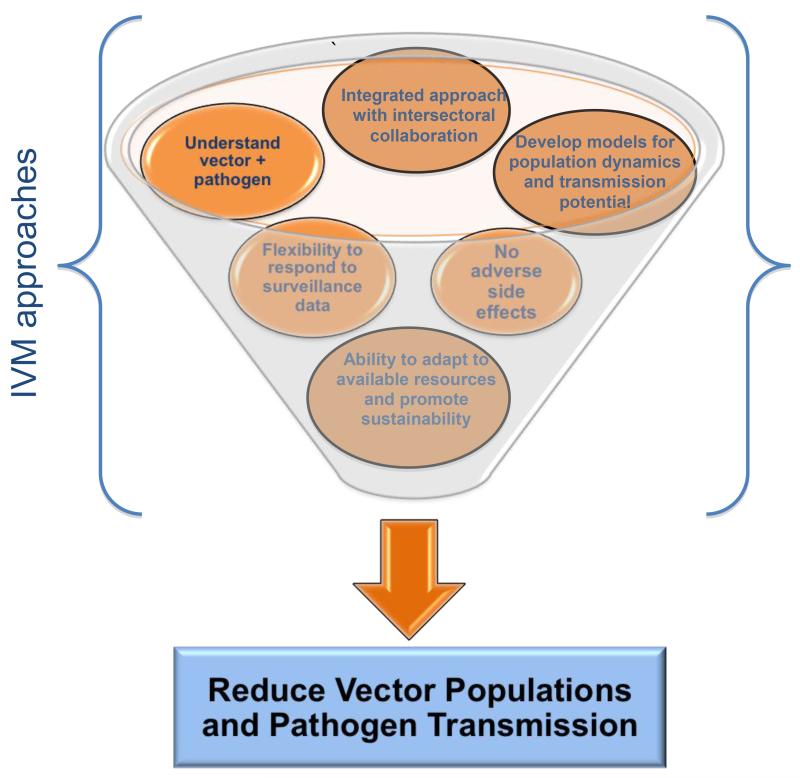
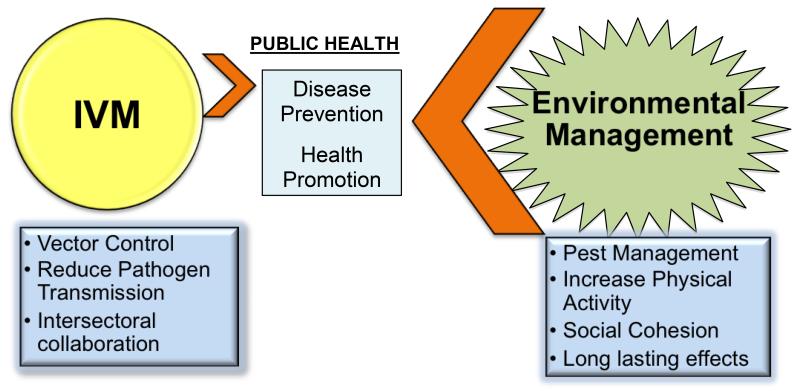
Integrated Vector Management (IVM) strategies are intended to protect communities from pathogen transmission by arthropods. These strategies target multiple vectors and different ecological and socioeconomic settings, but the aggregate benefits of IVM are limited by the narrow focus of its approach; IVM strategies aim only to control arthropod vectors. We argue that IVM should encompass environmental modifications at early stages - for instance, infrastructural development and sanitation services - to regulate not only vectors but also nuisance biting arthropods. An additional focus on nuisance biting arthropods will improve public health and quality of life and minimize social-disparity issues fostered by pests. Optimally, IVM could incorporate environmental awareness and promotion of control methods proactively to reduce threats of serious pest situations.
Keywords: IVM; biting density; pest management; social disparities; vector control.
Copyright © 2014 Elsevier Ltd. All rights reserved.
Figures
References
-
- Andrews K, et al. World Malaria Report 2013. World Health Organization; 2013.
-
- Guidelines for control of vectors of public health importance in Pakistan. Department of Zoonotic and Vector-Borne Diseases, Epidemic Investigation Cell, Public Health Laboratories Division, National Institute of Health, Ministry of Health, Government of Pakistan; 2010.
-
- Guidelines on public health pesticide management policy for the WHO African Region. World Health Organization (WHO) Regional Office for Africa and the WHO Department of Control of Neglected Tropical Diseases; 2011.
-
- Global Strategic Framework for Integrated Vector Management. World Health Organization; 2004.
-
- Mendis K, et al. Global Malaria Control and Elimination: Report of a Technical Review. World Health Organization; 2008.
Publication types
MeSH terms
Grants and funding
LinkOut - more resources
Full Text Sources
Other Literature Sources
