Efficacy of Chinese auriculotherapy for stress in nursing staff: a randomized clinical trial
- PMID: 25029046
- PMCID: PMC4292631
- DOI: 10.1590/0104-1169.3239.2426
Efficacy of Chinese auriculotherapy for stress in nursing staff: a randomized clinical trial
Abstract
Objective: this randomized single blind clinical study aimed to evaluate the efficacy of auriculotherapy with and without a protocol for reducing stress levels among nursing staff.
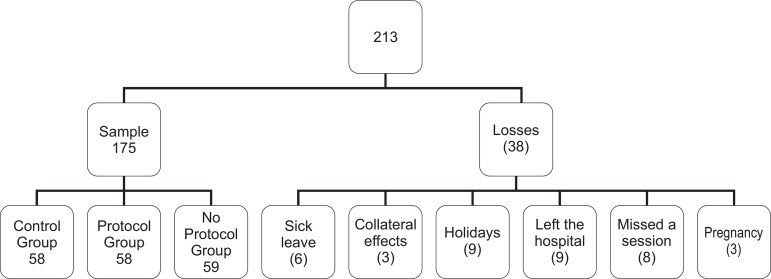
Method: a total of 175 nursing professionals with medium and high scores according to Vasconcelos' Stress Symptoms List were divided into 3 groups: Control (58), Group with protocol (58), Group with no protocol (59). They were assessed at the baseline, after 12 sessions, and at the follow-up (30 days).
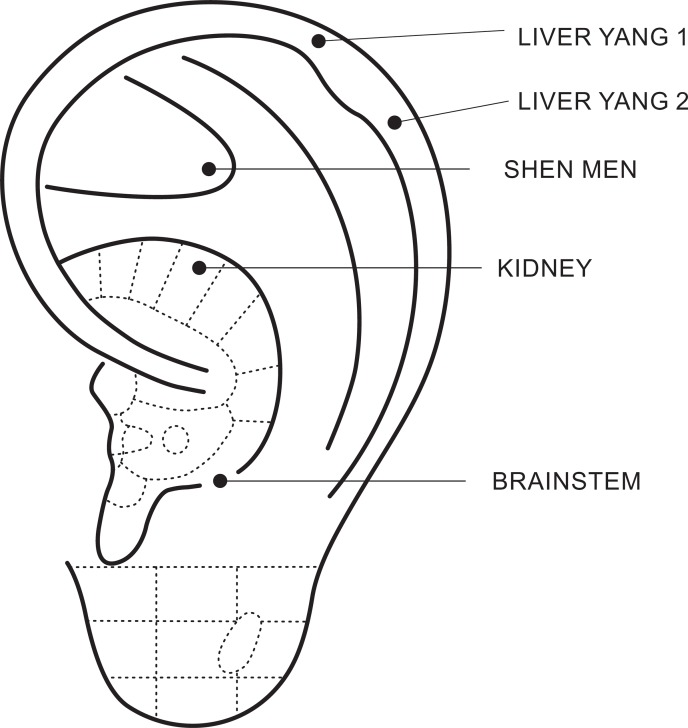
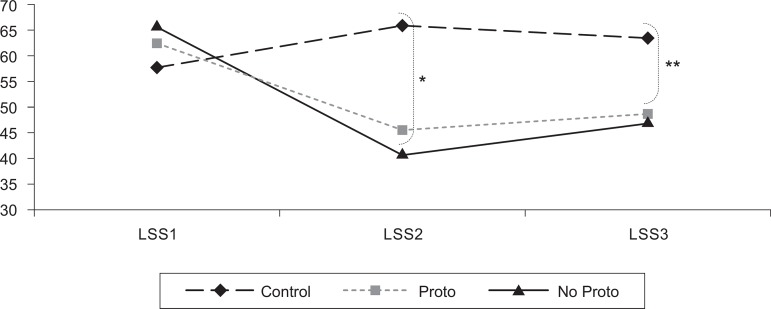
Results: in the analysis of variance, statistically significant differences between the Control and Intervention groups were found in the two evaluations (p<0.05) with greater size of effect indices (Cohen) for the No protocol group. The Yang Liver 1 and 2, Kidney, Brain Stem and Shen Men were the points most used.
Conclusion: individualized auriculotherapy, with no protocol, could expand the scope of the technique for stress reduction compared with auriculotherapy with a protocol. NCT: 01420835.
Trial registration: ClinicalTrials.gov NCT01420835.
Figures
References
-
- Gatti MFZ, Leão ER, Silva MJP, Puggina ACG. Comparison between anxiety and stress levels displayed by and perceived by the nursing collective. [acesso 8 fev 2011];Enferm Global. 2004 5:1–12. Disponível em: http://revistas.um.es/eglobal/article/view/540.
-
- Silva JLL, Melo ECP. Estresse e implicações para o trabalhador de Enfermagem. Informe-se em Promoção da Saúde. 2006;2(2):16–18.
-
- Fugulin FMT, Gaidzinski RR, Kurcgant P. Expected and unexpected absences of the nursing team at the inpatient units of a university hospital at the University of São Paulo-Brazil. Rev Esc Enferm USP. 2003;37(4):109–117. - PubMed
-
- Coelho NM, Neto, Garbaccio JL. O estresse ocupacional no serviço de Enfermagem hospitalar: reconhecimento e minimização. Interseção. 2008;1(2):71–81.
-
- Kurebayashi LFS, Gnatta JR, Borges TP, Belisse G, Coca S, Minami A, et al. The applicability of auriculotherapy with needles or seeds to reduce stress in nursing professionals. Rev Esc Enferm USP. 2012;46(1):89–95. - PubMed
Publication types
MeSH terms
Associated data
LinkOut - more resources
Full Text Sources
Other Literature Sources
Medical