Changes in the seroprevalence of IgG anti-hepatitis A virus between 2001 and 2013: experience at a single center in Korea
- PMID: 25032182
- PMCID: PMC4099331
- DOI: 10.3350/cmh.2014.20.2.162
Changes in the seroprevalence of IgG anti-hepatitis A virus between 2001 and 2013: experience at a single center in Korea
Abstract
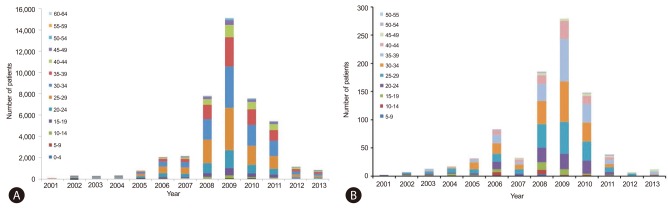
Background/aims: The incidence of symptomatic hepatitis A reportedly increased among 20- to 40-year-old Korean during the late 2000s. Vaccination against hepatitis A was commenced in the late 1990s and was extended to children aged <10 years. In the present study we analyzed the changes in the seroprevalence of IgG anti-hepatitis A virus (HAV) over the past 13 years.
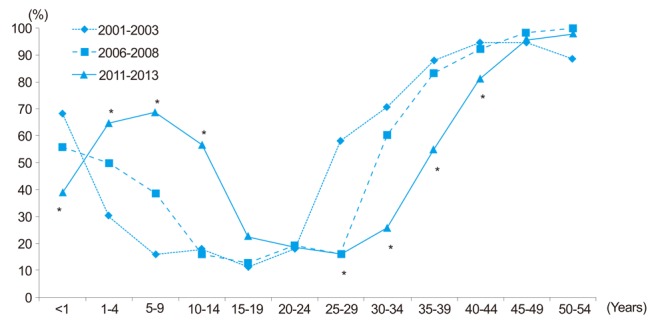
Methods: Overall, 4903 subjects who visited our hospital between January 2001 and December 2013 were studied. The seroprevalence of IgG anti-HAV was analyzed according to age and sex. In addition, the seroprevalence of IgG anti-HAV was compared among 12 age groups and among the following time periods: early 2000s (2001-2003), mid-to-late 2000s (2006-2008), and early 2010s (2011-2013). The chi-square test for trend was used for statistical analysis.
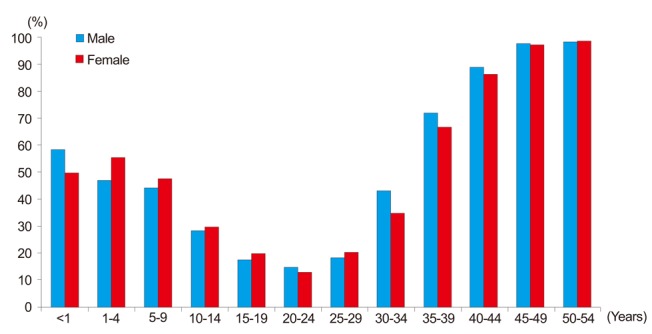
Results: The seroprevalence of IgG anti-HAV did not differ significantly between the sexes. Furthermore, compared to the seroprevalence of IgG anti-HAV in the early 2000s and mid-to-late 2000s, that in the early 2010s was markedly increased among individuals aged 1-14 years and decreased among those aged 25-44 years (P<0.01). We also found that the seroprevalence of IgG anti-HAV in individuals aged 25-44 years in the early 2010s was lower than that in the early 2000s and mid-to-late 2000s.
Conclusions: The number of symptomatic HAV infection cases in Korea is decreasing, but the seroprevalence of IgG anti-HAV is low in the active population.
Keywords: Hepatitis A virus; IgG Anti-HAV; Seroprevalence.
Conflict of interest statement
The authors have no conflicts to disclose.
Figures
References
-
- Kim JH. Recent epidemiological status and vaccination of hepatitis A in Korea. J Korean Med Assoc. 2008;51:110–118.
-
- Yoo SH, Kim IH, Jang JW, Choi CH, Moon JC, Park JK, et al. Clinical features and risk factors for severe complications among patients with acute hepatitis A virus infection in the Jeonbuk Province of Korea. Korean J Gastroenterol. 2014;63:25–31. - PubMed
-
- Lee EJ, Kwon SY, Seo TH, Yun HS, Cho HS, Kim BK, et al. Clinical features of acute hepatitis A in recent two years. Korean J Gastroenterol. 2008;52:298–303. - PubMed
-
- Korean Centers of Disease Control & Prevention (CDC) Hepatitis A Virus. [Accessed 2014.04.10]. CDC web site, http://www.cdc.go.kr/CDC/cms/content/08/18008_view.html.
-
- Jung YK, Kim JH. Epidemiology and clinical features of acute hepatitis A: from the domestic perspective. Korean J Hepatol. 2009;15:438–445. - PubMed
MeSH terms
Substances
LinkOut - more resources
Full Text Sources
Other Literature Sources
Medical
Miscellaneous