


The effect of HIV-hepatitis C co-infection on bone mineral density and fracture: a meta-analysis
- PMID: 25033046
- PMCID: PMC4102482
- DOI: 10.1371/journal.pone.0101493
The effect of HIV-hepatitis C co-infection on bone mineral density and fracture: a meta-analysis
Abstract
Objective: There is a variable body of evidence on adverse bone outcomes in HIV patients co-infected with hepatitis C virus (HCV). We examined the association of HIV/HCV co-infection on osteoporosis or osteopenia (reduced bone mineral density; BMD) and fracture.
Design: Systematic review and random effects meta-analyses.
Methods: A systematic literature search was conducted for articles published in English up to 1 April 2013. All studies reporting either BMD (g/cm2, or as a T-score) or incident fractures in HIV/HCV co-infected patients compared to either HIV mono-infected or HIV/HCV uninfected/seronegative controls were included. Random effects meta-analyses estimated the pooled odds ratio (OR) and the relative risk (RR) and associated 95% confidence intervals (CI).
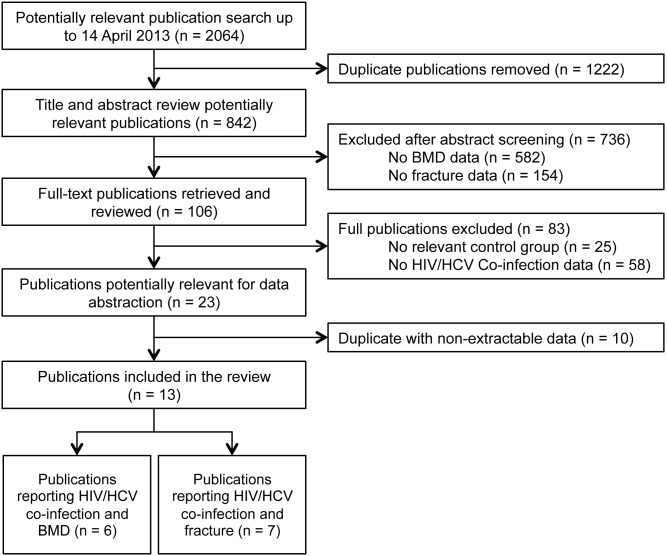
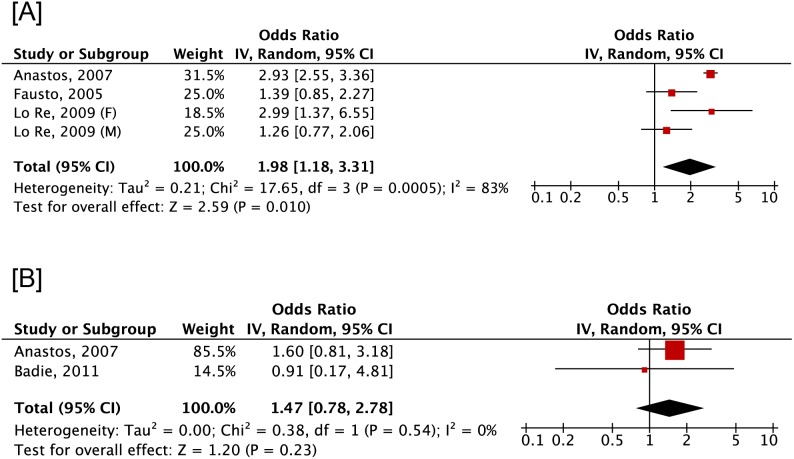
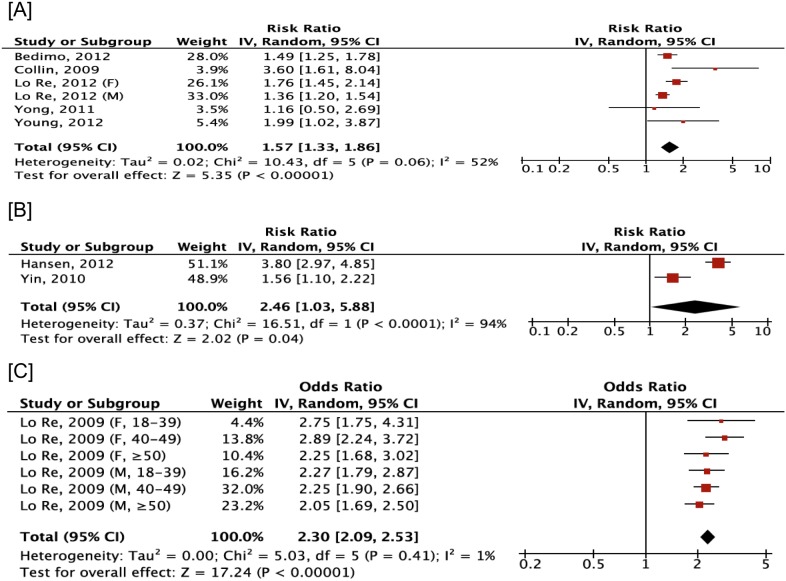
Results: Thirteen eligible publications (BMD N = 6; Fracture = 7) of 2,064 identified were included with a total of 427,352 subjects. No publications reported data on HCV mono-infected controls. Meta-analysis of cross-sectional studies confirmed that low bone mineral density was increasingly prevalent among co-infected patients compared to HIV mono-infected controls (pooled OR 1.98, 95% CI 1.18, 3.31) but not those uninfected (pooled OR 1.47, 95% CI 0.78, 2.78). Significant association between co-infection and fracture was found compared to HIV mono-infected from cohort and case-control studies (pooled RR 1.57, 95% CI 1.33, 1.86) and compared to HIV/HCV uninfected from cohort (pooled RR 2.46, 95% CI 1.03, 3.88) and cross-sectional studies (pooled OR 2.30, 95% CI 2.09, 2.23).
Conclusions: The associations of co-infection with prevalent low BMD and risk of fracture are confirmed in this meta-analysis. Although the mechanisms of HIV/HCV co-infection's effect on BMD and fracture are not well understood, there is evidence to suggest that adverse outcomes among HIV/HCV co-infected patients are substantial.
Conflict of interest statement
Figures
References
-
- Sackoff JE, Hanna DB, Pfeiffer MR, Torian LV (2006) Causes of death among persons with AIDS in the era of highly active antiretroviral therapy: New York City. Ann Intern Med 145: 397–406. - PubMed
-
- Brown TT, Qaqish RB (2006) Antiretroviral therapy and the prevalence of osteopenia and osteoporosis: a meta-analytic review. AIDS 20(17): 2165–74. - PubMed
-
- Seef LB (2002) Natural history of chronic hepatitis. Hepatology 36(S1): S35–46. - PubMed
-
- Tebas P, Powderly W, Yarasheski K (2000) Response to ‘accelerate bone mineral loss in HIV-infected patients receiving potent antiretroviral therapy’ by Drs Weil and Lenhard. AIDS 14(15): 2417. - PubMed
Publication types
MeSH terms
Substances
LinkOut - more resources
Full Text Sources
Other Literature Sources
Medical
Miscellaneous
