Role of the neural niche in brain metastatic cancer
- PMID: 25035392
- PMCID: PMC4122250
- DOI: 10.1158/0008-5472.CAN-14-1226
Role of the neural niche in brain metastatic cancer
Erratum in
- Cancer Res. 2014 Oct 1;74(19):5680
Abstract
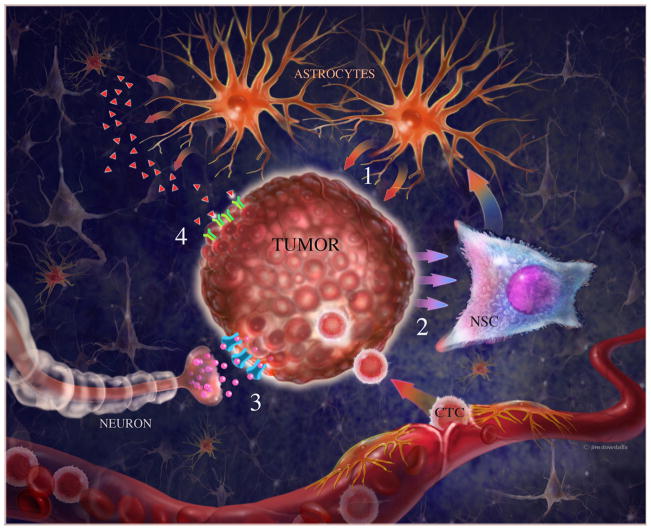
Metastasis is the relentless pursuit of cancer to escape its primary site and colonize distant organs. This malignant evolutionary process is biologically heterogeneous, yet one unifying element is the critical role of the microenvironment for arriving metastatic cells. Historically, brain metastases were rarely investigated because patients with advanced cancer were considered terminal. Fortunately, advances in molecular therapies have led to patients living longer with metastatic cancer. However, one site remains recalcitrant to our treatment efforts, the brain. The central nervous system is the most complex biologic system, which poses unique obstacles but also harbors opportunities for discovery. Much of what we know about the brain microenvironment comes from neuroscience. We suggest that the interrelated cellular responses in traumatic brain injury may guide us toward new perspectives in understanding brain metastases. In this view, brain metastases may be conceptualized as progressive oncologic injury to the nervous system. This review discusses our evolving understanding of bidirectional interactions between the brain milieu and metastatic cancer.
©2014 American Association for Cancer Research.
Figures
References
-
- Neman J, Somlo G, Jandial R. Classification of genomic changes in breast cancer brain metastasis. Neurosurgery. 2010;67:N18–9. - PubMed
-
- Barnholtz-Sloan JS, Sloan AE, Davis FG, Vigneau FD, Lai P, Sawaya RE. Incidence proportions of brain metastases in patients diagnosed (1973 to 2001) in the Metropolitan Detroit Cancer Surveillance System. J Clin Oncol. 2004;22:2865–72. - PubMed
Publication types
MeSH terms
Grants and funding
LinkOut - more resources
Full Text Sources
Other Literature Sources
Medical