


Sleep disturbances and health-related quality of life in adults with steady-state bronchiectasis
- PMID: 25036723
- PMCID: PMC4103887
- DOI: 10.1371/journal.pone.0102970
Sleep disturbances and health-related quality of life in adults with steady-state bronchiectasis
Abstract
Background: Sleep disturbances are common in patients with chronic lung diseases, but little is known about the prevalence in patients with bronchiectasis. A cross sectional study was conducted to investigate the prevalence and determinants associated with sleep disturbances, and the correlation between sleep disturbances and quality of life (QoL) in adults with steady-state bronchiectasis.
Methods: One hundred and forty-four bronchiectasis patients and eighty healthy subjects were enrolled. Sleep disturbances, daytime sleepiness, and QoL were measured by utilizing the Pittsburgh Sleep Quality Index (PSQI), Epworth Sleepiness Scale (ESS) and St. George Respiratory Questionnaire (SGRQ), respectively. Demographic, clinical indices, radiology, spirometry, bacteriology, anxiety and depression were also assessed.
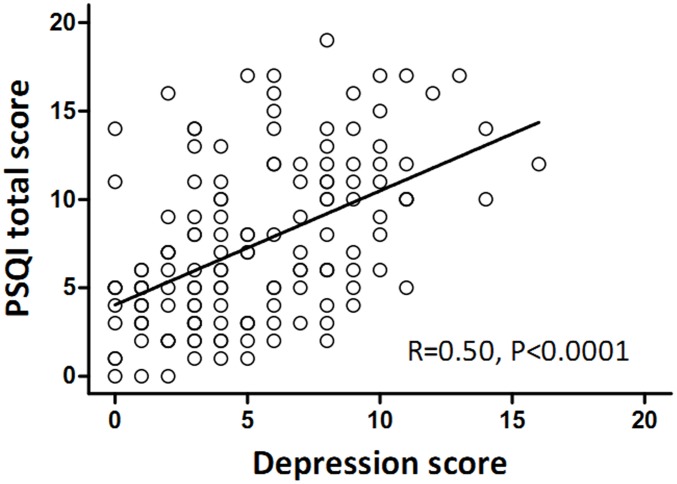
Results: Adults with steady-state bronchiectasis had a higher prevalence of sleep disturbances (PSQI>5) (57% vs. 29%, P<0.001), but not daytime sleepiness (ESS≥10) (32% vs. 30%, P = 0.76), compared with healthy subjects. In the multivariate model, determinants associated with sleep disturbances in bronchiectasis patients included depression (OR, 10.09; 95% CI, 3.46-29.37; P<0.001), nocturnal cough (OR, 1.89; 95% CI, 1.13-3.18; P = 0.016), aging (OR, 1.04; 95% CI, 1.01-1.07; P = 0.009) and increased 24-hour sputum volume (OR, 2.01; 95% CI, 1.22-3.33; P = 0.006). Patients with sleep disturbances had more significantly impaired QoL affecting all domains than those without. Only 6.2% of patients reported using a sleep medication at least weekly.
Conclusions: In adults with steady-state bronchiectasis, sleep disturbances are more common than in healthy subjects and are related to poorer QoL. Determinants associated with sleep disturbances include depression, aging, nighttime cough and increased sputum volume. Assessment and intervention of sleep disturbances are warranted and may improve QoL.
Conflict of interest statement
Figures
References
-
- Pasteur MC, Bilton D, Hill AT (2010) British Thoracic Society guideline for non-CF bronchiectasis. Thorax 65 Suppl 1i1–58. - PubMed
-
- Barker AF, Bardana EJ Jr (1988) Bronchiectasis: update of an orphan disease. Am Rev Respir Dis 137: 969–978. - PubMed
-
- Martinez-Garcia MA, Perpina-Tordera M, Roman-Sanchez P, Soler-Cataluna JJ (2005) Quality-of-life determinants in patients with clinically stable bronchiectasis. Chest 128: 739–745. - PubMed
-
- Tsang KW, Bilton D (2009) Clinical challenges in managing bronchiectasis. Respirology 14: 637–650. - PubMed
-
- De Soyza A, Brown JS, Loebinger MR (2013) Research priorities in bronchiectasis. Thorax 68: 695–696. - PubMed
Publication types
MeSH terms
Grants and funding
LinkOut - more resources
Full Text Sources
Other Literature Sources
Medical
