


An intraoperative device to restore femoral offset in total hip arthroplasty
- PMID: 25037492
- PMCID: PMC4223551
- DOI: 10.1186/s13018-014-0058-7
An intraoperative device to restore femoral offset in total hip arthroplasty
Abstract
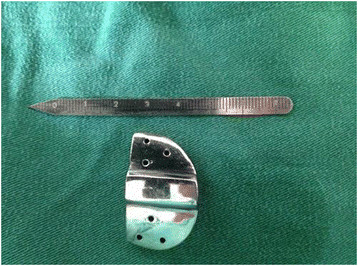
Background: Leg length discrepancy (LLD) after total hip arthroplasty (THA) can lead to unsatisfactory outcome. Our objective was to design and evaluate a simple and reliable intraoperative device (Length-offset Lever) to minimize leg length discrepancy.
Methods: This device was used in 51 patients undergoing primary total hip replacements. The leg length discrepancy was measured pre- and postoperatively based on plain radiographs.
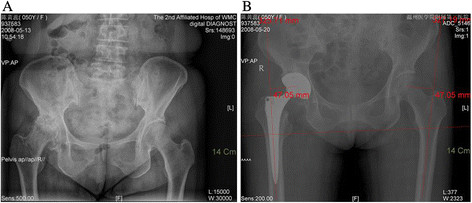
Results: Preoperative radiographic leg length discrepancy averaged 13.5 ± 6.2 mm. Leg length discrepancy showed significant improvement, with a postoperative average of 4.1 ± 2.3 mm (p < 0.0001). There were no complications associated with this device.
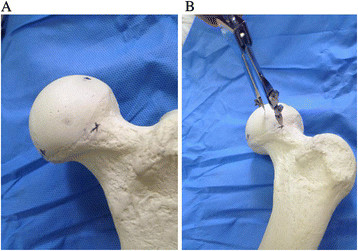
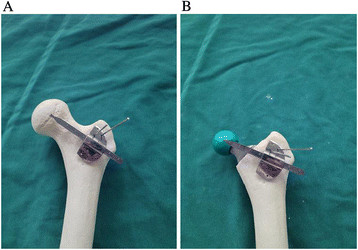
Conclusions: The 'Length-offset Lever' is a useful intraoperative tool to restore anatomic femoral offset and height of femoral head.
Figures
References
-
- Charnley J. Low Friction Arthroplasty of the Hip: Theory and Practice. Springer-Verlag, New York; 1979.
-
- Yamaguchi T, Naito M, Aasayama I, Ishiko T. Total hip arthroplasty: the relationship between posterolateral reconstruction, abductor muscle strength, and femoral offset. J Orthop Surg (Hong Kong) 2004;12:164. - PubMed
-
- McGrory BJ, Morrey BF, Cahalan TD, An KN, Cabanela ME. Effect of femoral offset on range of motion and abductor muscle strength after total hip arthroplasty. J Bone Joint Surg (Br) 1995;77-B:865. - PubMed
MeSH terms
LinkOut - more resources
Full Text Sources
Other Literature Sources
Medical
