


The Intervention Nurses Start Infants Growing on Healthy Trajectories (INSIGHT) study
- PMID: 25037579
- PMCID: PMC4105401
- DOI: 10.1186/1471-2431-14-184
The Intervention Nurses Start Infants Growing on Healthy Trajectories (INSIGHT) study
Abstract
Background: Because early life growth has long-lasting metabolic and behavioral consequences, intervention during this period of developmental plasticity may alter long-term obesity risk. While modifiable factors during infancy have been identified, until recently, preventive interventions had not been tested. The Intervention Nurses Starting Infants Growing on Healthy Trajectories (INSIGHT). Study is a longitudinal, randomized, controlled trial evaluating a responsive parenting intervention designed for the primary prevention of obesity. This "parenting" intervention is being compared with a home safety control among first-born infants and their parents. INSIGHT's central hypothesis is that responsive parenting and specifically responsive feeding promotes self-regulation and shared parent-child responsibility for feeding, reducing subsequent risk for overeating and overweight.
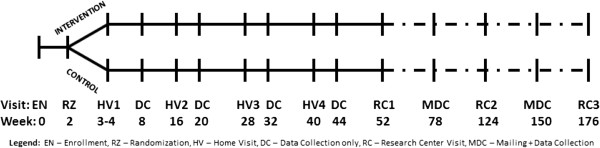
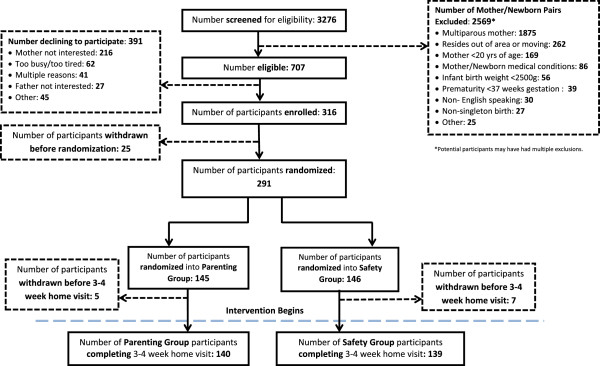
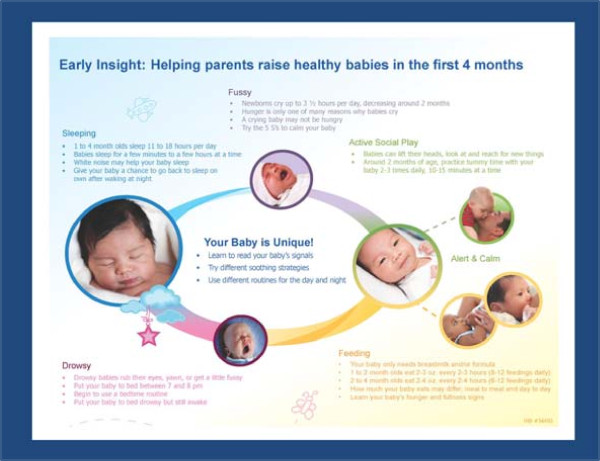
Methods/design: 316 first-time mothers and their full-term newborns were enrolled from one maternity ward. Two weeks following delivery, dyads were randomly assigned to the "parenting" or "safety" groups. Subsequently, research nurses conduct study visits for both groups consisting of home visits at infant age 3-4, 16, 28, and 40 weeks, followed by annual clinic-based visits at 1, 2, and 3 years. Both groups receive intervention components framed around four behavior states: Sleeping, Fussy, Alert and Calm, and Drowsy. The main study outcome is BMI z-score at age 3 years; additional outcomes include those related to patterns of infant weight gain, infant sleep hygiene and duration, maternal responsiveness and soothing strategies for infant/toddler distress and fussiness, maternal feeding style and infant dietary content and physical activity. Maternal outcomes related to weight status, diet, mental health, and parenting sense of competence are being collected. Infant temperament will be explored as a moderator of parenting effects, and blood is collected to obtain genetic predictors of weight status. Finally, second-born siblings of INSIGHT participants will be enrolled in an observation-only study to explore parenting differences between siblings, their effect on weight outcomes, and carryover effects of INSIGHT interventions to subsequent siblings.
Discussion: With increasing evidence suggesting the importance of early life experiences on long-term health trajectories, the INSIGHT trial has the ability to inform future obesity prevention efforts in clinical settings.
Trial registration: NCT01167270. Registered 21 July 2010.
Figures
References
-
- Fisch RO, Bilek MK, Ulstrom R. Obesity and leanness at birth and their relationship to body habitus in later childhood. Pediatrics. 1975;56(4):521–528. - PubMed
-
- Charney E, Goodman HC, McBride M, Lyon B, Pratt R. Childhood antecedents of adult obesity: do chubby infants become obese adults? N Engl J Med. 1976;295(1):6–9. - PubMed
-
- Whitaker RC, Wright JA, Pepe MS, Seidel KD, Dietz WH. Predicting obesity in young adulthood from childhood and parental obesity. N Engl J Med. 1997;337(13):869–873. - PubMed
-
- Guo SS, Wu W, Chumlea WC, Roche AF. Predicting overweight and obesity in adulthood from body mass index values in childhood and adolescence. Am J Clin Nutr. 2002;76(3):653–658. - PubMed
-
- Mei Z, Grummer-Strawn LM, Scanlon KS. Does overweight in infancy persist through the preschool years? An analysis of CDC Pediatric Nutrition Surveillance System data. Soz Praventivmed. 2003;48(3):161–167. - PubMed
Publication types
MeSH terms
Associated data
Grants and funding
LinkOut - more resources
Full Text Sources
Other Literature Sources
Medical
Molecular Biology Databases
