


Morphine has latent deleterious effects on the ventilatory responses to a hypoxic challenge
- PMID: 25045593
- PMCID: PMC4103751
- DOI: 10.4236/ojmip.2013.34022
Morphine has latent deleterious effects on the ventilatory responses to a hypoxic challenge
Abstract
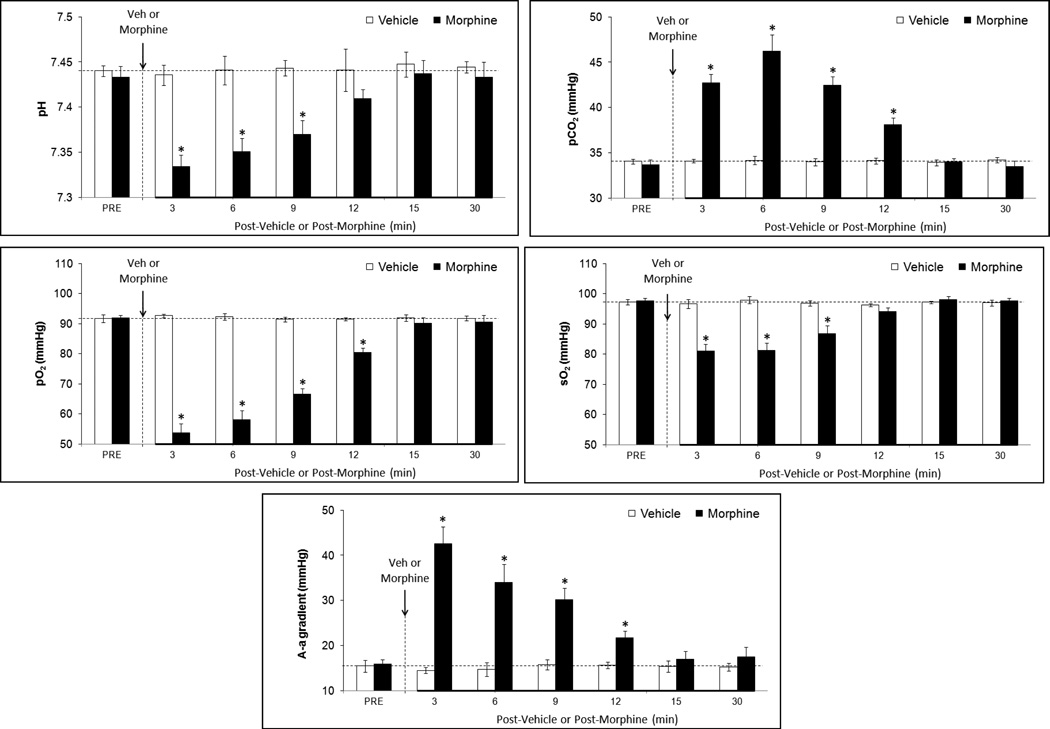
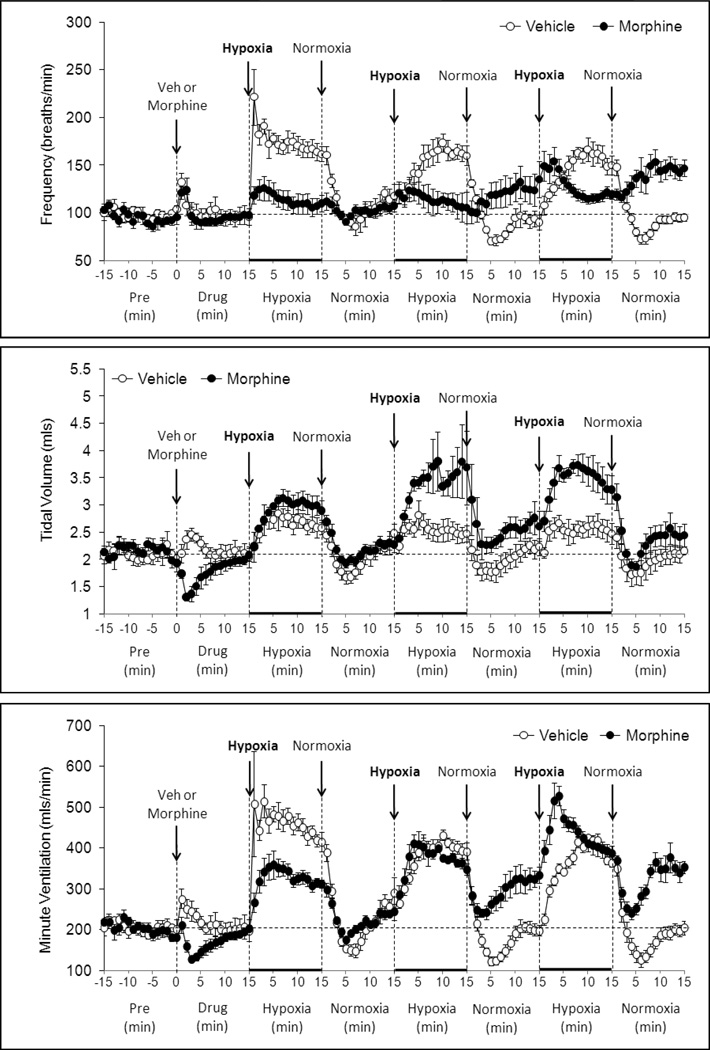
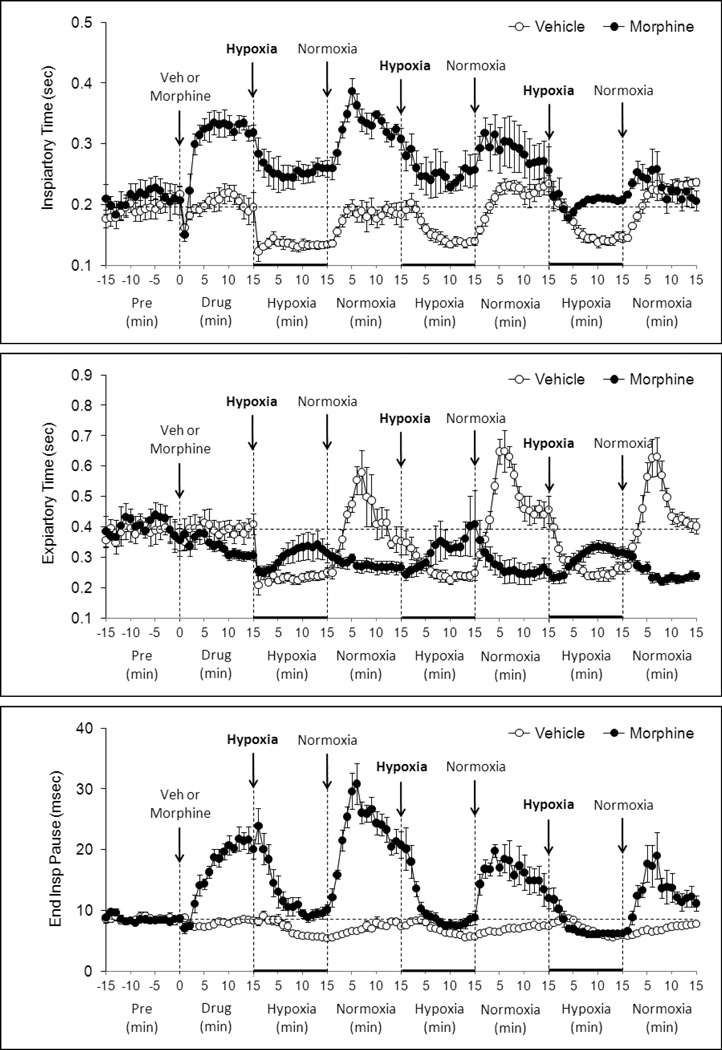
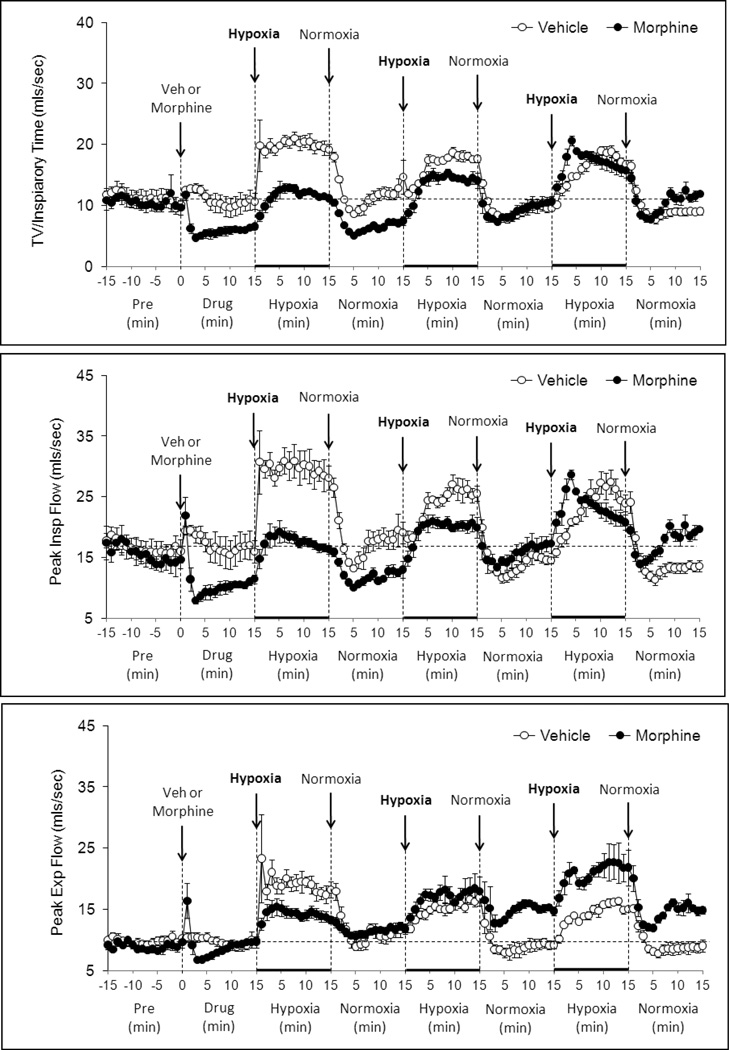
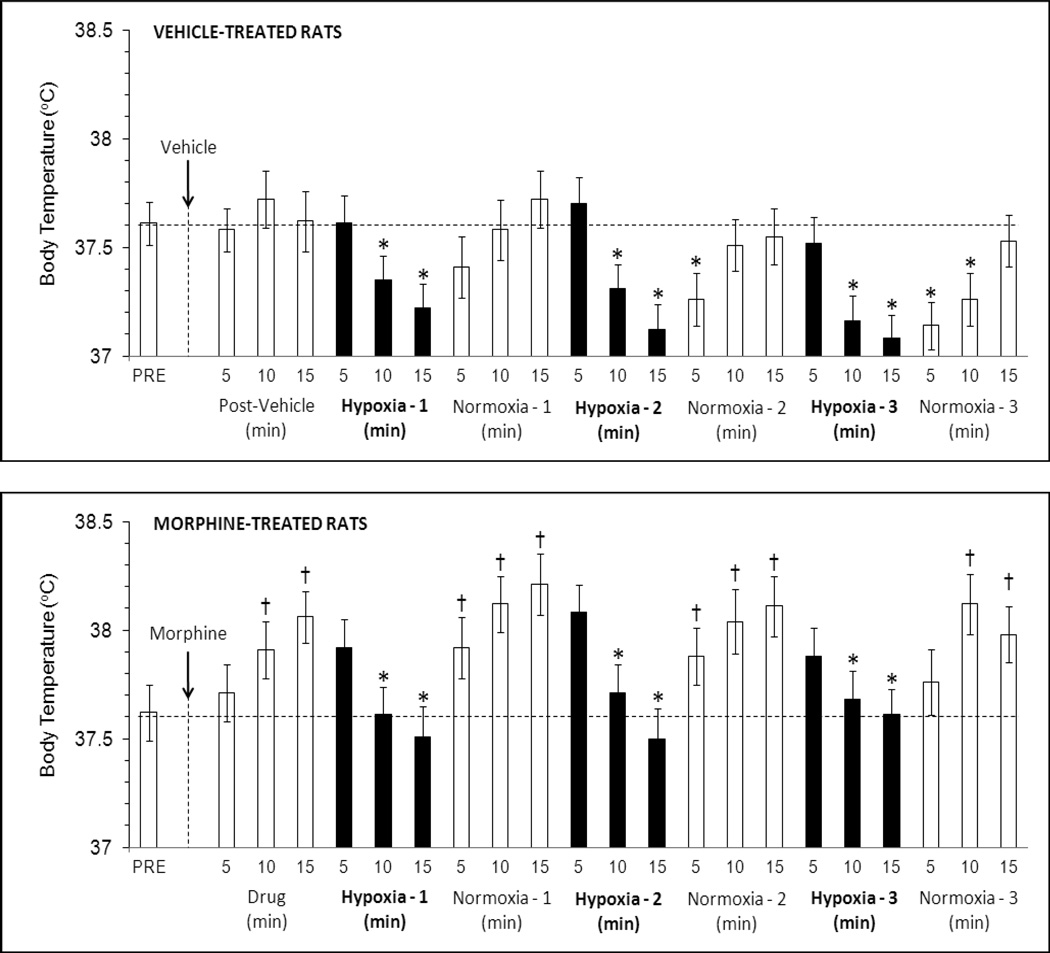
The aim of this study was to determine whether morphine depresses the ventilatory responses elicited by a hypoxic challenge (10% O2, 90% N2) in conscious rats at a time when the effects of morphine on arterial blood gas (ABG) chemistry, Alveolar-arterial (A-a) gradient and minute ventilation (VM) had completely subsided. In vehicle-treated rats, each episode of hypoxia stimulated ventilatory function and the responses generally subsided during each normoxic period. Morphine (5 mg/kg, i.v.) induced an array of depressant effects on ABG chemistry, A-a gradient and VM (via decreases in tidal volume). Despite resolution of these morphine-induced effects, the first episode of hypoxia elicited substantially smaller increases in VM than in vehicle-treated rats, due mainly to smaller increases in frequency of breathing. The pattern of ventilatory responses during subsequent episodes of hypoxia and normoxia changed substantially in morphine-treated rats. It is evident that morphine has latent deleterious effects on ventilatory responses elicited by hypoxic challenge.
Keywords: arterial blood gas chemistry; conscious rats; hypoxia; minute ventilation; morphine.
Conflict of interest statement
None
Figures
References
-
- Cepeda MS, Farrar JT, Baumgarten M, Boston R, Carr DB, Strom BL. Side effects of opioids during short-term administration: effect of age, gender, and race. Clinical Pharmacology and Therapeutics. 2003;74:102–112. - PubMed
-
- Cashman JN, Dolin SJ. Respiratory and haemodynamic effects of acute postoperative pain management: evidence from published data. British Journal of Anaesthesia. 2004;93:212–223. - PubMed
-
- Taylor S, Kirton OC, Staff I, Kozol RA. Postoperative day one: a high risk period for respiratory events. American Journal of Surgery. 2005;190:752–756. - PubMed
-
- Lötsch J, Dudziak R, Freynhagen R, Marschner J, Geisslinger G. Fatal respiratory depression after multiple intravenous morphine injections. Clinical Pharmacokinetics. 2006;45:1051–1060. - PubMed
-
- Peat SJ, Hanna MH, Woodham M, Knibb AA, Ponte J. Morphine-6-glucuronide: effects on ventilation in normal volunteers. Pain. 1991;45:101–104. - PubMed
Grants and funding
LinkOut - more resources
Full Text Sources
Other Literature Sources