


Real-time imaging of the epithelial-mesenchymal transition using microRNA-200a sequence-based molecular beacon-conjugated magnetic nanoparticles
- PMID: 25048580
- PMCID: PMC4105468
- DOI: 10.1371/journal.pone.0102164
Real-time imaging of the epithelial-mesenchymal transition using microRNA-200a sequence-based molecular beacon-conjugated magnetic nanoparticles
Abstract
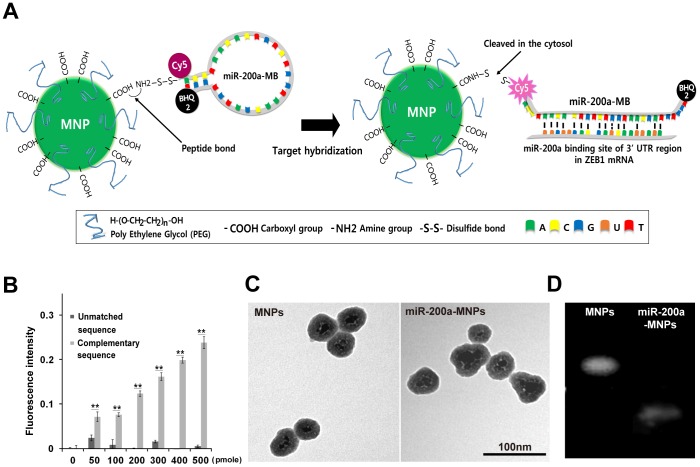
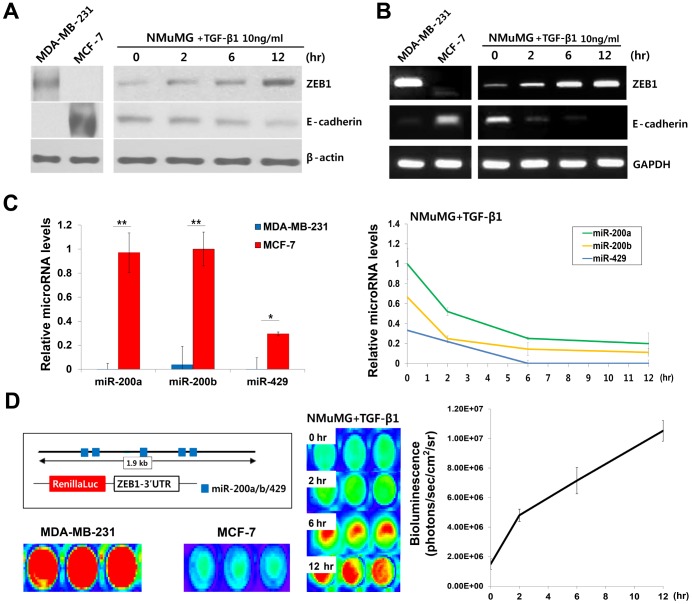
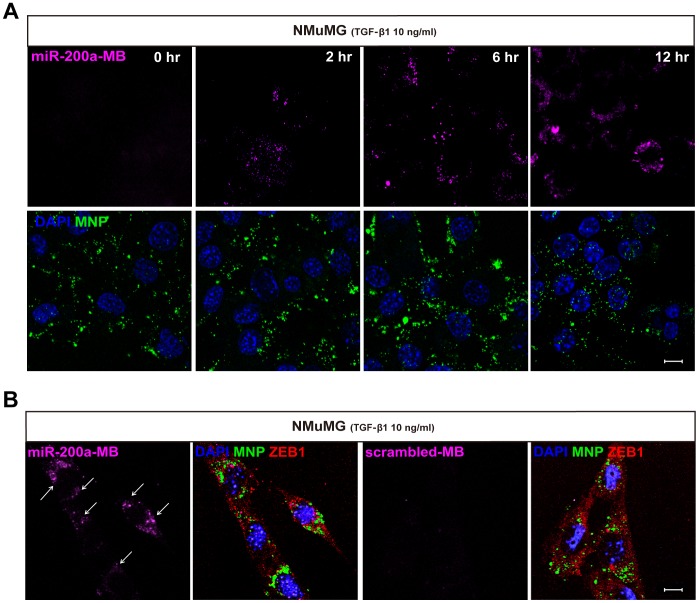
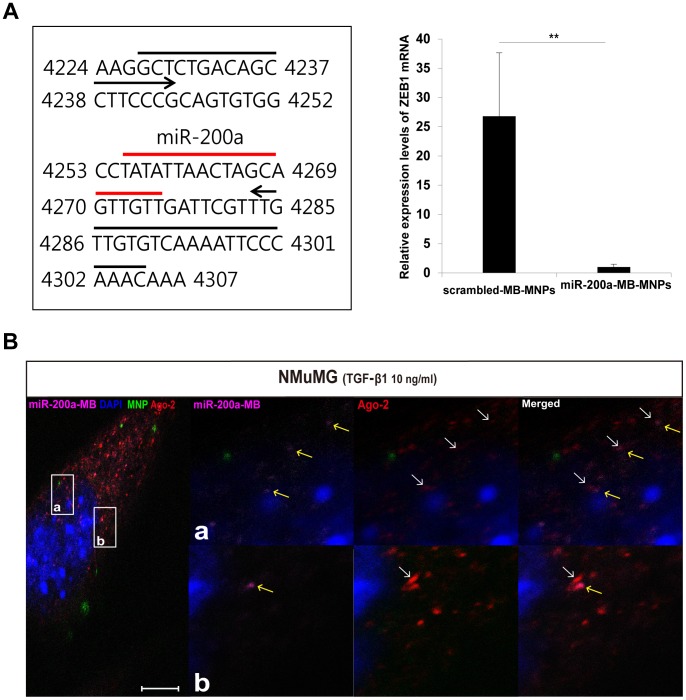
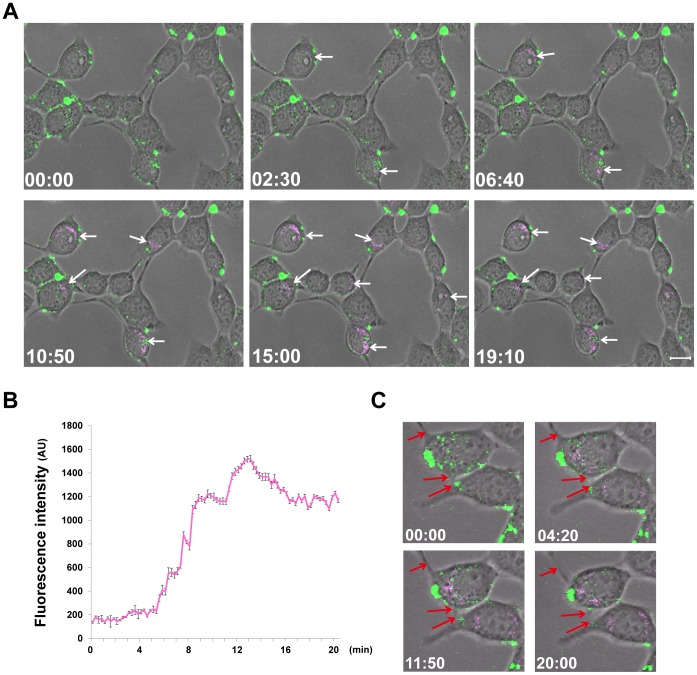
The epithelial-mesenchymal transition (EMT) plays important roles in tumor progression to metastasis. Thus, the development of an imaging probe that can monitor transient periods of the EMT process in live cells is required for a better understanding of metastatic process. Inspired by the fact that the mRNA expression levels of zinc finger E-box-binding homeobox 1 (ZEB1) increase when cells adopt mesenchyme characteristics and that microRNA-200a (miR-200a) can bind to ZEB1 mRNA, we conjugated molecular beacon (MB) mimicking mature miR-200a to magnetic nanoparticles (miR-200a-MB-MNPs) and devised an imaging method to observe transitional changes in the cells during EMT. Transforming growth factor-β1 treated epithelial cells and breast cancer cell lines representing both epithelial and mesenchymal phenotypes were used for the validation of miR-200a-MB-MNPs as an EMT imaging probe. The real-time imaging of live cells acquired with the induction of EMT revealed an increase in fluorescence signals by miR-200a-MB-MNPs, cell morphology alterations, and the loss of cell-cell adhesion. Our results suggest that miR-200a-MB-MNPs can be used as an imaging probe for the real-time monitoring of the EMT process in live cells.
Conflict of interest statement
Figures
References
-
- Chaffer CL, Weinberg RA (2011) A perspective on cancer cell metastasis. Science 331: 1559–1564. - PubMed
-
- De Craene B, Berx G (2013) Regulatory networks defining EMT during cancer initiation and progression. Nat Rev Cancer 13: 97–110. - PubMed
-
- Eger A, Stockinger A, Schaffhauser B, Beug H, Foisner R (2000) Epithelial mesenchymal transition by c-Fos estrogen receptor activation involves nuclear translocation of beta-catenin and upregulation of beta-catenin/lymphoid enhancer binding factor-1 transcriptional activity. J Cell Biol 148: 173–188. - PMC - PubMed
-
- Eger A, Aigner K, Sonderegger S, Dampier B, Oehler S, et al. (2005) DeltaEF1 is a transcriptional repressor of E-cadherin and regulates epithelial plasticity in breast cancer cells. Oncogene 24: 2375–2385. - PubMed
Publication types
MeSH terms
Substances
LinkOut - more resources
Full Text Sources
Other Literature Sources
Research Materials
Miscellaneous
