


The regulatory role of activating transcription factor 2 in inflammation
- PMID: 25049453
- PMCID: PMC4090481
- DOI: 10.1155/2014/950472
The regulatory role of activating transcription factor 2 in inflammation
Abstract
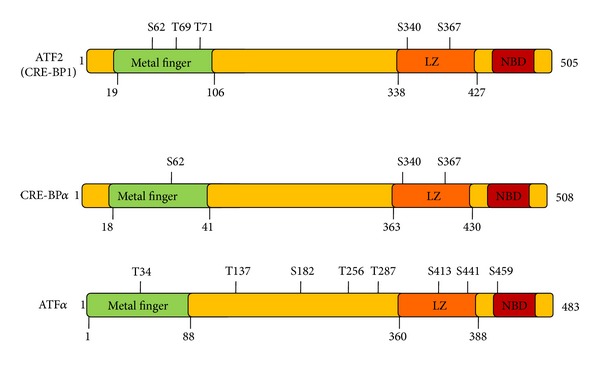
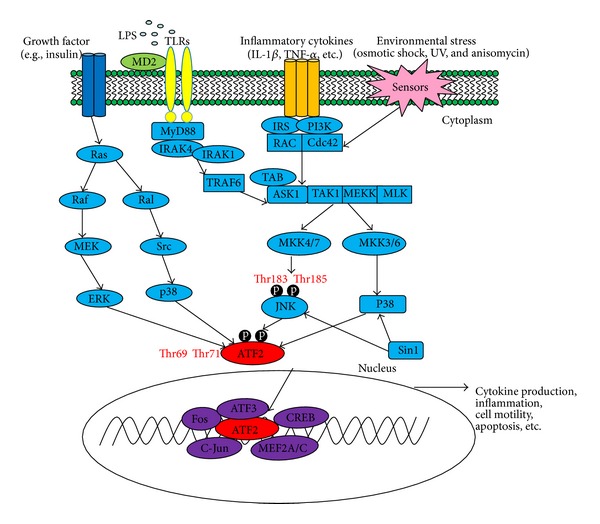
Activating transcription factor 2 (ATF2) is a member of the leucine zipper family of DNA-binding proteins and is widely distributed in tissues including the liver, lung, spleen, and kidney. Like c-Jun and c-Fos, ATF2 responds to stress-related stimuli and may thereby influence cell proliferation, inflammation, apoptosis, oncogenesis, neurological development and function, and skeletal remodeling. Recent studies clarify the regulatory role of ATF2 in inflammation and describe potential inhibitors of this protein. In this paper, we summarize the properties and functions of ATF2 and explore potential applications of ATF2 inhibitors as tools for research and for the development of immunosuppressive and anti-inflammatory drugs.
Figures
References
-
- Ham M, Moon A. Inflammatory and microenvironmental factors involved in breast cancer progression. Archives of Pharmacal Research. 2013;36(12):1419–1431. - PubMed
Publication types
MeSH terms
Substances
LinkOut - more resources
Full Text Sources
Other Literature Sources
Miscellaneous
