


Considerations for the appropriate use of skeletal muscle relaxants for the management of acute low back pain
- PMID: 25050056
- PMCID: PMC4103716
Item in Clipboard
Considerations for the appropriate use of skeletal muscle relaxants for the management of acute low back pain
P T.
2014 Jun.
Abstract
For patients with low back pain, skeletal muscle relaxants are often initiated after failure of first-line analgesics. However, these medications (reviewed in this article) are controversial alternatives that carry risks of adverse effects and increased cost.
Keywords: Skeletal muscle relaxants; antispasmodic; antispasticity; carisoprodol; controlled substance; low back pain.
Figures
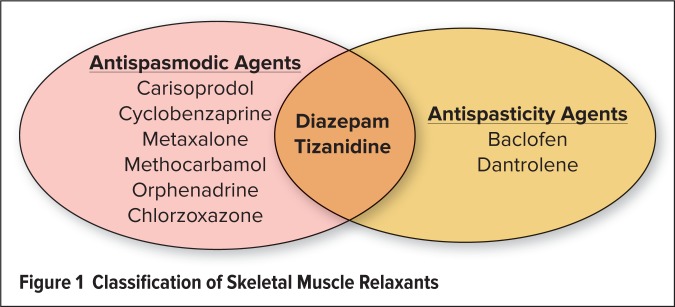
Classification of Skeletal Muscle Relaxants
References
-
- Chou R, Qaseem A, Snow V, et al. Diagnosis and treatment of low back pain: A joint clinical practice guideline from the American College of Physicians and the American Pain Society. Ann Intern Med. 2007;147(7):478–491. - PubMed
-
- See S, Ginzburg R. Skeletal muscle relaxants. Pharmacotherapy. 2008;28(2):207–213. - PubMed
-
- See S, Ginzburg R. Choosing a skeletal muscle relaxant. Am Fam Physician. 2008;78(3):365–370. - PubMed
-
- Carragee EJ. Persistent low back pain. N Eng J Med. 2005;352(18):1891–1898. - PubMed
LinkOut - more resources
Full Text Sources