


Acute acepromazine overdose: clinical effects and toxicokinetic evaluation
- PMID: 25059809
- PMCID: PMC4371025
- DOI: 10.1007/s13181-014-0416-1
Acute acepromazine overdose: clinical effects and toxicokinetic evaluation
Abstract
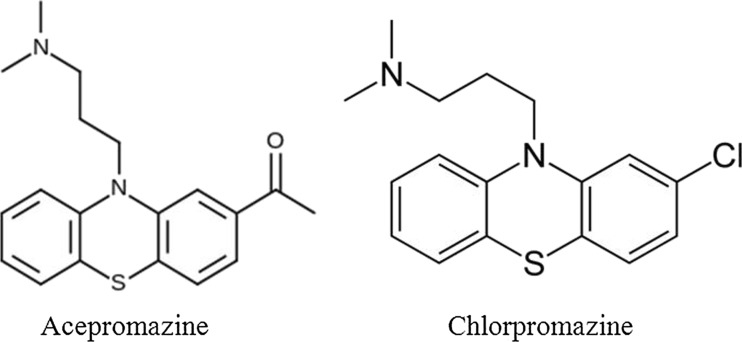
Introduction: Acepromazine is a phenothiazine that is used exclusively in veterinary medicine for multiple purposes. Human overdoses are rarely reported and toxicokinetic data has never been reported. We present a case of intentional acepromazine overdose resulting in central nervous system and cardiovascular toxicity with confirmatory toxicokinetic data.
Case report: A 54-year-old woman intentionally ingested 950 mg of her dog's acepromazine. Within 3 h of ingestion, she developed central nervous system and respiratory depression along with hypotension requiring non-invasive ventilation and vasopressors. Clinical toxicity resolved over the following 8 h. Serial plasma acepromazine levels were determined using gas chromatography/mass spectrometry. The initial acepromazine level (1-h post-ingestion) was 63 ng/ml. Follow-up levels at 8-, 10.5-, and 13.5-h post-ingestion were 8.9 ng/ml, 7.6 ng/ml, and 6.3 ng/ml, respectively.
Discussion: Human acepromazine toxicity is rarely reported but results in clinical toxicity (central nervous system depression, respiratory depression, hypotension) are similar to other phenothiazines. Compared to other phenothiazines, it appears to have a short elimination half-life that may account for the brief duration of clinical toxicity with relatively rapid improvement. No significant human cardiac toxicity has been reported. Treatment is supportive.
Conclusion: This case highlights the unique toxicity of acepromazine in demonstrating rapid improvement of severe toxicity within 8 h consistent with a short elimination half-life.
Figures
References
Publication types
MeSH terms
Substances
LinkOut - more resources
Full Text Sources
Other Literature Sources
Medical
